
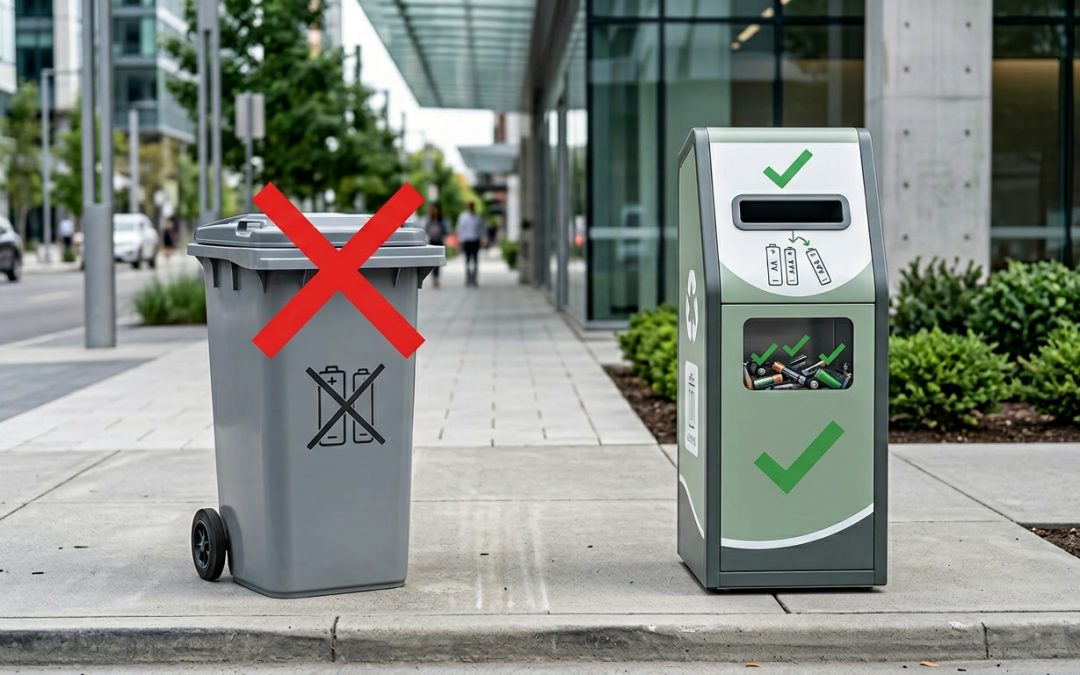
Your Recycling Bin Is Not the Right Place for Batteries
It seems logical. Batteries contain metals. Your yellow-lid recycling bin accepts metals. So batteries should go in the recycling bin, right? Absolutely not. Putting batteries in kerbside recycling is one of the most dangerous contamination mistakes you can make, and it’s causing millions of dollars in damage to Australian recycling infrastructure every year.
This isn’t about nitpicking recycling rules. It’s about preventing fires that endanger workers, destroy equipment, and shut down the facilities that process all of your other recyclable materials.
The Fire Problem
When batteries enter the kerbside recycling stream, they travel through a system designed for paper, cardboard, glass, and rigid plastics. At the Materials Recovery Facility (MRF), conveyor belts carry material through sorting equipment that uses spinning drums, screens, magnets, and optical scanners to separate different materials. At multiple points in this process, materials are compressed, dropped, and mechanically handled.
Lithium-ion batteries caught in this machinery can be punctured, crushed, or short-circuited. When that happens, the internal chemistry reacts violently, generating temperatures up to 600°C or more. In a facility filled with paper and cardboard, this creates an instant fire. These fires can escalate rapidly, sometimes engulfing entire sorting lines before they can be contained.
Even standard alkaline batteries cause problems. When their terminals contact metal objects or each other on a conveyor belt, they can short-circuit and generate heat. While less dramatic than lithium battery fires, this still creates risk in an environment full of combustible material.
It’s Not Just Fire Risk
Even when batteries don’t cause fires, they create other problems in the kerbside recycling stream:
Equipment damage. Batteries are hard, heavy objects that damage sorting equipment designed for lightweight materials. They jam conveyor mechanisms, damage optical sorters, and contaminate material streams.
Contamination of material bales. If batteries make it through sorting without causing a fire, they end up compressed into bales of paper, cardboard, or mixed plastics. These bales are sold to reprocessors who don’t want batteries in their feedstock. Contaminated bales may be rejected, downgraded, or create problems during reprocessing.
Worker safety. Sorting line workers who hand-pick contamination from conveyor belts encounter batteries mixed in with other materials. Handling loose batteries, particularly damaged lithium cells, creates risk for these workers.
What Types of Batteries Are the Biggest Risk
Lithium-ion batteries (rechargeable, found in phones, laptops, power tools, vapes, and wireless earbuds) are by far the biggest fire risk. Their high energy density means they pack a lot of reactive energy into a small package. Even “dead” lithium batteries retain enough charge to cause thermal runaway if damaged.
Lithium primary batteries (non-rechargeable, found in some cameras, medical devices, and specialty applications) carry similar fire risks.
9V batteries are particularly prone to short-circuiting because their positive and negative terminals are right next to each other. If a 9V battery’s terminals touch a piece of metal, the resulting short circuit generates heat quickly.
Standard alkaline batteries (AA, AAA, C, D) are lower risk individually but still don’t belong in kerbside recycling. In bulk, particularly mixed with metal objects, they can short-circuit and generate heat.
Button cell batteries are small enough to be missed during sorting, create contamination in material streams, and pose a serious swallowing hazard if they escape the waste stream into environments accessible by children.
Where Batteries Should Actually Go
Batteries have their own dedicated recycling pathways that are designed to handle their specific chemistry safely:
B-cycle drop-off points at Aldi, Officeworks, Battery World, and many other retail locations across Australia. B-cycle is the national battery recycling scheme and accepts all household battery types.
Council transfer stations typically have dedicated battery collection bins separate from general e-waste.
Retail collection programs at electronics and hardware stores often include battery recycling bins near the entrance.
Workplace collection. Many offices have battery collection containers, usually small tubs near the printer or in the kitchen area.
Safe Battery Storage at Home
Between drop-offs, store used batteries safely at home:
Tape the terminals of 9V batteries and lithium batteries before storage. A piece of sticky tape across the terminals prevents short-circuiting.
Use a non-metal container. A plastic tub or glass jar works well. Don’t store batteries in a metal tin where they could contact the container walls.
Keep away from heat and children. Store in a cool, dry location out of reach of young children, especially button cells which are a serious ingestion hazard.
Don’t let them accumulate excessively. Drop off your used batteries regularly rather than building up a large stockpile. Large collections of batteries in one place increase risk.
Spreading the Word
If there’s one recycling message worth sharing with friends, family, and colleagues, it’s this one. Batteries in the recycling bin cause real harm. They start fires that destroy infrastructure, endanger workers, and cost communities millions of dollars. The correct disposal route is simple, free, and widely accessible. Taking used batteries to a dedicated collection point instead of tossing them in the yellow bin is a small action with outsized impact on keeping our recycling system safe and functional.
How EWV Can Help
E-Waste Victoria (EWV) is a Melbourne-based, certified e-waste recycling and IT asset disposition provider serving commercial clients across Victoria. Our services include:
- Sustainability and ESG reporting with certified environmental outcomes
- Responsible e-waste collection and recycling aligned with AS/NZS 5377
- Our certified data destruction service supports your compliance obligations
- Request a free collection quote
Contact our team to discuss your e-waste and data destruction requirements.