
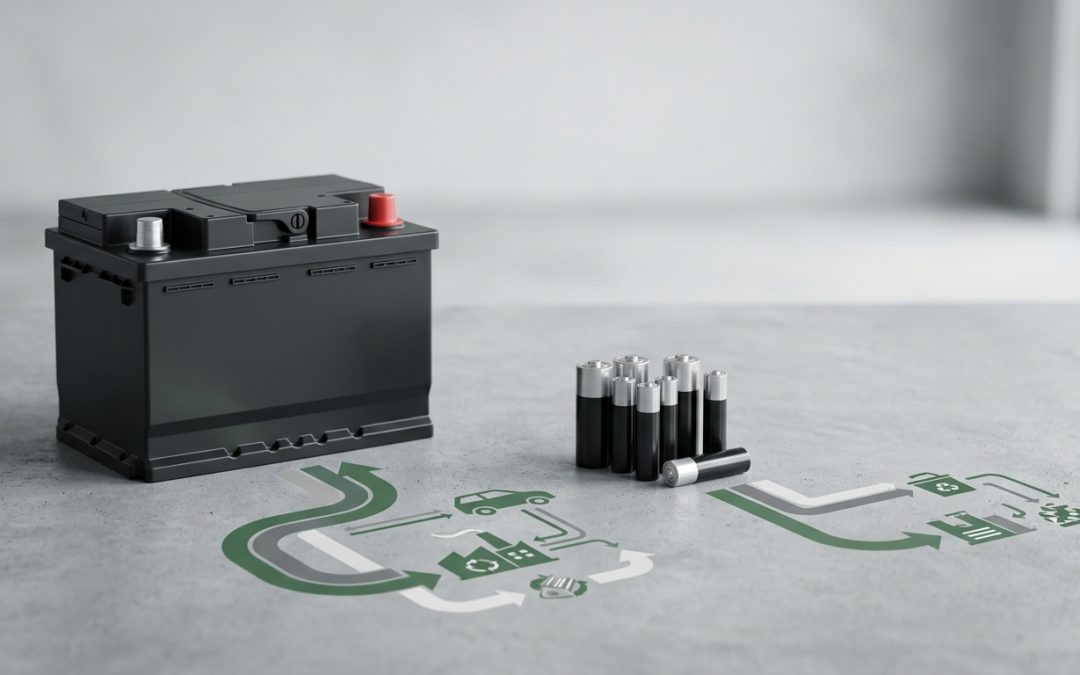
Different Batteries, Different Recycling Paths
Not all batteries are created equal, and when it comes to recycling, the differences matter. A car battery and a AA battery might both power things using electrochemistry, but they contain completely different materials, present different hazards, and follow different recycling pathways. Understanding these differences ensures each type reaches the right facility for safe, effective recycling.
Car Batteries (Lead-Acid)
Traditional car batteries, also known as lead-acid batteries or SLI batteries (starting, lighting, ignition), are one of the most successfully recycled products in the world. Approximately 98% of lead-acid batteries in Australia are recycled, making them a genuine circular economy success story.
What’s inside: Lead plates, sulfuric acid electrolyte, and a polypropylene plastic casing. A typical car battery contains about 10 kg of lead and 2-3 litres of sulfuric acid. Both the lead and the acid are hazardous materials that require careful handling.
Where to recycle: Almost anywhere that sells car batteries also accepts old ones for recycling. Auto parts stores (Repco, Supercheap Auto, Autobarn), mechanics, battery specialists (Battery World), and service stations commonly accept used car batteries. Many offer a small rebate ($5-15) as an incentive. Council transfer stations also accept them, usually in a dedicated area separate from general e-waste.
Handling precautions: Keep the battery upright to prevent acid spillage. Don’t tip, drop, or crack the casing. If acid has leaked, wear gloves and avoid skin contact. Sulfuric acid causes chemical burns. Transport on a stable, flat surface in your vehicle, ideally on a plastic tray or in a plastic container to contain any minor leaks.
Household Alkaline Batteries (AA, AAA, C, D, 9V)
What’s inside: Zinc, manganese dioxide, and potassium hydroxide electrolyte. These are the standard disposable batteries that power remote controls, torches, clocks, and toys.
Where to recycle: B-cycle drop-off points at Aldi, Officeworks, Battery World, and many other retailers. Council transfer stations with battery collection bins. Some supermarkets and libraries also host collection points.
Handling: Alkaline batteries are the least hazardous common battery type. Store used batteries in a plastic container (not metal). Tape the terminals of 9V batteries before storage to prevent short-circuiting.
Rechargeable Batteries (Lithium-Ion, NiMH)
Lithium-ion batteries are found in phones, laptops, power tools, and most portable electronics. They’re the highest-risk battery type for fire due to their high energy density and reactive chemistry. Never put lithium-ion batteries in any bin.
Nickel-metal hydride (NiMH) batteries are found in some rechargeable AA/AAA batteries and older portable electronics. They’re less fire-prone than lithium-ion but still need proper recycling.
Where to recycle: B-cycle drop-off points, Officeworks, Battery World, and council facilities. For larger lithium-ion battery packs (power tools, e-bikes), check with the retailer or manufacturer for take-back programs.
Handling: Tape over the terminals of lithium batteries before storage and transport. If a battery is swollen, damaged, or hot, handle it carefully and take it to a recycling point immediately. Don’t store damaged lithium batteries in your home.
Button Cell Batteries
What’s inside: Various chemistries including silver oxide (watches), zinc-air (hearing aids), or lithium (key fobs, some watches). Despite their tiny size, button cells deserve careful handling.
Where to recycle: Same channels as other household batteries. B-cycle, Officeworks, Battery World, hearing aid providers (for zinc-air cells).
Handling: Tape over both faces of each button cell to prevent short-circuiting. Keep away from children, as ingestion of button cells is a serious medical emergency that can cause fatal internal burns.
Electric Vehicle and Hybrid Batteries
What’s inside: Large lithium-ion battery packs containing hundreds of individual cells, with total energy storage of 20-100+ kWh. These are by far the largest and most complex batteries in the consumer space.
Where to recycle: EV and hybrid batteries should only be handled by the vehicle manufacturer’s authorised service network or specialist battery recyclers. These batteries contain enough stored energy to be lethal if mishandled. Never attempt to remove or dispose of an EV battery yourself.
Second life potential: Many EV batteries retain 70-80% of their original capacity when retired from vehicle use. They can be repurposed as stationary energy storage for homes, businesses, or grid applications, extending their useful life by a decade or more before recycling.
The Key Differences at a Glance
Lead-acid (car batteries): Recycled through auto retailers and battery specialists. High recycling rate. Main hazard is acid spillage. The most established and efficient battery recycling stream.
Alkaline (household): Recycled through retail drop-off points. Lowest risk battery type. Recoverable zinc and manganese.
Lithium-ion (rechargeable devices): Recycled through dedicated battery programs. Highest fire risk. Increasingly valuable for cobalt, lithium, and nickel recovery. The fastest-growing battery waste stream.
NiMH (rechargeable AA/AAA): Recycled alongside other household batteries. Moderate risk. Recoverable nickel and rare earth elements.
Button cells: Recycled through household battery programs. Ingestion hazard for children. Small but still worth recycling.
The common thread is simple: no battery of any type belongs in any bin. Each type has accessible, free recycling options. The few minutes it takes to sort and deliver batteries to the right collection point keeps hazardous materials out of landfill, recovers valuable metals, and prevents the waste facility fires that are becoming an increasingly serious problem across Australia.
How EWV Can Help
E-Waste Victoria (EWV) is a Melbourne-based, certified e-waste recycling and IT asset disposition provider serving commercial clients across Victoria. Our services include:
- Sustainability and ESG reporting with certified environmental outcomes
- Responsible e-waste collection and recycling aligned with AS/NZS 5377
- Our certified data destruction service supports your compliance obligations
- Request a free collection quote
Contact our team to discuss your e-waste and data destruction requirements.