
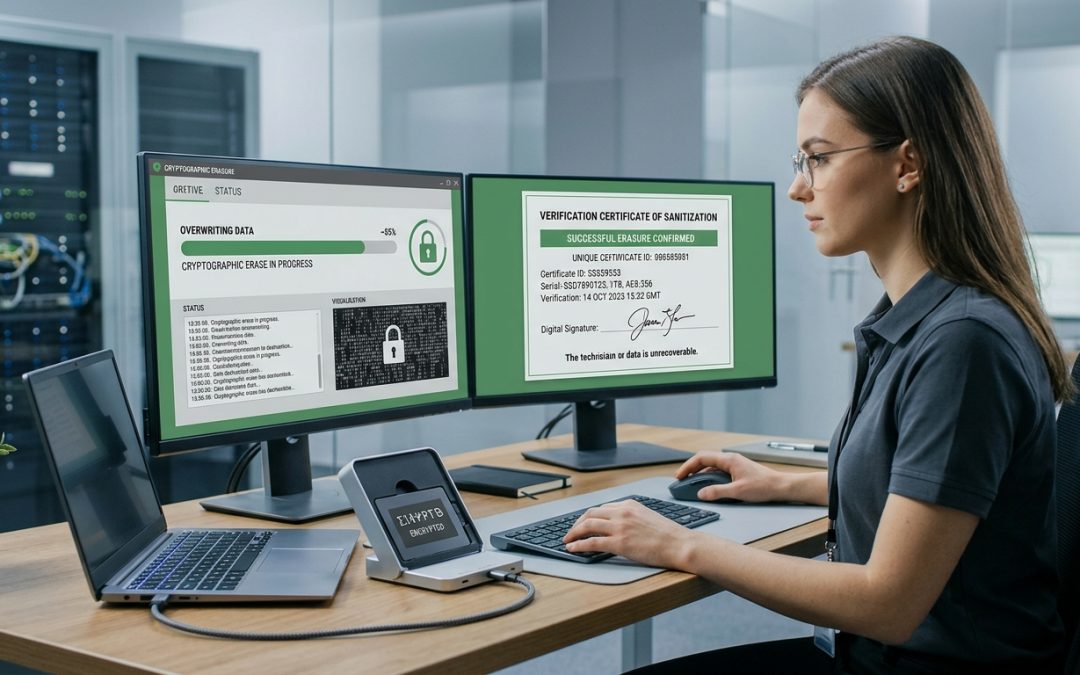
The Role of Cryptographic Erasure
How cryptographic erasure destroys data by destroying the encryption key, the conditions it depends on, where it falls short, and how to layer it with other sanitisation methods.
How cryptographic erasure destroys data by destroying the encryption key, the conditions it depends on, where it falls short, and how to layer it with other sanitisation methods.
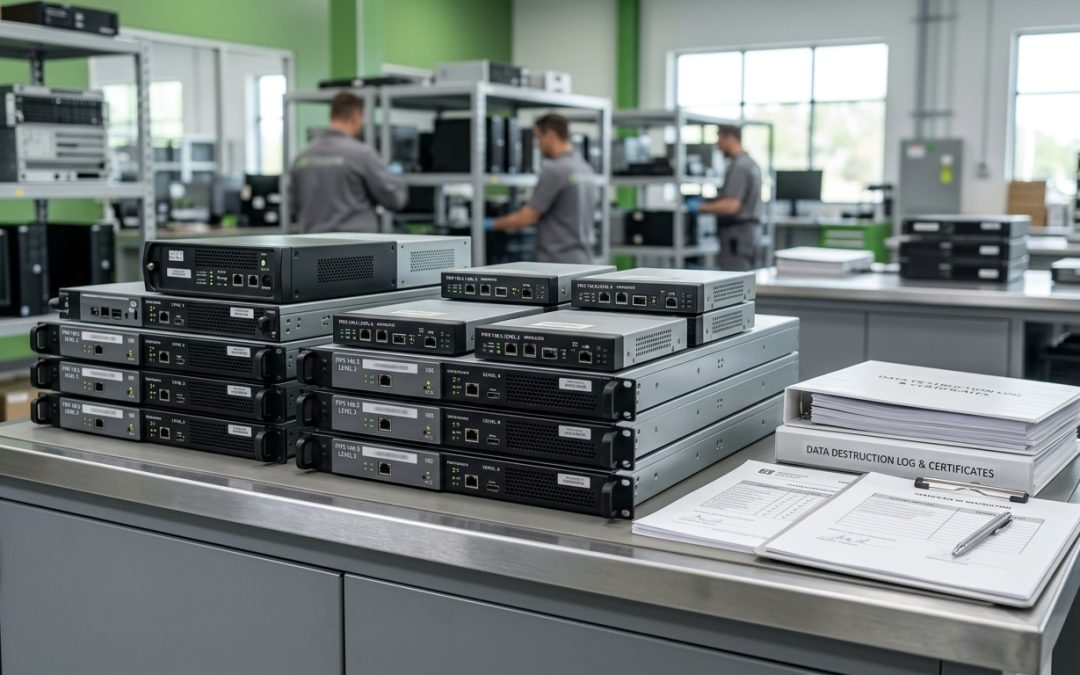
What FIPS 140 validation means for cryptographic erasure, how it applies to self-encrypting drives and BitLocker or FileVault, and how to check a module’s status before you rely on it.

Why Secure Boot can stop bootable wiping tools from loading, the practical ways to wipe devices that have it enabled, and why UEFI should be reset to factory defaults before disposal.

A five-phase guide to server decommissioning: planning, shutting down services, destroying data on every drive and firmware component, disposal, and the records you should keep.
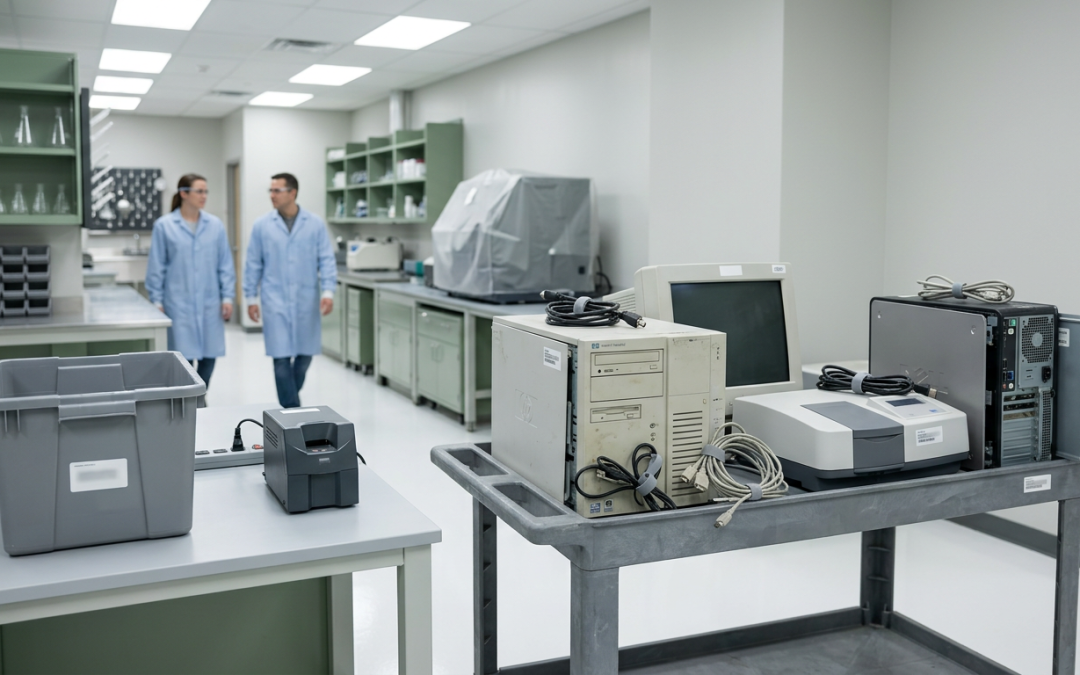
What data laboratory instruments retain, the retention rules to check first, and how to migrate, clear and sanitise lab equipment while protecting results and intellectual property.
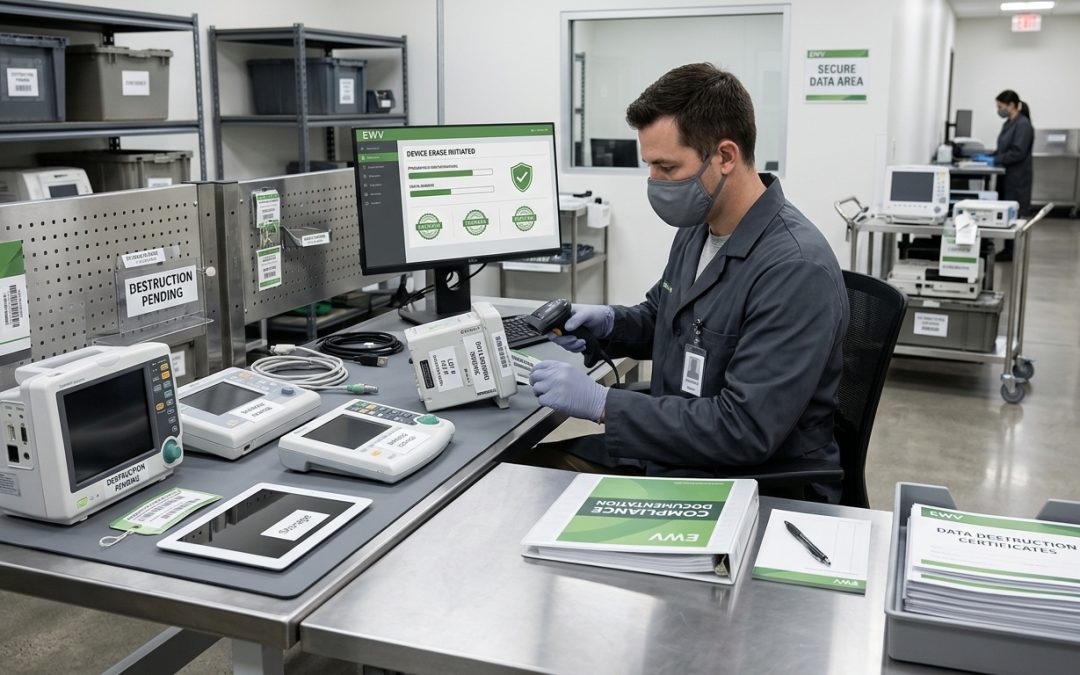
What patient data medical devices store, how Victorian privacy and health records law affects destruction, and how to sanitise imaging systems, monitors and embedded storage.