
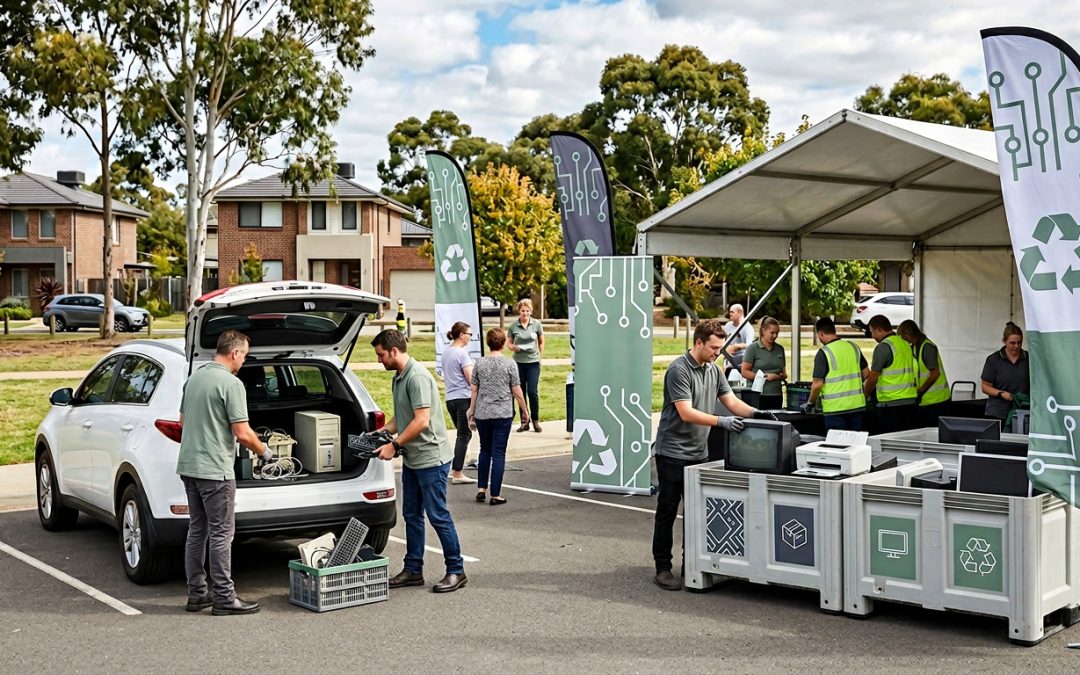
Why Community E-Waste Events Work
Most people want to recycle their old electronics. The barrier isn’t willingness, it’s convenience. Council drop-off points might be across town. Collection days happen infrequently. And many people simply don’t know where to take their e-waste. A community e-waste collection event removes these barriers by bringing the collection point directly to the neighbourhood.
Community events are effective because they create a specific date and location, which motivates action. People who have been meaning to clear out their old electronics for months will actually do it if there’s a convenient, scheduled opportunity. They also raise awareness about e-waste issues and proper disposal methods in ways that council brochures and website listings don’t.
Getting Started: The Planning Phase
Start planning at least 6-8 weeks before your target event date. The key early decisions are who will process the collected e-waste, where the event will be held, and who will help organise and run it.
The most important partnership to establish first is with a licensed e-waste recycler. Contact local e-waste recycling companies and ask if they support community collection events. Many do, either at no cost (because they recover value from the materials) or for a modest fee. Some councils also provide support for community-run events through their waste management programs.
Your recycling partner will advise on what types of e-waste they can accept, how materials should be sorted, any items they cannot process, and logistics for collection containers and transport. Getting this sorted early shapes every other aspect of your planning.
Choosing a Venue
The ideal venue is accessible, visible, and has enough space for vehicles to pull up, unload, and drive away without creating traffic problems. Good options include community centre car parks, school grounds (with permission), church or hall parking areas, sporting club venues, and shopping centre car parks (with management approval).
You need enough space for the collection point itself (typically several large bins or caged pallets), a queue area for vehicles, a sorting area where volunteers can help people unload, and signage visible from the road.
Consider accessibility carefully. People are bringing heavy, bulky items, so they need to be able to drive close to the drop-off point. Avoid venues with tight access, steps, or limited parking.
What to Accept and What to Refuse
Work with your recycling partner to establish a clear list of accepted and refused items. Being specific about what you will and won’t take prevents confusion on the day and ensures everything collected can actually be processed.
- Computers, laptops, tablets, phones
- Monitors, televisions, printers
- Keyboards, mice, cables, chargers
- Small household appliances (toasters, kettles, etc.)
- Batteries (collected separately in lined containers)
- Gaming consoles and accessories
Commonly refused items:
- Whitegoods (fridges, washing machines) – too large, need specialist handling
- Smoke detectors (contain radioactive material)
- Gas cylinders or pressurised containers
- Non-electronic items (general rubbish, clothing, furniture)
Building Your Volunteer Team
A typical community e-waste event needs 8-15 volunteers depending on the expected turnout and event duration. Key roles include greeters who direct arriving vehicles and explain the process, sorters who help unload items and direct them to the right collection areas, a battery handler (someone specifically managing battery collection, as these need careful handling), traffic management if the venue requires it, and a coordinator who oversees the event and handles any issues.
Recruit volunteers from local community groups, environmental organisations, service clubs, school parent groups, or through social media. Most people are happy to give a few hours to a worthwhile community event, especially one with a clear environmental benefit.
Brief all volunteers before the event on safety procedures (particularly around batteries and heavy lifting), what’s accepted and refused, and the general flow of the event.
Promoting Your Event
Start promoting at least 3-4 weeks before the event. The more people know about it, the more e-waste gets collected, and the bigger the community impact.
Effective promotion channels include local community Facebook groups (often the single most effective channel), neighbourhood apps like Nextdoor, flyers at local shops, libraries, and community noticeboards, your local council’s events calendar or newsletter, school newsletters and parent communication apps, local newspapers and community radio, and signage at the venue in the weeks leading up to the event.
In your promotion, be specific about what’s accepted, the date and time, and the exact location. Include a clear call to action: “Clean out your drawers, clear out your garage, and bring your old electronics.” Reminding people to wipe data from devices before bringing them is also important.
Event Day Logistics
Set up well before the published start time. Have collection bins, signage, and volunteers in place at least 30 minutes before doors open.
Create a clear flow: vehicles arrive, are greeted and directed, unload their items with volunteer assistance, items are sorted into the correct collection areas, and vehicles exit. For busy events, a one-way traffic flow prevents bottlenecks.
Set up separate collection areas for different material types. At minimum, have separate areas for IT equipment (computers, phones, tablets), monitors and screens, small appliances, cables and accessories, and batteries (in a designated, lined container away from other materials).
Keep a simple tally of what comes in. Counting items or estimating weights helps you measure the event’s impact and report back to the community and any sponsors. Photos of the event (with people’s permission) are valuable for promoting future events.
Data Security Reminders
Prominently display signage reminding people to wipe data from their devices before dropping them off. While your recycling partner should handle data destruction as part of their process, it’s best practice to encourage people to take responsibility for their own data.
Have a simple handout or poster listing the basic steps: sign out of accounts, perform a factory reset, remove SIM cards and memory cards. For those who haven’t done this beforehand, having a few volunteers who can help people perform a quick factory reset on phones can add value to the event.
For more detailed guidance, point people to resources like our guide to data destruction.
After the Event
Once the event wraps up, the follow-through is just as important as the event itself. Ensure your recycling partner collects all materials as arranged. Document the results: how many items collected, estimated weight, number of community members who participated.
Share these results with the community through the same channels you used for promotion. People want to know their effort made a difference. “Our community collected 2.5 tonnes of e-waste and diverted it from landfill” is a powerful message that builds support for future events.
Send thank-you messages to volunteers, venue providers, and your recycling partner. If sponsors contributed (some local businesses may donate refreshments or promotional support), acknowledge them publicly.
Finally, capture lessons learned while they’re fresh. What worked well? What would you change? How long were wait times? Was the venue adequate? This information makes the next event smoother.
Making It Recurring
The most successful community e-waste programs run events regularly, whether quarterly, biannually, or annually. A recurring event becomes something people plan for, setting aside old electronics in a box knowing that the collection day is coming up.
Each event gets easier as you refine the process, build your volunteer base, and establish your relationship with the recycling partner. Over time, your community event becomes a recognised fixture that makes a genuine, measurable difference to local e-waste management.
For background on why these events matter and the broader recycling picture, see our complete guide to e-waste recycling in Australia.
EWV helps Victorian businesses manage e-waste and IT asset disposal compliantly and sustainably — including collection, certified data destruction, and recycling. Contact us for a free quote.