
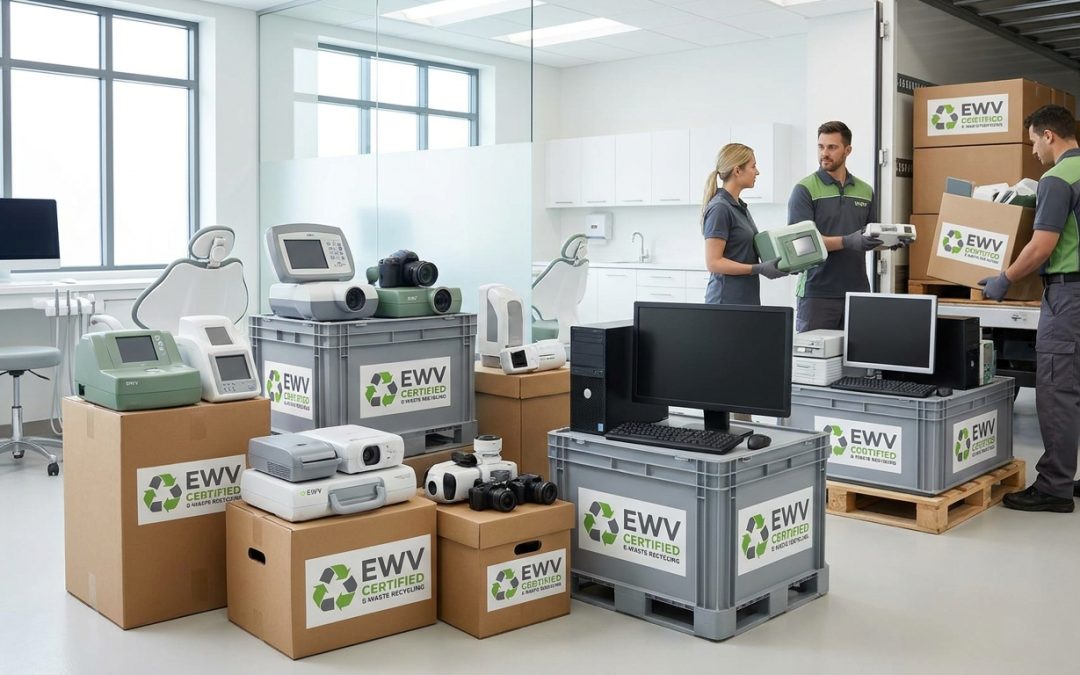
The Digital Revolution in Dentistry
Dental practices have embraced digital technology at a remarkable pace. What was once a profession defined by physical X-ray films and paper-based patient records is now driven by digital imaging systems, practice management software, CAD/CAM milling machines, intraoral scanners, and 3D printing technology. This digital transformation has improved patient care dramatically, but it also means that dental practices now generate a growing stream of electronic waste that needs careful management.
A modern dental practice of four or five dentists will typically contain dozens of electronic devices: workstations in every surgery and at the front desk, digital X-ray sensors and panoramic imaging units, intraoral cameras, a practice management server, networking equipment, sterilisation monitoring devices, and increasingly sophisticated equipment like CEREC CAD/CAM systems or 3D scanners. When any of these devices reach end of life, they need proper disposal that addresses both environmental and data security requirements.
Patient Data on Dental Equipment
The data security dimension of dental e-waste is more significant than many practice owners realise. Dental practice management systems contain comprehensive patient health records, Medicare details, private health insurance information, payment records, and clinical notes. Under the Privacy Act 1988 and the Australian Privacy Principles, this information must be protected throughout its lifecycle, including when the devices that stored it are being retired.
Digital imaging systems are a particular concern. X-ray workstations, OPG machines, and CBCT (cone beam computed tomography) units store patient images alongside identifying information. These images are part of the patient’s health record and are subject to strict privacy protections. A digital X-ray workstation that has been in service for five years might contain tens of thousands of patient images linked to names, dates of birth, and Medicare numbers.
Even devices that might seem data-free can contain patient information. Intraoral cameras may cache images locally. Sterilisation logging systems record cycle data that can be linked to patient treatments. Front desk computers store appointment histories, contact details, and payment information. Professional data destruction, following NIST 800-88 standards, is essential for all practice equipment. For more detail, see our guide to preventing data breaches through IT disposal.
Specialised Dental Equipment as E-Waste
Unlike a standard office environment, dental practices contain medical-grade electronic equipment that requires special consideration during disposal. Digital X-ray sensors are delicate electronic devices containing circuit boards, cables, and sometimes small amounts of specialised materials. Panoramic and CBCT imaging units are large, complex machines with computers, motors, sensor arrays, and radiation-generating components.
CAD/CAM systems like CEREC units combine scanning technology, computing power, and milling machinery. When these are upgraded, the entire system including the computer, scanner, and milling unit needs appropriate disposal. The computer component follows standard e-waste procedures, but the milling unit may contain coolant fluids and metal dust that require additional consideration.
Intraoral scanners are becoming more common as practices move toward digital impressions. These handheld devices contain sophisticated optical and computing components, and like most dental technology, they cycle through upgrades as new generations offer improved accuracy and speed. Older generation scanners that are replaced become e-waste.
3D printers used for creating surgical guides, dental models, and temporary restorations add another category. These devices contain electronic control systems, UV curing lamps, and sometimes residual resin that may be classified as hazardous, requiring appropriate handling during disposal.
Radiation Considerations
Dental X-ray equipment, including intraoral X-ray units, OPG machines, and CBCT scanners, generates ionising radiation during operation but does not typically contain radioactive materials. The radiation source is an X-ray tube that only produces radiation when energised. However, the disposal of radiation-generating equipment is regulated in most Australian states and territories.
In Victoria, the Department of Health oversees radiation safety, and practices may need to notify the relevant authority when decommissioning registered radiation apparatus. The equipment itself can be recycled through standard e-waste channels once any regulatory notifications have been made, but practices should check their state requirements before disposal.
It is worth noting that older dental X-ray processing equipment, from the era of film-based radiography, may contain chemical solutions (developer and fixer) that require disposal as hazardous waste separate from the electronic components. If a practice is clearing out legacy equipment from storage, these materials should be identified and handled appropriately.
Practice Management System Migrations
One of the most common triggers for dental e-waste is a practice management system migration. When a practice changes from one software platform to another, the old server and associated hardware often needs to be retired. This is a critical moment for data management because the old system contains the complete patient record history.
Before the old hardware is disposed of, the practice must ensure that all patient records have been successfully migrated to the new system or archived in an accessible format for the required retention period. Once the migration is verified and any necessary records have been preserved, the old hardware can be sent for secure data destruction.
Practices should obtain certificates of data destruction for the old server and any associated storage media, and retain these certificates as part of their compliance records. This documentation provides evidence that patient data was properly handled if questions arise during audits or in the event of a privacy complaint.
Compliance for Dental Practices
Dental practices in Victoria must comply with the state’s e-waste landfill ban, which covers all electronic equipment used in the practice. The Dental Board of Australia, through AHPRA (Australian Health Practitioner Regulation Agency), also sets expectations for records management that extend to the secure disposal of devices containing patient information.
Practices accredited under the National Safety and Quality Health Service (NSQHS) Standards or those meeting the requirements of the Dental Board’s registration standards have additional documentation obligations around information security and records management. Having a documented e-waste disposal process, supported by certificates from a certified ITAD provider, helps satisfy these requirements.
For an overview of the broader regulatory framework, see our article on e-waste laws and regulations across Australia.
Practical Steps for Dental Practices
Managing e-waste in a dental practice does not need to be complicated, but it does need to be intentional. Keep a register of all electronic equipment in the practice, including imaging systems, computers, and peripherals. When planning equipment upgrades, include disposal of the old equipment in the project scope and budget.
Work with an ITAD provider who has experience with healthcare or professional services equipment and can provide certified data destruction. Ensure that patient records have been properly migrated or archived before any hardware leaves the practice. Retain certificates of data destruction alongside other compliance documentation.
For dental practices looking to build a more structured approach to managing their IT assets, our guide on building an IT asset disposal policy provides a practical framework that can be adapted for practices of any size.
EWV helps Victorian businesses manage e-waste and IT asset disposal compliantly and sustainably — including collection, certified data destruction, and recycling. Contact us for a free quote.