
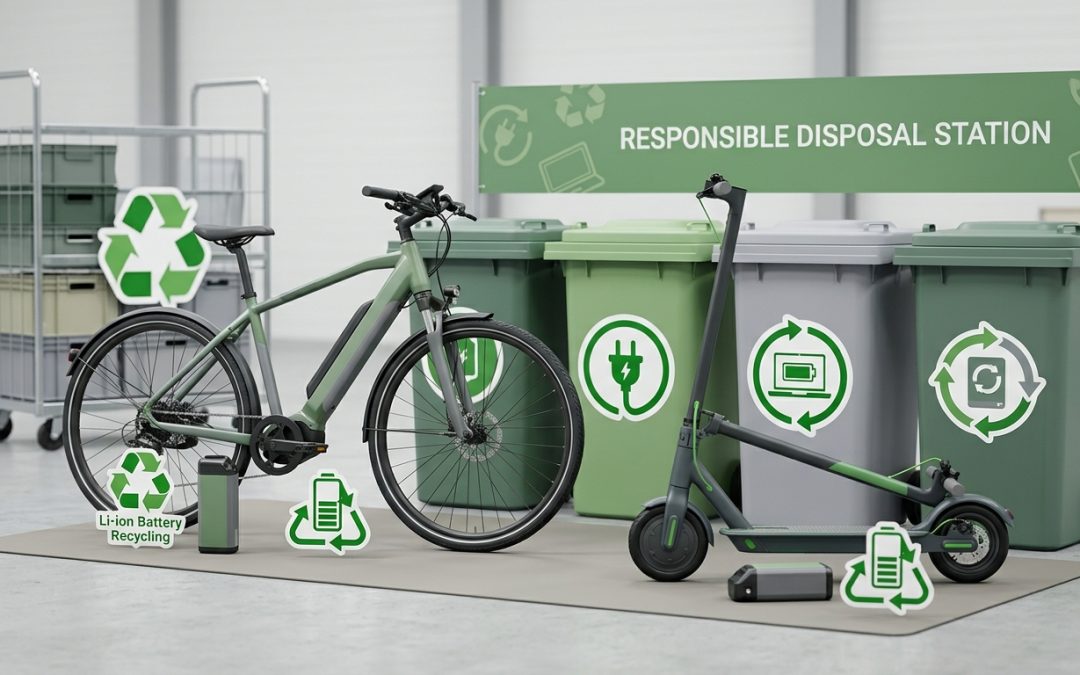
The Growing Challenge of E-Bike and E-Scooter Disposal
Electric bikes and scooters have exploded in popularity across Australia over the past few years. They’re a brilliant solution for short commutes and urban transport, but like all electronics, they eventually reach end of life. And when they do, disposing of an e-bike or e-scooter is more complex than most people expect, primarily because of the large lithium-ion battery packs they contain.
Unlike a regular bicycle that’s mostly metal and can go straight to scrap, electric personal transport devices combine mechanical components with significant electrical and electronic systems that need careful handling.
What Makes E-Bikes and E-Scooters Different
The key difference between an electric and non-electric bicycle or scooter is the battery and motor system. Understanding these components is essential for proper disposal.
The battery is typically a lithium-ion pack with a capacity of 250-750 watt-hours for e-bikes and 150-500 watt-hours for e-scooters. To put that in perspective, a laptop battery is around 50-60 watt-hours. An e-bike battery contains 5-15 times more stored energy than a laptop, making it a significantly greater safety concern if mishandled.
The motor (usually a hub motor in the wheel or a mid-drive motor at the pedals) contains copper windings and permanent magnets with rare earth elements like neodymium. The controller is an electronic circuit board that manages power delivery from the battery to the motor. The display and controls contain small circuit boards and wiring. And the wiring harness connects everything together with copper cable.
The frame, wheels, brakes, and other mechanical components are essentially the same as a regular bicycle or scooter and can be handled through standard metal recycling or bicycle reuse channels.
- Battery pack: Specialist battery recycler (NEVER general waste)
- Motor: Scrap metal or e-waste recycler (contains copper and rare earths)
- Controller and display: E-waste recycling
- Frame and mechanical parts: Scrap metal or bicycle reuse
- Tyres and tubes: Tyre recycling or general waste
- Charger: E-waste recycling
The Battery Is the Critical Component
The lithium-ion battery is both the most valuable and the most hazardous component of an e-bike or e-scooter. It requires specialist handling and should never, under any circumstances, go in general waste, regular recycling bins, or be left out for kerbside collection.
Lithium-ion batteries can catch fire or explode if damaged, punctured, or short-circuited. Battery fires from e-bikes and e-scooters have been in the news globally, with incidents in homes, apartment buildings, and waste facilities. These fires burn extremely hot, are difficult to extinguish, and can reignite after appearing to be out.
If your battery is in good condition (no damage, no swelling, no unusual heat during charging), it can be removed from the vehicle and taken to a battery recycling facility. Most council transfer stations accept lithium-ion batteries, and some specialist battery recyclers handle larger packs like those from e-bikes.
If the battery is damaged, swollen, or has been involved in a crash, treat it as hazardous. Do not transport it in an enclosed vehicle. Contact your local council’s hazardous waste service or a specialist battery recycler for advice on safe collection. Some fire services also provide guidance on handling damaged lithium batteries.
Selling or Donating a Working E-Bike
If your e-bike or e-scooter still works, selling or donating it is the best environmental and economic outcome. These devices have strong resale value, particularly name-brand e-bikes from manufacturers like Giant, Trek, Merida, and Specialized.
Before selling, check the battery’s health. A battery that no longer holds a reasonable charge significantly reduces the value of the vehicle, since replacement batteries can cost $500-1,500. Be upfront about battery condition in your listing. Include details about the motor type, battery capacity, range, and any maintenance history.
Bicycle shops sometimes accept trade-ins on e-bikes. Community bicycle programs may accept donated e-bikes, though many are set up for standard bicycles and may not have the expertise to handle electric components. Check before donating.
For e-scooters, marketplace platforms are the most common sales channel. Include the brand, model, battery capacity, maximum speed, range, and honest condition assessment. Working chargers significantly increase resale value, so include yours.
Recycling a Non-Functional E-Bike or E-Scooter
If the vehicle is beyond repair or selling, disassembly and component-level recycling is the most responsible approach.
Start by removing the battery. Most e-bike batteries are designed to be removable and slide out of a frame-mounted holder or detach from a rear rack mount. E-scooter batteries are often more integrated and may require tools to access. Consult the manufacturer’s manual or look for disassembly guides online for your specific model.
Once the battery is removed, the remaining vehicle becomes much simpler to handle. The motor can be removed from the wheel (or the entire wheel can be taken as-is). Controllers and displays can be disconnected. What remains is essentially a standard bicycle frame and components.
Take the battery to a specialist battery recycling point. Take electronic components (motor, controller, display, charger) to an e-waste recycling facility. The frame and mechanical components can go to a scrap metal recycler or, if the frame is in good condition, to a bicycle reuse program.
The Charger Matters Too
Don’t forget about the charger. E-bike and e-scooter chargers are electronic devices containing transformers, circuit boards, and sometimes cooling fans. They should go through e-waste recycling, not in the general bin.
If you’re selling the vehicle, always include the charger. A vehicle without its charger is worth significantly less because replacement chargers need to match the battery’s voltage and connector type exactly, and aftermarket chargers can be difficult to source for some models.
Replacement Batteries: A Growing Market
Sometimes an e-bike is mechanically sound but the battery has degraded to the point of being useless. Before writing off the entire vehicle, investigate whether a replacement battery is available. Many e-bike manufacturers sell replacement battery packs, and third-party battery rebuilders can often refurbish or rebuild a pack for less than the cost of a new one.
A new battery can extend the life of an otherwise functional e-bike by five or more years, which is far better from an environmental perspective than scrapping the entire vehicle and buying new.
When replacing a battery, make sure the old one goes to battery recycling. Don’t keep it “just in case” because a degraded lithium battery that sits in storage continues to degrade and can become a safety risk over time.
Regulatory Considerations
In Australia, e-scooters occupy a complex regulatory space that varies by state. If you’re disposing of an e-scooter that doesn’t comply with current regulations (for example, one that exceeds speed or power limits for legal road use in your state), be aware that selling it may put the buyer in a difficult legal position.
Non-compliant scooters should ideally be recycled rather than sold, or clearly disclosed as non-road-legal when listed for sale. This is particularly relevant for high-powered imported scooters that were purchased before stricter regulations were introduced.
Prevention: Making Your E-Bike Last Longer
The best way to reduce e-bike and e-scooter waste is to extend the life of the ones already in use. Battery care is the single biggest factor in longevity.
Store your battery at room temperature when not in use, avoiding extreme heat or cold. Don’t leave it fully charged or fully depleted for extended periods; a 40-60% charge is ideal for storage. Charge with the manufacturer’s charger only. Keep the battery clean and dry. And service the mechanical components regularly, just as you would a standard bicycle.
With proper care, an e-bike battery should last 500-1,000 charge cycles, translating to roughly 3-7 years of regular use. The mechanical components of a quality e-bike can last much longer, making battery replacement a worthwhile investment to extend the vehicle’s total lifespan.
For more on the environmental impact of electronic waste and the importance of proper recycling, see our article on the true environmental cost of electronic waste.
EWV helps Victorian businesses manage e-waste and IT asset disposal compliantly and sustainably — including collection, certified data destruction, and recycling. Contact us for a free quote.