
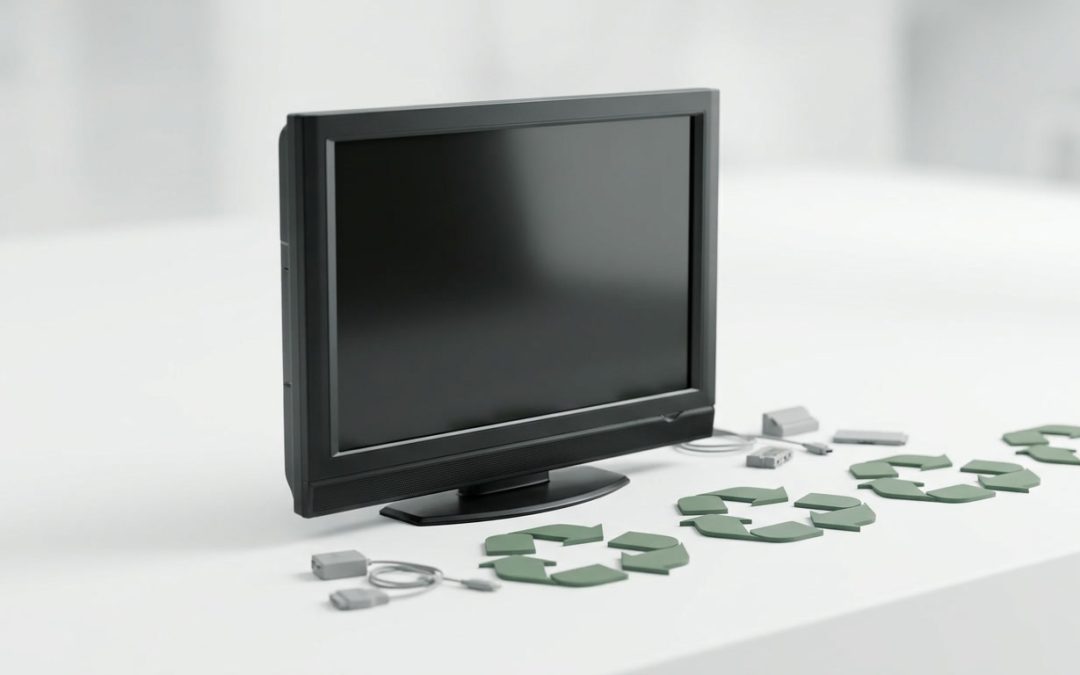
Your Old TV Can’t Go in the Bin
If you’ve got an old television collecting dust in the garage or a broken one leaning against the wall, you need to know that TVs cannot be disposed of through your regular council bins in Victoria. The state’s e-waste landfill ban, in effect since 1 July 2019, covers all televisions regardless of type, size, or condition. This includes LCD, LED, OLED, plasma, and the old cathode ray tube (CRT) models that are particularly problematic to handle.
The good news is that disposing of your old TV responsibly is straightforward once you know your options.
Why TVs Need Special Handling
Televisions contain materials that make them both valuable to recycle and hazardous if improperly disposed of:
CRT televisions (the old heavy, boxy ones) contain significant amounts of lead in the funnel glass, sometimes 2-4 kg per unit. They also contain phosphor coatings on the screen interior that may include cadmium and other toxic substances. The sheer weight of CRTs (a 68cm model can weigh 30-40 kg) also makes them difficult to handle.
LCD and LED televisions contain mercury in the backlight tubes (older models), lead in solder joints, and various flame retardants in the plastic housing. Some older LCD models use cold cathode fluorescent lamps (CCFLs) for backlighting, which contain mercury vapour.
Plasma televisions contain a mix of noble gases, lead, and other materials in the plasma cells that require careful handling during recycling.
All TV types contain valuable recoverable materials including copper, aluminium, steel, and various plastics that can be recycled back into manufacturing supply chains when properly processed.
Option 1: Council Hard Waste Collection
Most Victorian councils include televisions in their hard waste collection programs. Depending on your council, this might be a scheduled collection (annual or biannual), an on-demand booking system, or a combination. Hard waste collection is usually free for residents and is the most convenient option because the TV is collected from your property.
Check your council’s website or call their waste hotline to find out how to book a hard waste collection that includes TVs. Some councils have specific instructions about how TVs should be presented, such as placing them screen-down to prevent damage during collection, or keeping them separate from other hard waste items.
Option 2: Council Transfer Station or Resource Recovery Centre
If you can transport the TV yourself, most council transfer stations and resource recovery centres accept televisions from residents for free. This is often the fastest option because you can drop it off during operating hours without waiting for a collection date.
For large or heavy CRT televisions, get help lifting them. These old sets are heavy and awkward, and back injuries from lifting old TVs are a genuine risk. Use a trolley if available and always lift with your legs, not your back.
Option 3: Retailer Take-Back
Some electronics retailers offer take-back services for old TVs, particularly when you’re purchasing a new one. This varies by retailer and may involve a fee for older or larger sets. Ask at the time of purchase whether the retailer will take your old TV when delivering the new one.
Option 4: The National TV and Computer Recycling Scheme
Australia’s National Television and Computer Recycling Scheme (NTCRS) funds free recycling of televisions through approved collection services. Drop-off points and collection events funded by the scheme are available across Australia, including Victoria. Visit the program’s website or contact your local council to find NTCRS-funded collection points near you.
What If the TV Still Works?
If your television is functional and reasonably modern (less than 8-10 years old), consider whether it has a second life available before recycling. Options include selling through online marketplaces, donating to a charity that accepts working electronics, or offering it through community give-away groups.
A working TV has more value as a reusable item than as recycled materials. However, be realistic about desirability. Very old CRT televisions have virtually no second-hand value and are difficult to give away, even for free. If the TV is outdated enough that nobody wants it, recycling is the right path.
What NOT to Do
Don’t dump it. Illegal dumping of e-waste, including TVs, carries penalties in Victoria. Beyond the legal risk, dumped TVs leak hazardous materials into the environment and create a cleanup burden for councils and property owners.
Don’t put it in any council bin. TVs don’t fit in standard bins, but even small portable TVs should not go in the general waste, recycling, or green waste bin.
Don’t stockpile indefinitely. It’s tempting to put the old TV in the garage and forget about it, but the sooner it reaches a recycler, the sooner its materials can be recovered. Old CRT TVs stored in garages can also leak if the housing degrades, creating a hazard.
What Happens to Your Recycled TV
At a proper recycling facility, your old TV goes through careful disassembly. The process varies by TV type, but generally involves removing the housing, separating the screen panel from the electronics, extracting the circuit boards for precious metals recovery, removing any hazardous components (mercury backlights, lead-containing glass), and sorting the remaining materials into recyclable streams.
For CRT TVs, the leaded funnel glass is separated from the unleaded panel glass. Both can be recycled, though finding markets for CRT glass has been one of the e-waste recycling industry’s ongoing challenges. The copper from deflection yokes, the steel from chassis, and the plastics from housings all enter their respective recycling streams.
Getting your old TV to a proper recycling facility ensures these materials are recovered safely and the hazardous components are handled without environmental contamination. It’s a small effort that makes a genuine difference.
EWV helps Victorian businesses manage e-waste and IT asset disposal compliantly and sustainably — including collection, certified data destruction, and recycling. Contact us for a free quote.