
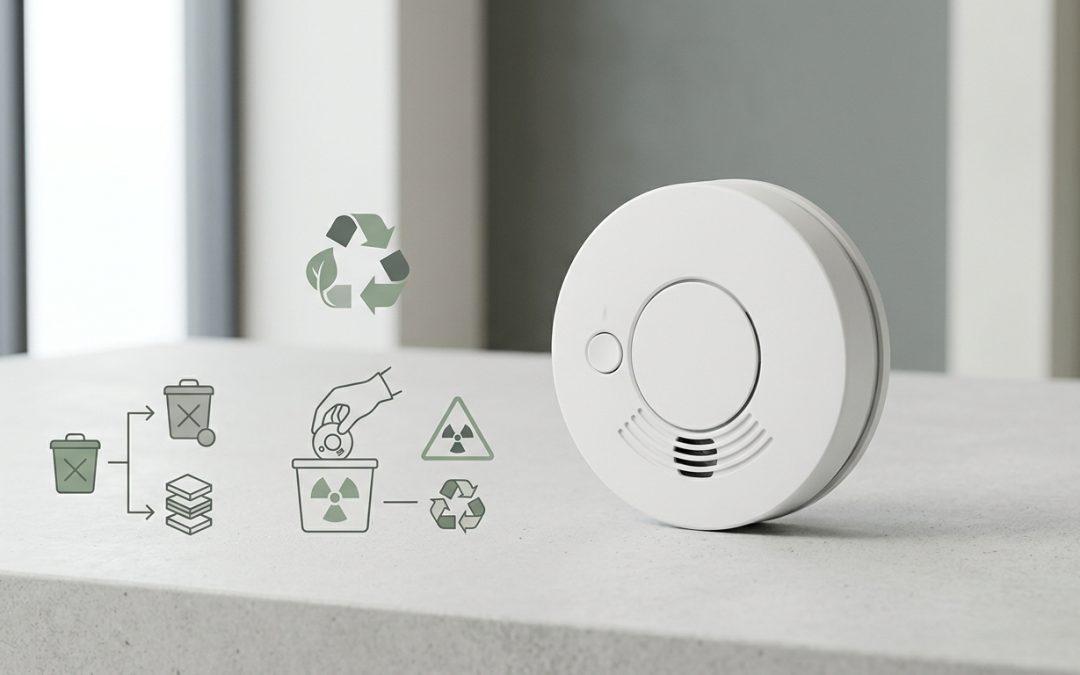
Smoke Detectors Need Special Handling
When your smoke detector starts that persistent low-battery chirp, or when you’re replacing older units with newer models, you might wonder what to do with the old ones. They’re small, seem harmless, and the temptation is to toss them in the bin. But smoke detectors require more careful disposal than most people realise, particularly ionisation-type detectors, which contain a small amount of radioactive material.
Understanding the difference between smoke detector types and knowing the proper disposal pathway keeps you safe and compliant.
Two Types of Smoke Detectors
Ionisation smoke detectors use a tiny amount of americium-241, a radioactive element, to detect smoke particles. The americium creates a small ionisation chamber where smoke disrupts the electrical current, triggering the alarm. These detectors are particularly sensitive to fast-burning fires with small smoke particles. The amount of radioactive material is very small (typically about 1 microcurie or 37 kilobecquerels) and poses negligible risk during normal use, but it does require proper disposal.
Photoelectric smoke detectors use a light source and sensor to detect smoke. When smoke enters the chamber, it scatters the light beam onto the sensor, triggering the alarm. These detectors contain no radioactive material and are better at detecting slow, smouldering fires. They’re increasingly preferred in Australian homes and are often identifiable by a “P” marking.
Dual-sensor detectors combine both technologies and should be treated as ionisation detectors for disposal purposes.
Disposing of Ionisation Smoke Detectors
Because ionisation smoke detectors contain radioactive material, they’re classified as radioactive waste in Australia and fall under specific regulatory requirements. They should not go in your general waste bin, recycling bin, or standard e-waste collection.
Return to the manufacturer. Many smoke detector manufacturers accept returns of their products for proper disposal. Check the packaging, instruction manual, or the manufacturer’s website for return instructions. Some provide prepaid mailing labels.
Contact your state radiation safety authority. In Victoria, the Department of Health regulates radioactive materials. They can advise on disposal options for ionisation smoke detectors in your area.
Some council transfer stations accept ionisation detectors separately from general e-waste, with specific storage arrangements for the radioactive components. Check with your local council before taking them to a transfer station.
Licensed radioactive waste handlers can accept bulk quantities, which may be relevant for businesses, landlords, or property managers replacing multiple detectors.
Disposing of Photoelectric Smoke Detectors
Photoelectric detectors without radioactive material are standard e-waste. They contain a circuit board, sensor components, a battery (or battery compartment), and a plastic housing. Dispose of them through the same channels as other small electronics:
Council transfer stations and resource recovery centres accept them as e-waste. Council hard waste collections typically include them. E-waste recycling drop-off points will handle them alongside other small electronics.
Remove the battery first if it’s removable. Batteries should be recycled separately through battery recycling programs like B-cycle. If the detector has a sealed, non-removable 10-year lithium battery, leave it in place and let the recycler handle it.
When to Replace Smoke Detectors
Australian standards recommend replacing smoke detectors every 10 years, regardless of whether they appear to be working. The sensors degrade over time and become less reliable. Most detectors have a manufacture date printed on the back or inside the battery compartment.
Victorian rental regulations require landlords to maintain working smoke detectors in all rental properties, with specific requirements about detector types and placement that have been updated in recent years. When replacing detectors as part of compliance, the old units need proper disposal through the channels described above.
Handling Precautions
For ionisation detectors: The radioactive source is sealed inside the ionisation chamber and poses no risk during normal handling, removal, or transport. Don’t try to open the ionisation chamber or remove the radioactive element. Handle the detector intact and dispose of it intact. If the detector is damaged and the ionisation chamber appears compromised, place it in a sealed plastic bag and contact your state radiation safety authority for guidance.
For all detector types: Remove batteries before storage to prevent leaking. Store old detectors in a dry place until you can take them to the appropriate disposal point. Don’t accumulate large numbers of ionisation detectors in one location without proper storage guidance.
Smoke detectors save lives while they’re working, and proper disposal ensures they don’t create environmental or safety problems once they’re retired. Taking a few minutes to identify the type and use the right disposal channel is a small effort for responsible handling of a device that served your household well.
How EWV Can Help
E-Waste Victoria (EWV) is a Melbourne-based, certified e-waste recycling and IT asset disposition provider serving commercial clients across Victoria. Our services include:
- Sustainability and ESG reporting with certified environmental outcomes
- Responsible e-waste collection and recycling aligned with AS/NZS 5377
- Our certified data destruction service supports your compliance obligations
- Request a free collection quote
Contact our team to discuss your e-waste and data destruction requirements.