
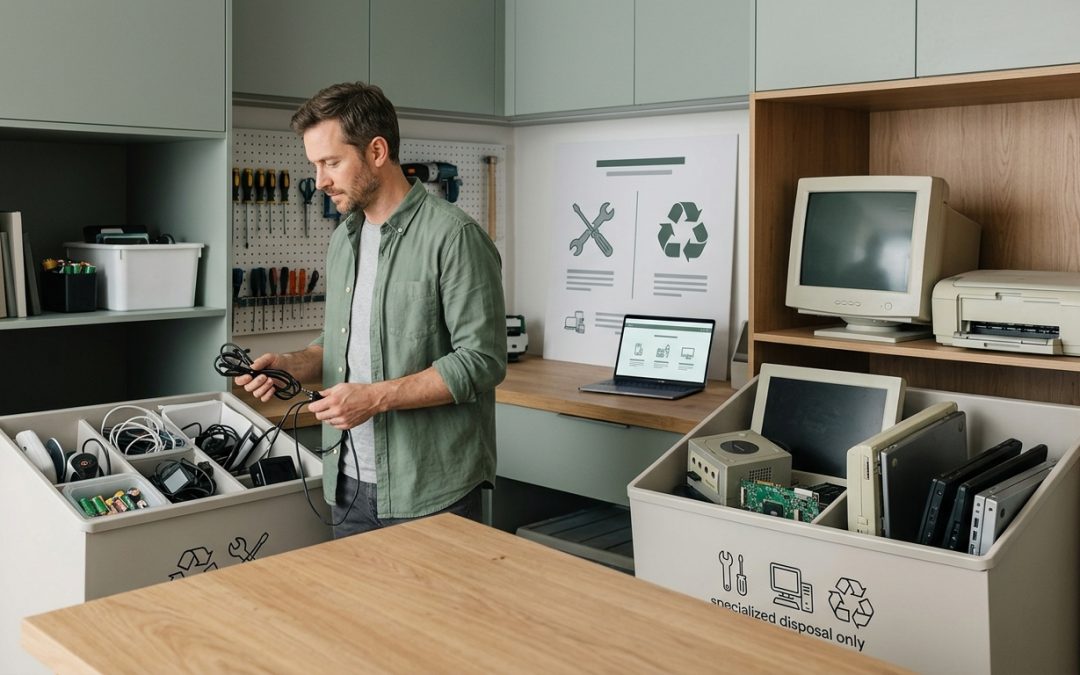
The Appeal and the Limits of DIY E-Waste Recycling
The internet is full of videos showing people extracting gold from circuit boards, melting down aluminium from old electronics, and turning e-waste into art or useful projects. It’s appealing to think you could handle your own e-waste recycling at home. But the reality is that some aspects of e-waste recycling are perfectly suited to DIY approaches, while others are genuinely dangerous and should be left to professionals.
Knowing where that line falls helps you make the most of what you can do at home while staying safe and ensuring hazardous materials are handled properly.
What You Can Safely Do at Home
Data destruction on your own devices is the most important DIY e-waste task, and it’s entirely manageable. Before any device leaves your possession, wiping your personal data should be non-negotiable. For smartphones and tablets, a factory reset after signing out of all accounts is effective, particularly on modern devices with hardware encryption. For computers, free disk-wiping software like DBAN (Darik’s Boot and Nuke) can securely erase hard drives to recognised standards.
Sorting and categorising your e-waste is another useful DIY step. Separating devices into categories (working vs broken, data-bearing vs non-data-bearing, battery-containing vs not) before taking them to a recycling point saves time and helps ensure everything goes to the right stream.
Basic disassembly of certain devices is safe if you take precautions. Removing screws to separate metal housings from plastic components, pulling out easily accessible copper heat sinks, or removing hard drives from desktop computers before recycling are all reasonable DIY tasks. Just use proper tools and work in a well-ventilated area.
Repurposing functional components is a great DIY activity. Old hard drives make interesting clocks. RAM sticks become keychains. Circuit boards can be used in art projects. And working components like fans, power supplies, and drives can be reused in other builds. The maker and repair communities are full of creative ideas for giving old components new life.
What You Should Never Do at Home
This is where it gets serious. Several common “DIY e-waste recycling” activities shown online are genuinely hazardous and should never be attempted at home.
Don’t try to extract gold or other metals chemically. The processes shown in YouTube videos typically involve strong acids like aqua regia (a mixture of hydrochloric and nitric acid), hydrochloric acid, or cyanide solutions. These are extremely dangerous. Acid fumes can cause severe respiratory damage. Skin contact causes chemical burns. Improper disposal of spent chemicals contaminates soil and waterways. The quantities of gold recovered from a handful of circuit boards are worth a few dollars at best, making the risk absurdly disproportionate to the reward.
Don’t burn e-waste. Burning circuit boards, cables, or plastic housings releases toxic fumes including dioxins, furans, heavy metal vapours, and brominated compounds from flame retardants. These are serious carcinogens and toxins. Open burning of e-waste is one of the primary health hazards facing informal recyclers in developing countries, and there’s no reason to replicate it in your backyard.
- Chemical extraction of precious metals (acid baths, cyanide leaching)
- Burning or melting circuit boards, cables, or plastics
- Opening or puncturing lithium-ion batteries
- Breaking CRT monitors or televisions (contain lead and vacuum)
- Handling mercury-containing components (some switches, older backlights)
- Removing refrigerant from fridges, freezers, or air conditioners
Don’t open or puncture batteries. Lithium-ion batteries can ignite, explode, or release toxic gases if damaged. This isn’t theoretical. Battery fires are a real and common problem, and attempting to dismantle batteries at home creates serious risks of fire, chemical burns, and toxic exposure.
Don’t break open CRT monitors. Old cathode ray tube monitors and televisions contain a vacuum and significant amounts of lead in the glass. Breaking the tube releases lead dust and the implosion risk from the vacuum can send glass shards flying. CRT recycling requires specialist equipment and training.
Practical DIY Projects for Old Electronics
Between the safe and the dangerous, there’s a wide range of creative and practical projects that give old electronics a second life without any hazardous processing.
Old computers as media servers or home automation hubs: A laptop or desktop that’s too slow for daily use might be perfect as a dedicated media server, home automation controller, or network storage device. Installing lightweight Linux distributions can breathe new life into hardware that struggles with modern Windows or macOS.
Component harvesting for hobbyists: If you’re into electronics as a hobby, old devices are a goldmine of components. Capacitors, resistors, LEDs, switches, connectors, fans, and motors can all be desoldered from old circuit boards and reused in projects. This is safe as long as you work in a ventilated area and use proper soldering equipment.
Educational teardowns: Taking apart old electronics with children is an excellent way to teach them about technology and materials. Let them see the circuit boards, identify the copper wiring, find the different metals and plastics. Just supervise carefully and avoid opening batteries or CRT components.
Art and furniture: Circuit boards, particularly older ones with colourful components, make striking art pieces. They can be incorporated into resin tabletops, framed as wall art, or used in jewellery. Old computer cases can become planters, tool organisers, or quirky shelving.
The Economics Don’t Work for Home Precious Metal Recovery
One of the most persistent DIY e-waste myths is that you can profitably extract gold from old electronics at home. Let’s do the maths. A single circuit board from a desktop computer contains roughly 0.1-0.3 grams of gold. At current prices, that’s worth approximately $10-30. The chemicals needed for extraction cost more than that, plus you need protective equipment, proper ventilation, and a safe way to dispose of the chemical waste.
Professional recyclers achieve profitability because they process tonnes of material at a time using industrial-scale equipment, efficient chemical processes, and economies of scale that are impossible to replicate at home. They also have environmental licences, waste treatment systems, and safety protocols that make the process legal and safe.
For individuals, the value in old electronics is better captured by selling working devices, claiming trade-in credits, or simply ensuring proper recycling so the materials enter the professional recovery stream.
When to Call in the Professionals
For anything beyond basic sorting, data wiping, and creative repurposing, professional e-waste recyclers have the equipment, training, and licences to handle materials safely and recover the maximum value.
Specifically, involve professionals when you have batteries that need recycling (take them to dedicated collection points), CRT monitors or televisions, refrigerators, freezers, or air conditioning units containing refrigerants, large quantities of e-waste from a home office or business, any devices you suspect contain mercury or asbestos (some older equipment does), and any device with data you need certified proof of destruction for.
Professional recycling also ensures materials actually get recovered. Your careful sorting at home doesn’t help if the e-waste ultimately goes to landfill. Using a certified recycler closes the loop and ensures your old electronics’ materials re-enter the manufacturing supply chain.
For more on what professional recycling involves and how to choose a reputable recycler, see our complete guide to e-waste recycling in Australia.
The Bottom Line
DIY e-waste recycling has its place. Wiping data, sorting materials, repurposing functional devices, and creative upcycling are all valuable activities that anyone can do safely. But when it comes to extracting materials, processing hazardous components, or handling batteries and chemicals, leave it to the professionals. The health risks and environmental damage from amateur processing far outweigh any financial or environmental benefit.
The most impactful thing you can do as an individual is simply get your old electronics to a proper recycling facility rather than leaving them in a drawer or putting them in the bin. That single action puts your devices into a system designed to recover maximum value while managing hazards safely.
EWV helps Victorian businesses manage e-waste and IT asset disposal compliantly and sustainably — including collection, certified data destruction, and recycling. Contact us for a free quote.