
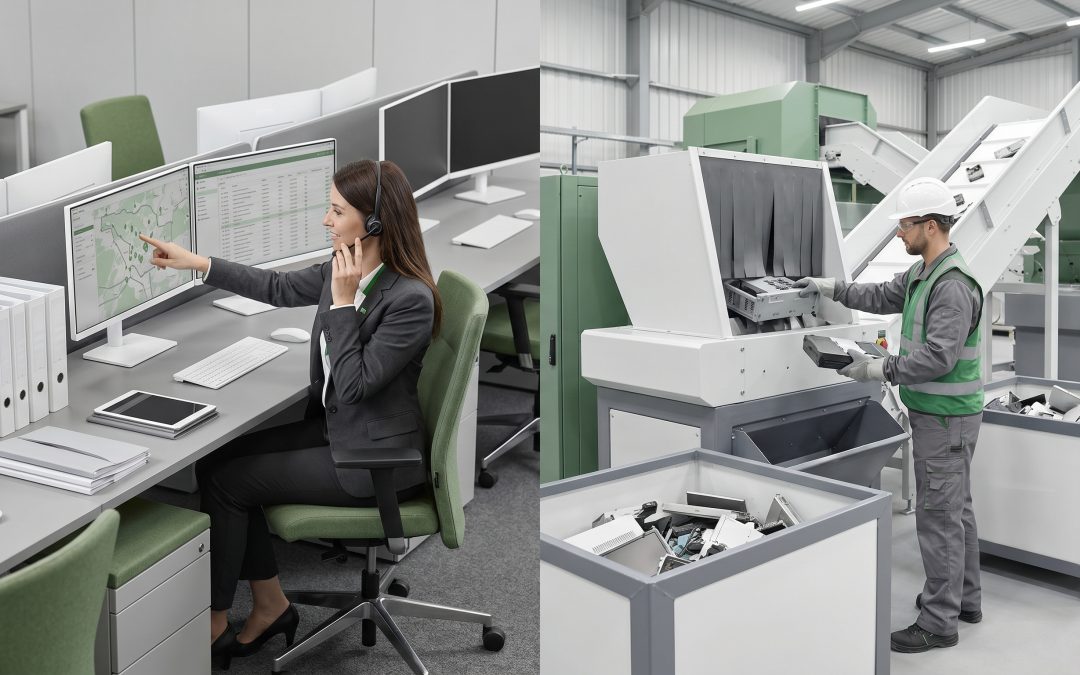
When arranging IT equipment disposal, you may encounter both e-waste brokers and direct recyclers. Understanding the difference between these two business models helps you make an informed decision about who handles your end-of-life equipment and how your data and materials are ultimately processed.
Direct Recyclers
A direct recycler owns and operates the processing facility where your equipment is physically broken down, data is destroyed, and materials are recovered. When you engage a direct recycler, your equipment goes to their facility and they perform the work themselves.
Advantages: You know exactly where your equipment is being processed. The recycler has direct accountability for data destruction and environmental compliance. There is no middleman adding cost or complexity. You can visit the facility and see the operation firsthand. And the chain of custody is simpler with fewer handoff points.
Disadvantages: A single recycler may not have capabilities across all equipment types. Their geographic coverage may be limited to the area around their facility. And their remarketing channels for reusable equipment may be less developed than a broker’s network.
E-Waste Brokers
A broker acts as an intermediary between your organisation and the recycling or remarketing operation. The broker collects your equipment and then directs it to various downstream processors based on the type of equipment and the best available disposition channel. Brokers typically do not own processing facilities.
Advantages: Brokers can access multiple downstream processors and select the best channel for each equipment type. They may offer broader geographic coverage by working with local processors in different regions. They can potentially achieve better value recovery by directing equipment to specialist buyers. And they provide a single point of contact even when multiple processors are involved.
Disadvantages: You have less visibility into where your equipment is actually processed. The broker adds a margin, increasing the total cost of the service. Chain of custody is more complex because equipment changes hands multiple times. And the broker’s assurances about downstream processing are only as good as their oversight of their partners.
Making the Choice
For organisations with high data security requirements, a direct recycler provides greater transparency and simpler chain of custody. You know exactly where your equipment is at every stage.
For organisations with diverse equipment types or multi-state operations, a broker may offer better coverage and channel optimisation. But insist on full downstream transparency, including the identity of every processor who handles your equipment and evidence of their certifications and compliance.
In either case, verify certifications, request facility visits, and ensure that data destruction documentation traces back to the actual facility where destruction occurred, not just the broker’s office.
EWV helps Victorian businesses manage e-waste and IT asset disposal compliantly and sustainably — including collection, certified data destruction, and recycling. Contact us for a free quote.