
Where Does E-Waste Actually Go?
When you hand over your old laptop or phone for recycling, you probably assume it gets processed locally. In many cases it does. But a significant volume of electronic waste generated in developed countries, including Australia, ends up being shipped to developing nations for processing. This global flow of e-waste raises serious ethical, environmental, and legal questions that every business generating electronic waste should understand.
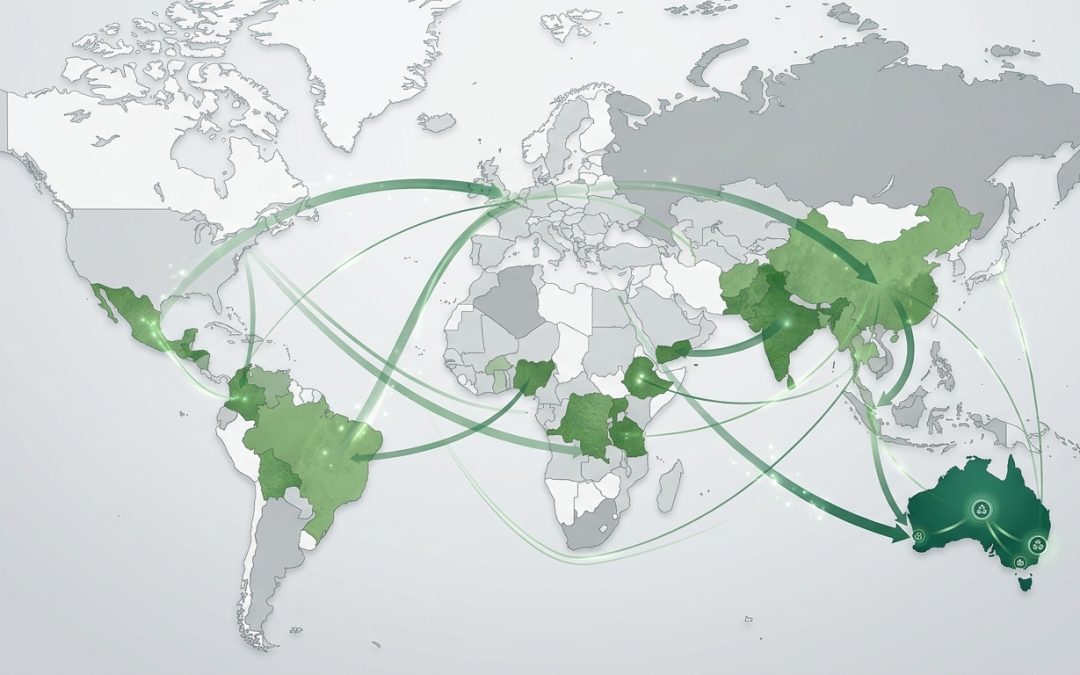
The scale of e-waste exports is difficult to measure precisely because much of it occurs through opaque channels or is mislabelled as “used goods” or “donations.” The UN estimates that millions of tonnes of e-waste are shipped internationally each year, with major flows moving from Europe, North America, and Oceania to West Africa, Southeast Asia, and parts of South Asia. Ghana, Nigeria, India, China (despite import bans), Vietnam, Thailand, and the Philippines are among the most significant receiving countries.
Why E-Waste Gets Exported
The economics are straightforward. Processing e-waste properly is expensive. It requires specialised equipment, trained workers, environmental controls, and regulatory compliance. In countries with high labour costs and strict environmental regulations, these costs are substantial. Exporting e-waste to countries with lower labour costs and less stringent enforcement is cheaper, creating a financial incentive that drives the trade.
Several mechanisms facilitate these exports:
Some material is legitimately exported as “used goods” for refurbishment and resale. When a three-year-old laptop is shipped to a market where it has genuine secondhand value, this represents a positive outcome, extending the device’s useful life. But this legitimate trade provides cover for exporting devices that have no practical remaining life and are destined for informal recycling rather than reuse.
Charitable “donations” of obsolete equipment sometimes function as waste export. Devices too old or damaged for productive use in the donating country are shipped to developing nations under the guise of bridging the digital divide. When these devices prove unusable, the receiving communities bear the cost and environmental burden of disposal.
Deliberate mislabelling of waste shipments as second-hand goods circumvents export regulations. Container loads of mixed, untested electronics are documented as functional used equipment to avoid waste export restrictions. Once they arrive at destination, the non-functional material enters informal processing streams.
What Happens at the Receiving End
In countries receiving significant e-waste flows, a substantial portion is processed through informal recycling operations. These operations typically lack the environmental controls, safety equipment, and processing technology used in formal recycling facilities. The consequences are severe:
Open burning is used to recover copper wire from cables and connectors. Burning plastic insulation releases dioxins, furans, and other toxic compounds into the air. In areas like Agbogbloshie in Accra, Ghana, one of the world’s largest informal e-waste processing sites, air quality monitoring has revealed toxic compound concentrations far exceeding safe exposure limits.
Acid leaching extracts gold and other precious metals from circuit boards. Workers use concentrated acids without protective equipment, and the spent acid, containing dissolved heavy metals, is discharged into soil and waterways. Soil and water sampling near informal processing sites consistently shows heavy metal contamination at levels that pose serious health risks.
Manual dismantling exposes workers to lead solder dust, mercury from switches and flat panel backlights, cadmium from batteries, and brominated flame retardants from plastics. Workers, including children in some locations, handle hazardous materials with bare hands and without respiratory protection.
The health impacts are documented and devastating. Studies of communities near informal e-waste sites show elevated blood lead levels in children, increased rates of respiratory disease, higher cancer incidence, and reproductive health effects. The environmental contamination affects soil fertility, water quality, and food safety in surrounding areas.
The Legal Framework
The Basel Convention on the Control of Transboundary Movements of Hazardous Wastes is the primary international agreement governing e-waste exports. Ratified by over 180 countries including Australia, the Convention restricts the export of hazardous waste from developed to developing countries and requires prior informed consent from receiving nations.
However, enforcement is challenging. The distinction between “used goods” (not covered by the Convention) and “waste” (covered) is often subjective and difficult to verify at the point of export. Containerised shipments may contain a mix of functional and non-functional equipment. And the volume of international trade makes it impossible to inspect every container.
Australia’s domestic e-waste regulations and the Hazardous Waste (Regulation of Exports and Imports) Act 1989 govern Australia’s obligations under the Basel Convention. Exporting hazardous e-waste without proper permits and consent from the receiving country is illegal, but the resources dedicated to enforcement are limited relative to the volume of potential non-compliant shipments.
What Businesses Should Do
For Australian businesses, the e-waste export problem has direct implications for how you choose to manage retired IT equipment:
Know your processor’s downstream chain. When you engage an e-waste recycler or ITAD provider, ask where material goes after initial processing. Reputable operators maintain transparency about their downstream processors and can demonstrate that material stays within regulated facilities. If a provider can’t or won’t answer these questions, that’s a significant red flag.
Look for certifications and audits. Certifications like R2 (Responsible Recycling) and e-Stewards include requirements for downstream vendor auditing and prohibitions or restrictions on exporting material to developing countries for informal processing. While no certification is perfect, they provide a framework for accountability.
Consider the full chain of custody. Data destruction documentation should track devices from collection to final disposition. If the chain of custody ends at “exported for processing” without specifics about the destination facility’s standards, your data security and environmental compliance may be compromised.
Support domestic processing. Choosing processors that handle material domestically within Australia’s regulatory framework ensures that your e-waste is managed under environmental and occupational health standards that protect workers and communities. This may cost more than the cheapest available option, but it’s the only way to ensure responsible outcomes.
The e-waste export problem is ultimately a systemic issue requiring international cooperation, stronger enforcement, and investment in processing capacity in both developed and developing countries. But individual business decisions about how e-waste is managed contribute to either perpetuating or addressing the problem. Choosing responsibly is both an ethical obligation and a practical risk management strategy.
EWV helps Victorian businesses manage e-waste and IT asset disposal compliantly and sustainably — including collection, certified data destruction, and recycling. Contact us for a free quote.