
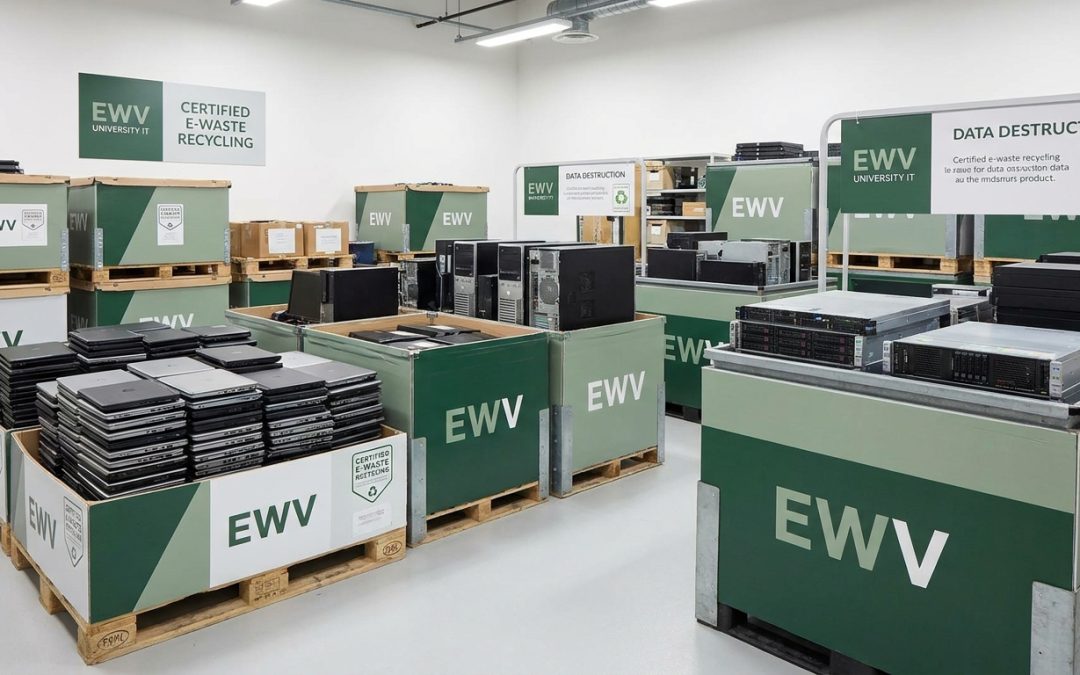
Educational institutions are among the largest generators of e-waste in any community. Schools, TAFEs, and universities operate hundreds to thousands of computing devices on rolling refresh cycles, producing a steady and significant stream of retired technology that needs responsible disposal. The combination of student data, large device volumes, and tight budgets makes e-waste management in education both important and challenging.
The Scale of the Challenge
A typical secondary school operates 300 to 800 computing devices including student laptops or Chromebooks, desktop computers in labs, teacher workstations, interactive whiteboards and projectors, printers and photocopiers, and networking infrastructure. Universities can have tens of thousands of devices across multiple campuses.
Most educational institutions refresh student devices every three to five years, meaning that a school with 500 laptops retires and replaces 100 to 170 devices annually. Multiply this across the thousands of schools in Australia and the volume of education-sector e-waste is enormous.
Data Security in Education
School devices frequently contain sensitive student information that is protected under both the Privacy Act 1988 and state-specific education regulations. Data on school devices can include student records (names, dates of birth, addresses, medical information), academic results and assessments, behavioural records and counselling notes, parent and guardian contact information, staff employment records, financial data (fee payments, payroll), and NAPLAN and standardised test data.
Student data is considered particularly sensitive because it involves minors whose information requires heightened protection. Schools have both a legal and ethical obligation to ensure that devices containing student data are securely wiped before leaving the school’s control.
Every device with storage, from laptops and desktops to printers with internal hard drives, should undergo certified data destruction before disposal, donation, or resale.
Common Approaches for Schools
ITAD Provider Partnership
The most comprehensive approach is partnering with a professional ITAD provider. The provider collects retired equipment, performs certified data destruction on all storage devices, refurbishes and remarkets viable equipment (returning value to the school), and responsibly recycles everything else.
For schools, the key benefit is that a good ITAD provider can offset disposal costs with resale revenue. Laptops that are three to four years old often still have meaningful resale value, and the proceeds can contribute to the budget for replacement devices.
Donation Programs
Many schools donate retired devices to charitable organisations that refurbish and redistribute technology. This is a positive approach but requires careful attention to data destruction before donation. Simply handing devices to a charity without wiping them first creates a data breach risk.
Some organisations, like Computer Bank and WorkVentures, accept bulk donations from schools and handle refurbishment and redistribution professionally. These organisations typically have processes for data wiping, but schools should still perform their own wipe before handover as a matter of policy.
Council or Government Programs
Some state education departments and local councils offer e-waste collection programs specifically for schools. In Victoria, the Department of Education provides guidance on IT asset disposal for government schools, including approved disposal methods and providers.
1:1 Device Programs and BYO Complications
The widespread adoption of 1:1 device programs (where every student has their own laptop or tablet) has dramatically increased the volume of e-waste from schools. These programs typically issue devices at the start of a student’s secondary schooling and retire them at the end, creating large batch disposals aligned with the school calendar.
Some schools allow students to keep their devices at the end of the program, which transfers the disposal responsibility to families. In these cases, schools should provide guidance to families on how to properly recycle the device when it eventually reaches end of life.
BYO (Bring Your Own Device) programs shift the disposal burden to families entirely, but schools may still need to handle centrally managed equipment like servers, networking gear, and shared devices.
Interactive Whiteboards and AV Equipment
The shift from traditional whiteboards to interactive displays, and then through several generations of interactive technology, has generated a specific stream of education e-waste. Retired interactive whiteboards, projectors, document cameras, and AV equipment all need proper recycling.
Interactive whiteboards and large touchscreen displays are essentially large monitors and should be recycled through the same channels. Projectors require attention to mercury-containing lamps in older models. AV receivers, amplifiers, and speakers contain standard electronic materials.
Building a School E-Waste Policy
Every educational institution should have a documented e-waste disposal policy that covers how devices are tracked through their lifecycle (asset register), when devices are retired (refresh cycle criteria), who is responsible for data destruction and how it is verified, which disposal channel is used (ITAD provider, donation, council), how disposal is documented for audit purposes, and how the policy applies to both centrally-managed and school-issued devices.
Having a clear policy ensures consistency, protects student and staff data, and makes it easier to manage the regular disposal events that occur as devices are refreshed.
For guidance on building a comprehensive IT disposal policy, see our guide to building an IT asset disposal policy for your organisation.
EWV helps Victorian businesses manage e-waste and IT asset disposal compliantly and sustainably — including collection, certified data destruction, and recycling. Contact us for a free quote.