
Why the Distinction Matters
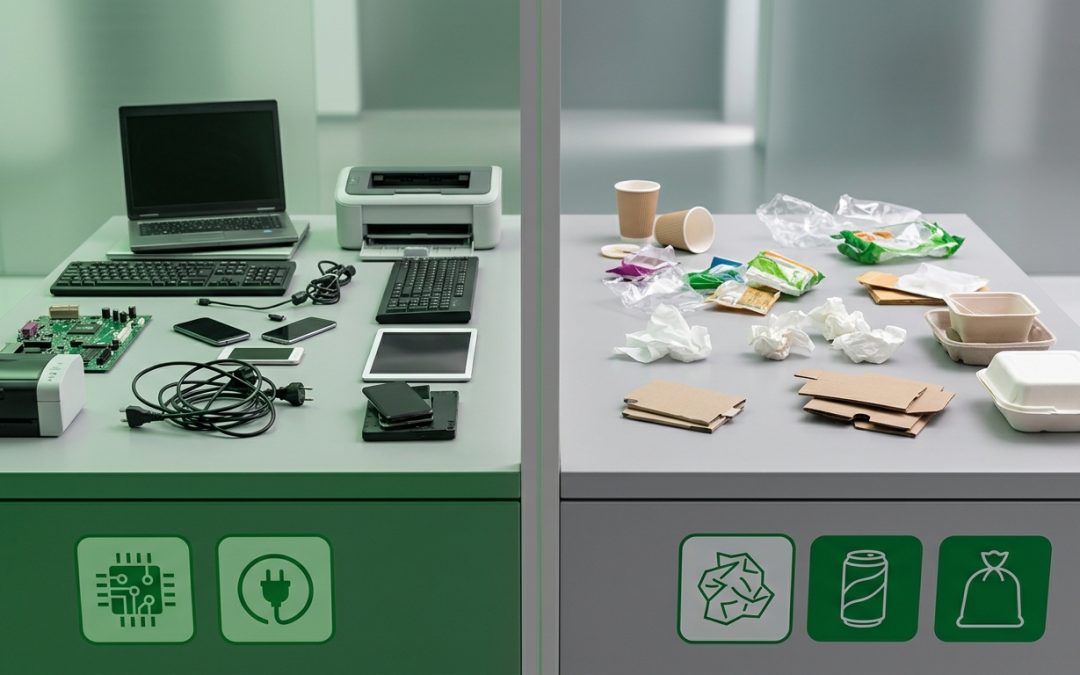
At first glance, the difference between e-waste and general waste seems obvious: e-waste is electronic, general waste is everything else. But in practice, the line isn’t always clear, and understanding why these two waste streams are handled differently helps explain the regulations, infrastructure, and effort that goes into keeping electronics out of landfill.
The distinction matters because e-waste contains both hazardous materials that can harm the environment and valuable materials that can be recovered. General waste, by contrast, is largely inert material heading for landfill or basic processing. Mixing e-waste into the general waste stream creates environmental risks and wastes recoverable resources.
What Makes E-Waste Different
Hazardous content. Electronic devices contain materials that are safely contained during normal use but become hazardous when devices break down in landfill or are crushed in waste processing. Lead in solder and CRT glass, mercury in older display backlights, cadmium in certain batteries, brominated flame retardants in plastics, and lithium-ion batteries that can cause fires are all present in the e-waste stream but absent from typical general waste.
Valuable recoverable materials. Electronics contain gold, silver, platinum, palladium, copper, aluminium, and other metals at concentrations that often exceed those found in natural ore deposits. A tonne of mobile phone circuit boards contains more gold than a tonne of gold ore. These materials can be recovered through proper recycling and returned to manufacturing supply chains, reducing the need for environmentally destructive mining.
Data security implications. Unlike general waste, many e-waste items contain storage media with personal or business data. A discarded hard drive, phone, or USB stick carries information that can be recovered and exploited if the device isn’t properly sanitised before disposal. General waste doesn’t present this risk.
Complexity. A single electronic device may contain dozens of different materials including metals, plastics, glass, ceramics, and chemical compounds. Effectively recycling these materials requires specialised disassembly and processing that general waste facilities aren’t equipped to perform.
General waste: largely inert, low contamination risk, limited recovery value, processed through standard waste facilities
E-waste: contains hazardous materials, high recovery value, requires specialist processing, data security concerns, legally banned from Victorian landfill
The Legal Difference in Victoria
In Victoria, the distinction between e-waste and general waste has legal force. Since 1 July 2019, e-waste has been banned from landfill. This means any item that meets the definition of e-waste (essentially, anything with a plug, battery, or electrical cord) must be directed to appropriate recycling or processing facilities rather than disposed of through general waste channels.
The ban applies to households, businesses, and institutions alike. Putting e-waste in your general waste bin technically violates this regulation. While enforcement primarily targets large-scale violations rather than individual households, the ban reflects the scientific and environmental consensus that e-waste is fundamentally different from general waste and needs separate management.
Other Australian states are at various stages of considering or implementing similar measures. The trend is clearly toward treating e-waste as a distinct regulated waste stream nationwide, consistent with practice in the EU, parts of Asia, and other developed economies.
Grey Areas
Some items fall into grey areas between e-waste and general waste:
Items with very small electronic components. A greeting card with an embedded sound chip, a children’s toy with a simple LED, or a piece of clothing with a sewn-in LED light all technically contain electronic components. In practice, these are often handled as general waste because the electronic content is minimal, but strictly speaking, any item containing a battery or electronic circuit is e-waste.
Appliances with both electronic and non-electronic components. A gas stove with an electronic ignition, or a manual tool with a battery-powered laser level, contains electronic elements within a primarily non-electronic item. These are generally treated as e-waste because of the electronic components.
Cables and connectors without active electronics. A simple extension cord or unpowered audio cable doesn’t contain circuit boards or batteries, but it’s still treated as e-waste because of the copper and plastic content that should be recycled rather than landfilled.
When in doubt, treat the item as e-waste and take it to an e-waste collection point. Recycling facilities can sort items appropriately, while general waste facilities can’t recover materials from electronics mixed into the general stream.
Why Mixing Matters
When e-waste enters the general waste stream, several bad outcomes occur:
Contamination. Hazardous materials from electronics contaminate the general waste mass. Lead, mercury, and other toxic substances leach into landfill leachate and potentially into groundwater.
Fire risk. Lithium-ion batteries crushed in waste trucks or compacted at landfill sites cause fires. These fires are expensive, dangerous, and release toxic smoke. Battery-related waste fires are one of the fastest-growing safety challenges in the waste industry.
Lost resources. Every phone, computer, or appliance that goes to landfill takes its valuable materials with it. Gold, copper, rare earths, and other resources are lost when they could have been recovered and reused.
Legal non-compliance. In Victoria and increasingly in other jurisdictions, disposing of e-waste through general waste channels violates regulations.
Making It Easy
The simplest way to keep e-waste out of general waste is the “plug, battery, or cord” test. Before throwing anything away, ask: does this item have a plug, contain a battery, or have an electrical cord? If yes, it’s e-waste and needs to go to a proper recycling point.
At home, keep a small collection box for e-waste and empty it at a drop-off point when it’s full. At work, set up a dedicated e-waste bin. The habit takes almost no extra effort once established, and it ensures that electronic waste reaches facilities equipped to handle it safely and extract its valuable materials.
EWV helps Victorian businesses manage e-waste and IT asset disposal compliantly and sustainably — including collection, certified data destruction, and recycling. Contact us for a free quote.