
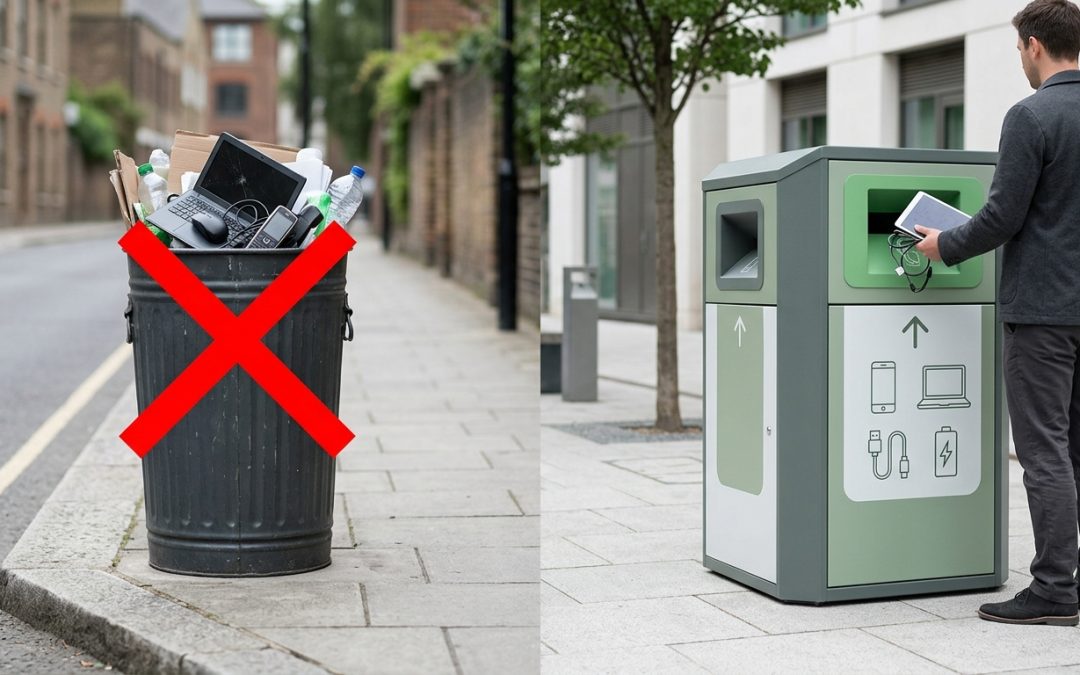
The Short Answer: No
If you live in Victoria, the answer is clear: electronic waste cannot go in your council bins. Not the general waste bin, not the recycling bin, not the green waste bin. Since 1 July 2019, Victoria’s e-waste landfill ban has made it illegal to dispose of electronic items through general waste streams. This ban exists because electronics contain hazardous materials that don’t belong in landfill and valuable materials that should be recovered through proper recycling.
Even if you live outside Victoria in a state without a specific e-waste landfill ban, putting electronics in your council bins is still problematic. Most council waste systems aren’t designed to handle electronics safely, and doing so contaminates other waste streams and risks damaging collection equipment.
Why Electronics Can’t Go in General Waste
Electronic devices contain a cocktail of materials that create problems in landfill. Lead in older solder and CRT monitors leaches into groundwater. Mercury in some backlights and switches is toxic even in tiny quantities. Cadmium in certain batteries and semiconductors is a known carcinogen. Brominated flame retardants in plastics persist in the environment and accumulate in food chains.
When electronics sit in landfill, rainwater percolating through the waste dissolves these substances and carries them into surrounding soil and groundwater. Modern landfills have liner systems designed to prevent this, but no liner lasts forever, and many older landfill sites have minimal containment.
Beyond the hazardous materials, electronics in general waste bins can cause immediate problems. Lithium-ion batteries are a major fire risk in waste collection trucks and processing facilities. When crushed or punctured in a compactor truck, lithium batteries can short-circuit, generating intense heat that ignites surrounding waste. Waste facility fires caused by batteries are increasing across Australia and globally.
What About the Recycling Bin?
Your yellow-lid recycling bin is designed for specific materials: paper, cardboard, glass bottles and jars, steel and aluminium cans, and certain plastics (typically types 1, 2, and 5). Electronics do not belong in kerbside recycling for several reasons:
Electronics are made of complex mixed materials that can’t be separated by the sorting equipment at Materials Recovery Facilities (MRFs). A phone or circuit board passing through a paper sorting line contaminates the paper stream. Metals from electronics contaminate glass streams. The processing equipment isn’t designed to handle hard, complex items like electronics and can be damaged by them.
Even small electronics like phone chargers, cables, and earbuds cause problems. Cables wrap around sorting machinery, causing jams and shutdowns. This is already one of the most common contamination problems at Australian MRFs, and adding electronic items makes it worse.
What Counts as E-Waste?
The e-waste ban covers more items than you might expect. Essentially, anything with a plug, battery, or electrical cord is e-waste. This includes:
Obvious items like computers, laptops, tablets, smartphones, printers, monitors, and televisions. But it also covers smaller items that people commonly throw in the bin: electric toothbrushes, battery-powered toys, LED light bulbs, smoke detectors, remote controls, old phone chargers, USB cables, broken earbuds, and electric razors.
Kitchen electronics count too: toasters, kettles, microwaves, food processors, and coffee machines. So do tools: cordless drills, electric lawnmowers, and battery-powered garden equipment. If it uses electricity in any form, it’s e-waste and needs proper handling.
Where to Take Your E-Waste Instead
Victoria has established several convenient options for disposing of e-waste properly:
Council transfer stations and resource recovery centres. Most Victorian councils operate facilities that accept e-waste for free from residents. Check your local council’s website for locations, opening hours, and any restrictions on the types or volumes they accept.
Council hard waste collections. Many councils include e-waste acceptance in their regular hard waste collection services, either as scheduled collections or on-demand bookings. This is one of the most convenient options because items are collected from your property.
Dedicated e-waste drop-off events. Some councils run specific e-waste collection events at convenient locations like shopping centres or community centres. These are often well-publicised through council newsletters and social media.
Retailer take-back. Many electronics retailers accept old devices when you purchase replacements. Some offer permanent collection bins for small e-waste items like batteries, phones, and cables.
Battery-specific collection. Batteries can be dropped at dedicated battery recycling points, commonly found at supermarkets, hardware stores, and libraries. B-cycle is Australia’s official battery recycling scheme, with thousands of collection points across the country.
What About Small Items?
People often feel uncertain about small electronic items. A dead AAA battery, a broken pair of earbuds, a single old phone cable. It feels excessive to make a special trip to a recycling point for something so small. But these items genuinely don’t belong in your bins.
A practical approach is to set up a small collection container at home, a shoebox or small tub where you accumulate small e-waste items. When it’s full, or when you’re making a trip to the tip or a drop-off point anyway, take the box along. This batches up the small items so you’re not making dedicated trips for individual batteries.
Some councils and retailers provide specific collection options for small e-waste. Officeworks stores, for example, accept a range of small electronics and batteries for recycling. Libraries, Aldi stores, and other community locations often have battery collection points through the B-cycle scheme.
The Penalty for Non-Compliance
Victoria’s e-waste ban is enforceable, and the EPA Victoria can issue penalties for illegal disposal of e-waste. While enforcement primarily targets businesses and large-scale illegal dumping rather than individual householders, the regulations apply to everyone. More importantly, the ban exists for good environmental and safety reasons. The few minutes it takes to separate e-waste from general rubbish prevents hazardous materials entering landfill and ensures valuable materials get recovered through proper recycling channels.
If you’re unsure about the best disposal option for a specific item, your local council’s waste information line or website is the best first point of contact. They can direct you to the most convenient collection option for your area and the items you need to dispose of.
EWV helps Victorian businesses manage e-waste and IT asset disposal compliantly and sustainably — including collection, certified data destruction, and recycling. Contact us for a free quote.