
The Energy Recovery Debate
When electronic waste can’t be reused or economically recycled, what should happen to it? One option that generates significant debate is energy recovery through incineration, also known as waste-to-energy (WtE). Proponents argue that burning non-recyclable e-waste fractions to generate electricity or heat is better than landfilling. Critics counter that incineration destroys valuable materials, releases harmful emissions, and undermines incentives for proper recycling. The truth sits somewhere in between, and understanding the nuances matters for making informed decisions about e-waste management.
This is particularly relevant in Australia, where waste-to-energy policy is evolving at both state and federal levels, and where the environmental credentials of different e-waste processing pathways are increasingly scrutinised by regulators and corporate sustainability frameworks.
How E-Waste Incineration Works
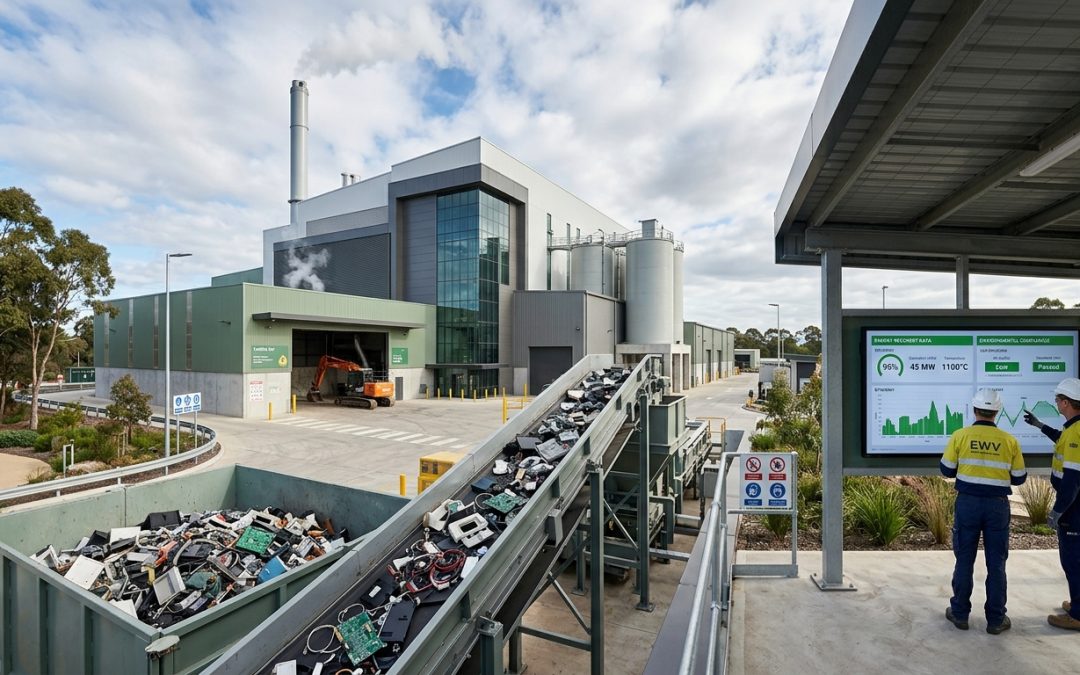
Modern waste-to-energy facilities are fundamentally different from the open-burning incinerators of previous decades. Contemporary WtE plants operate at high temperatures (typically 850-1,100°C), use sophisticated emissions control systems, and capture the thermal energy to generate electricity or supply district heating networks.
For e-waste specifically, incineration typically applies to non-recyclable fractions that remain after valuable components and materials have been removed. This includes mixed plastics contaminated with flame retardants, composite materials that can’t be economically separated, and residual material from shredding operations. The goal is to recover energy from material that would otherwise go to landfill, while destroying organic pollutants through high-temperature combustion.
The process generates ash residues: bottom ash (the solid residue from combustion, which may contain recoverable metals) and fly ash (fine particles captured by emissions control systems, which often contain concentrated heavy metals and require hazardous waste treatment). Managing these residues properly is a critical part of the process.
The Case For Energy Recovery
When applied to genuinely non-recyclable e-waste fractions, energy recovery offers several advantages over landfill:
Volume reduction. Incineration reduces waste volume by approximately 90%, significantly extending landfill capacity. For countries and regions with limited landfill space, this is a meaningful consideration.
Energy generation. The calorific value of plastics in e-waste is comparable to some fossil fuels. Capturing this energy for electricity generation or heating offsets some fossil fuel consumption, though the carbon accounting is complex because the energy content comes from petroleum-derived plastics.
Destruction of hazardous organic compounds. High-temperature incineration can destroy persistent organic pollutants including brominated flame retardants, PCBs, and other hazardous organic substances that are difficult to manage through other disposal methods. At temperatures above 1,100°C with sufficient residence time and oxygen, these compounds are effectively destroyed.
Metal recovery from ash. Bottom ash from e-waste incineration can contain recoverable metals, including copper, iron, aluminium, and precious metals. Post-incineration metal recovery from ash is an established practice that captures materials that might otherwise be lost in mixed waste.
The Case Against
The arguments against e-waste incineration are substantial and should be weighed carefully:
Permanent material loss. Burning plastics and other materials destroys them permanently, removing them from the circular economy. Unlike recycling, which keeps materials in productive use, incineration is a one-way process. The embodied energy, water, and resources that went into producing those materials are irretrievably lost.
Emissions concerns. Even with modern emissions control, incineration releases CO2 (from fossil-derived plastics), trace amounts of heavy metals, and potentially dioxins and furans if combustion conditions aren’t perfectly maintained. While modern facilities emit far less than uncontrolled burning, they still contribute to air pollution, particularly in regions that are already managing air quality challenges.
Undermining recycling incentives. If energy recovery is too readily available and too cheaply accessible, it can reduce the economic incentive to invest in better recycling technology and higher recovery rates. Why develop expensive processes to recycle difficult plastics if they can simply be burned? This perverse incentive effect is a genuine concern in waste management policy.
Community opposition. WtE facilities face significant community resistance, particularly from nearby residents concerned about emissions, truck traffic, and property values. This social dimension adds cost and complexity to developing new facilities, and the burden often falls disproportionately on disadvantaged communities.
The Australian Context
Australia’s approach to waste-to-energy varies by state. Western Australia has been the most active in developing WtE capacity, with facilities under construction and operational. Victoria has taken a more cautious approach, maintaining strict assessment requirements for proposed WtE facilities and emphasising that energy recovery should only apply to residual waste that cannot be recycled.
Victoria’s e-waste landfill ban increases the relevance of the energy recovery question. If e-waste can’t go to landfill and certain fractions can’t be economically recycled, energy recovery may be the remaining option for some material streams. However, the EPA Victoria maintains that the waste hierarchy should be applied rigorously, with energy recovery genuinely limited to material where higher-value options have been exhausted.
Where Should Businesses Stand?
For businesses managing IT equipment disposal, the energy recovery debate is somewhat academic because the vast majority of e-waste components have higher-value processing pathways. Metals should be recycled. Intact devices should be refurbished. Circuit boards should go to precious metals recovery. Batteries should go to specialised battery recycling.
Energy recovery enters the picture for the small fraction of material, typically contaminated plastics and mixed composites, that genuinely has no viable recycling pathway. A responsible ITAD provider or e-waste processor should be able to articulate clearly what percentage of collected material goes to each processing pathway, including energy recovery.
The key principle is the waste hierarchy: maximise reuse and recycling, and only consider energy recovery for the residual fraction. If a processor is sending significant volumes to energy recovery that could have been recycled, they’re not applying best practice. And if material is going to landfill that could have gone to energy recovery, that’s even worse.
The energy recovery question doesn’t have a simple yes-or-no answer. It’s a legitimate last-resort option for material that has genuinely exhausted higher-value pathways, but it should never be used as an excuse to avoid investing in better recycling solutions. The goal remains keeping materials circulating in the economy for as long as possible.
EWV provides e-waste collection and recycling for Victorian businesses, responsibly processing electronic equipment through certified downstream partners. Book a collection to keep your e-waste out of landfill.