
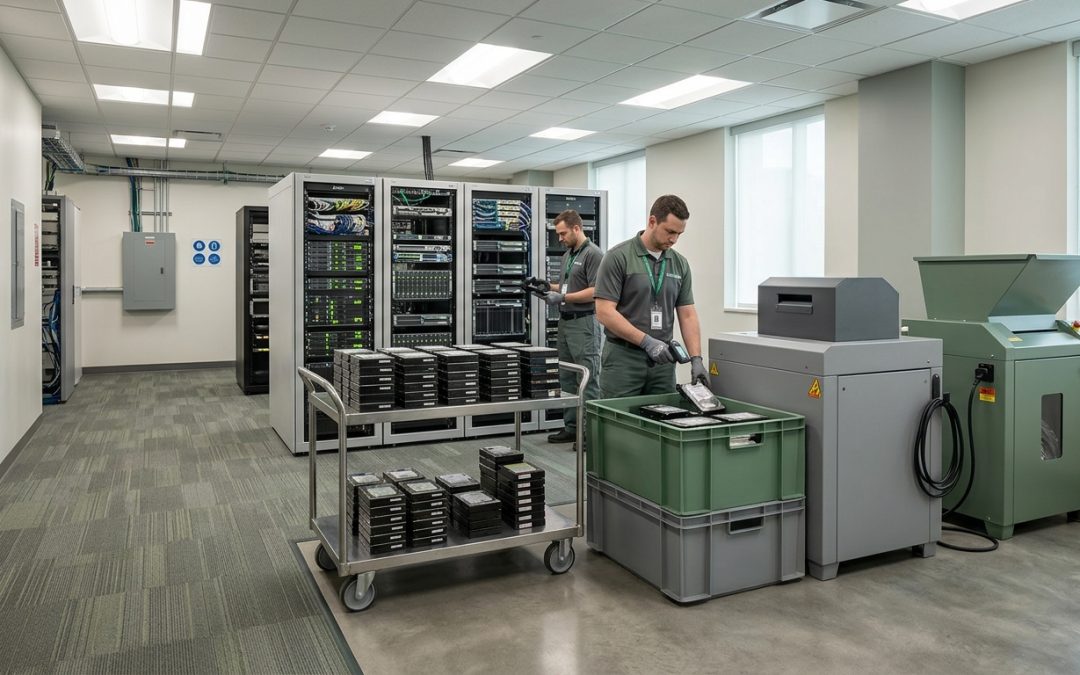
Safeguarding Patient Data at Every Stage
Healthcare organisations hold some of the most sensitive personal information in existence. Patient records contain medical histories, diagnoses, test results, mental health notes, genetic information, and billing details. The trust that patients place in healthcare providers to protect this information extends to the end of life of the IT equipment that stores it. Improper data destruction in healthcare is not just a regulatory issue. It is a fundamental breach of the duty of care that underpins the entire healthcare relationship.
The Regulatory Landscape for Healthcare Data
Healthcare data destruction in Australia is governed by multiple overlapping regulatory frameworks. The Privacy Act 1988 (Cth) and the Australian Privacy Principles (APPs) provide the baseline requirements for handling personal information, including health information. APP 11 requires organisations to take reasonable steps to destroy or de-identify personal information when it is no longer needed.
State health records legislation adds another layer. In Victoria, the Health Records Act 2001 imposes specific obligations on health service providers regarding the handling, storage, and destruction of health information. The Health Privacy Principles under this Act mirror and in some cases exceed the requirements of the federal APPs.
Professional registration bodies, such as AHPRA (Australian Health Practitioner Regulation Agency), set standards that registered health practitioners must follow, including requirements around record keeping and destruction. Medical defence organisations also provide guidance that practitioners are expected to follow.
Retention Requirements Before Destruction
Healthcare data cannot be destroyed at will. Specific retention periods apply depending on the type of record and the jurisdiction.
In Victoria, the general requirement is to retain health records for a minimum of seven years from the date of last service for adult patients. For records created when the patient was a minor, the retention period extends until the patient reaches 25 years of age. Records relating to mental health treatment may have extended retention requirements under the Mental Health Act.
Records related to surgical procedures, particularly where medical devices were implanted, may need to be retained for longer periods to support device tracking and recall processes. Records involved in ongoing or anticipated legal proceedings must be preserved until the proceedings are resolved, regardless of the standard retention period.
Before any healthcare IT equipment is approved for data destruction, a thorough review of these retention requirements is essential. Destroying patient records prematurely can have serious legal and professional consequences.
Types of Healthcare IT Equipment
Healthcare environments contain a wide range of data-bearing IT equipment that must be addressed during disposal. Electronic medical record (EMR) servers and workstations store the most comprehensive patient data sets. Diagnostic imaging equipment (MRI scanners, CT scanners, X-ray systems, ultrasound machines) contains patient images and associated demographic data. Patient monitoring systems store vital sign recordings and alarm histories.
Laboratory analysers store test results linked to patient identifiers. Pharmacy dispensing systems contain medication records and patient profiles. Billing and administration systems hold patient demographic and financial data. Mobile devices used by clinicians for bedside charting or communication may contain cached patient data. And telehealth platforms and recording systems may store consultation recordings.
Each of these equipment types has different storage architectures and requires appropriate sanitisation methods. For detailed guidance on medical device disposal, see our article on medical device data destruction requirements.
DICOM and Imaging Data
Medical imaging data managed through the DICOM standard and stored in Picture Archiving and Communication Systems (PACS) presents particular challenges. Imaging workstations may cache images locally. Imaging devices maintain internal databases of studies performed. CDs or DVDs provided to patients or referring practitioners contain copies of images. And portable imaging devices may store images on removable media or internal flash storage.
Before disposing of any imaging equipment, verify that all images have been successfully archived to the PACS or another permanent storage system. Then sanitise the local storage on the imaging device using NIST 800-88 compliant methods.
Accreditation and Audit Implications
Healthcare organisations in Australia are subject to accreditation processes, including the National Safety and Quality Health Service (NSQHS) Standards administered by the Australian Commission on Safety and Quality in Health Care. These standards include requirements for information governance that extend to data destruction.
Accreditation auditors may request evidence that the organisation has policies and procedures for secure data destruction, that staff are trained in these procedures, and that destruction activities are properly documented. Certificates of destruction should be retained as part of the organisation’s quality management records.
Destruction Methods for Healthcare
Given the high sensitivity of health information, healthcare organisations should apply stringent destruction standards. For storage drives (HDDs, SSDs), NIST 800-88 Purge-level sanitisation is recommended as the minimum standard. For equipment containing particularly sensitive data (mental health records, genetic information, child protection records), physical destruction provides the highest assurance.
All destruction should be documented with certificates that can be produced for accreditation audits, regulatory inquiries, and freedom of information requests.
Patients trust healthcare organisations with their most personal information. Ensuring that trust is honoured through proper data destruction at end of life is both a legal obligation and a professional responsibility. For a broader view of the regulatory framework, see our guide to e-waste laws and regulations in Australia.
EWV provides NIST 800-88 certified data destruction for Victorian businesses, covering software-based erasure and physical destruction with full chain-of-custody documentation. Request a quote to discuss your requirements.