
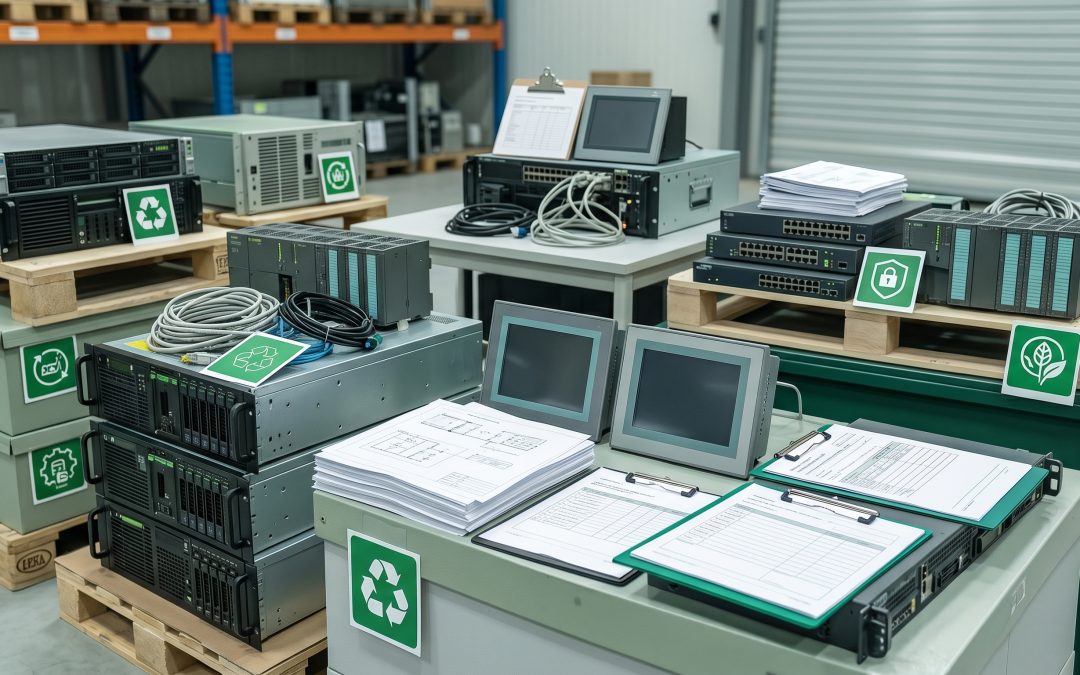
Industrial control systems sit at the heart of manufacturing plants, water treatment facilities, power grids, and countless other critical infrastructure environments. When these systems reach end of life, disposing of them safely presents a unique set of data security challenges that many organisations overlook.
What Makes ICS Disposal Different
Unlike standard IT equipment, industrial control systems often contain programmable logic controllers (PLCs), human-machine interfaces (HMIs), SCADA servers, and embedded devices with firmware that stores operational data. This data can include network configurations, process parameters, access credentials, and detailed information about how critical infrastructure operates.
The risk is not just about personal data. ICS components can reveal vulnerabilities in operational technology (OT) networks, making improper disposal a potential national security concern. If threat actors obtain decommissioned ICS hardware with intact configurations, they gain a blueprint for attacking similar systems still in production.
Types of Data Stored on ICS Components
Industrial control systems accumulate more sensitive data than most people realise. PLCs store ladder logic programs and process recipes that represent significant intellectual property. HMI terminals retain operator credentials, alarm histories, and network topology maps. Historian servers hold years of operational data that can reveal production volumes, efficiency metrics, and system weaknesses.
SCADA systems are particularly concerning because they often contain remote access configurations, VPN credentials, and communication protocols for field devices spread across wide geographic areas. Even seemingly simple components like network switches in OT environments may store VLAN configurations and access control lists that map out the entire industrial network.
Challenges Specific to ICS Decommissioning
Standard data destruction methods designed for conventional IT hardware do not always translate directly to industrial environments. Many ICS components use proprietary storage formats, embedded flash memory, or specialised firmware that resists conventional wiping tools. Some PLCs lack any built-in mechanism for secure data erasure, meaning physical destruction may be the only reliable option.
There is also the issue of interconnected systems. Industrial environments often run legacy protocols and have devices that have been operational for 15 to 20 years or more. Decommissioning one component without understanding its connections to other systems can create both operational risks and data security gaps.
Regulatory frameworks add another layer of complexity. Organisations operating critical infrastructure in Australia must consider obligations under the Security of Critical Infrastructure Act 2018 alongside standard privacy and environmental regulations.
Best Practices for Secure ICS Disposal
A thorough asset inventory is the essential first step. Before any ICS component leaves the facility, document every device, its storage capabilities, the types of data it holds, and its network connections. Many organisations discover during decommissioning that they have devices on their network they did not know about.
For devices with standard storage media like hard drives or SSDs, follow established data sanitisation standards such as NIST 800-88. For embedded systems and PLCs where software-based wiping is not feasible, physical destruction through shredding or degaussing (for magnetic media) provides the necessary assurance.
Engage disposal providers who understand OT environments specifically. The skill set required to safely decommission industrial control systems differs from standard IT asset disposition. Look for providers with experience in critical infrastructure sectors and appropriate security clearances where required.
Documentation and Chain of Custody
Given the sensitivity of ICS data, maintaining a strict chain of custody throughout the disposal process is non-negotiable. Every component should be tracked from the moment it is disconnected through to final destruction or certification of data sanitisation. Certificates of destruction should reference specific device serial numbers and the sanitisation method used.
For organisations subject to critical infrastructure regulations, this documentation may need to be retained for audit purposes. It also serves as evidence of due diligence if questions arise later about how decommissioned systems were handled.
The Growing Challenge
As industrial environments become more connected through Industry 4.0 initiatives and IoT integration, the volume of data stored on ICS components continues to grow. Edge computing devices in factories, smart sensors on production lines, and AI-driven quality control systems all create new categories of equipment that will eventually need secure disposal.
Organisations investing in industrial automation today should build disposal and decommissioning planning into their procurement process from the start, rather than treating it as an afterthought when systems reach end of life.
EWV helps Victorian businesses manage e-waste and IT asset disposal compliantly and sustainably — including collection, certified data destruction, and recycling. Contact us for a free quote.