
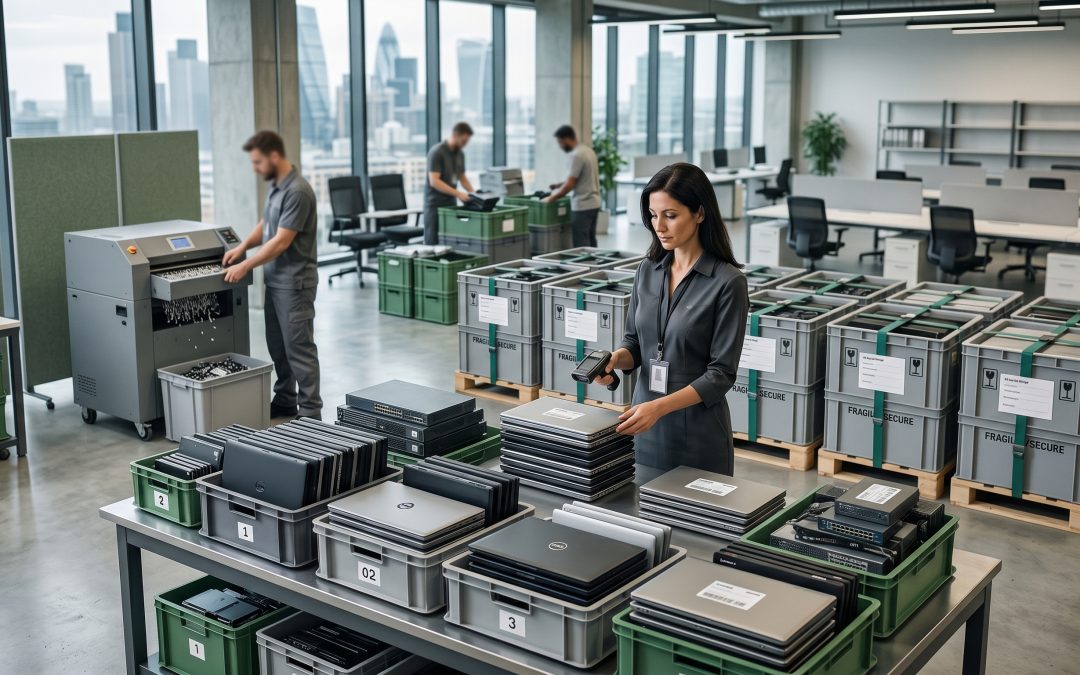
The Cross-Border Complexity of International IT Disposal
Closing an international office involves navigating a web of data protection requirements that extend well beyond those of a domestic closure. Each country has its own privacy legislation, data residency rules, and equipment disposal standards. IT equipment at an overseas office may contain data from multiple jurisdictions, subject to different and sometimes conflicting legal requirements. Getting this wrong can result in regulatory penalties in multiple countries simultaneously.
Australian businesses with international offices, whether in Southeast Asia, Europe, North America, or elsewhere, must consider the privacy laws of both the host country and Australia when disposing of IT equipment. Data collected from Australian customers that was processed at an overseas office remains subject to the Australian Privacy Act, while the local jurisdiction adds its own layer of requirements.
Jurisdictional Challenges
The European Union’s General Data Protection Regulation (GDPR) imposes strict requirements on data destruction, including the right to erasure and specific obligations around demonstrating that data has been properly destroyed. Closing an office in an EU member state requires GDPR-compliant data destruction regardless of the parent company’s location.
Asian jurisdictions have varying levels of data protection legislation. Singapore’s Personal Data Protection Act (PDPA), Japan’s Act on Protection of Personal Information (APPI), and similar frameworks across the region each have their own requirements for data disposal. Some jurisdictions require that certain types of data be destroyed within the country rather than transported elsewhere for destruction.
Data residency requirements in some countries prohibit the removal of certain data from the jurisdiction without specific consent or regulatory approval. This can affect whether IT equipment can be shipped back to Australia for centralised data destruction or must be processed locally.
Cross-border data transfer restrictions may limit the ability to migrate data from the closing office to servers in other countries. If data cannot be transferred, it may need to be destroyed locally, requiring engagement of local ITAD services.
Planning International Office IT Disposal
Begin planning IT equipment disposal as soon as the office closure decision is made. The lead time required for international disposal is significantly longer than domestic, due to the need to research local legal requirements, engage local service providers, and coordinate logistics across time zones.
Engage local legal counsel in the host country to advise on data destruction obligations specific to that jurisdiction. Local counsel can identify requirements that may not be apparent from an Australian perspective, including industry-specific regulations, employment data retention rules, and any notification requirements that apply to data destruction activities.
Determine whether equipment can be shipped back to Australia for centralised processing or must be handled locally. Factors to consider include data residency restrictions, customs requirements for shipping used electronics, the cost and logistics of international shipping, and whether the equipment has residual value that would be better realised in the local market.
For equipment that must be processed locally, identify certified ITAD providers in the host country. Look for providers with internationally recognised certifications such as R2, e-Stewards, or ISO 27001, which provide assurance of consistent standards regardless of location.
Data Classification and Handling
Before disposing of any equipment, conduct a thorough data classification exercise. Identify what data is stored on each device, which jurisdictions that data relates to, and what legal requirements apply to its destruction.
Data from Australian customers processed overseas remains subject to the Australian Privacy Act, including the obligation to take reasonable steps to destroy it when no longer needed. If the host country has stricter requirements, the stricter standard applies.
Employee data from local staff at the international office is subject to the host country’s employment and privacy laws. Some jurisdictions require that employment records be retained for specified periods even after the employment relationship ends and the office closes.
Business data including contracts, financial records, and operational information may be subject to local record retention requirements. Tax authorities in the host country may require access to financial records for several years after the office closes, necessitating secure archival rather than immediate destruction.
Logistics and Chain of Custody
Maintaining chain of custody for IT equipment during an international office closure is more challenging than domestic operations. Equipment may need to be transported between facilities, handed to local service providers, or shipped internationally. At each transition point, the chain of custody must be documented.
For equipment being shipped internationally, use secure, tracked logistics with appropriate customs documentation. Declare the contents accurately on customs forms, as incorrectly classified shipments may be held at borders or subjected to inspection that could compromise data security.
If equipment is being processed locally, establish clear handover procedures with the local ITAD provider. The handover should include a detailed inventory, documented condition assessment, and agreement on destruction standards and documentation requirements.
Working with Local ITAD Providers
When engaging ITAD providers in overseas markets, verify their credentials carefully. Certifications that are standard in Australia may not exist in all markets, and the quality of data destruction services varies significantly between providers and regions.
Request references from other international clients who have used the provider for office closure projects. A provider experienced in handling international disposals will understand the documentation requirements, compliance standards, and logistical challenges involved.
Specify that certificates of destruction must include sufficient detail to satisfy both local and Australian regulatory requirements. The certificate should document the destruction method, the date, the equipment details, and verification that the process was completed successfully.
Documentation for Cross-Border Compliance
Maintain comprehensive documentation of the entire disposal process, from the initial inventory through to final destruction certificates. This documentation should be retained in a location accessible to the Australian parent entity and should be sufficient to demonstrate compliance with the privacy and data protection requirements of every jurisdiction involved.
Consider having local legal counsel review the destruction documentation to confirm it meets local requirements. A sign-off from local counsel provides an additional layer of assurance that the disposal process has been handled correctly under the laws of the host country.
International office closures are complex undertakings, and data disposal is just one of many workstreams that need to be managed simultaneously. However, the consequences of getting data disposal wrong across multiple jurisdictions can be severe. Investing the time and resources to handle it properly protects the organisation from regulatory action, reputational damage, and the lasting complications of a cross-border data breach.
EWV helps Victorian businesses manage e-waste and IT asset disposal compliantly and sustainably — including collection, certified data destruction, and recycling. Contact us for a free quote.