
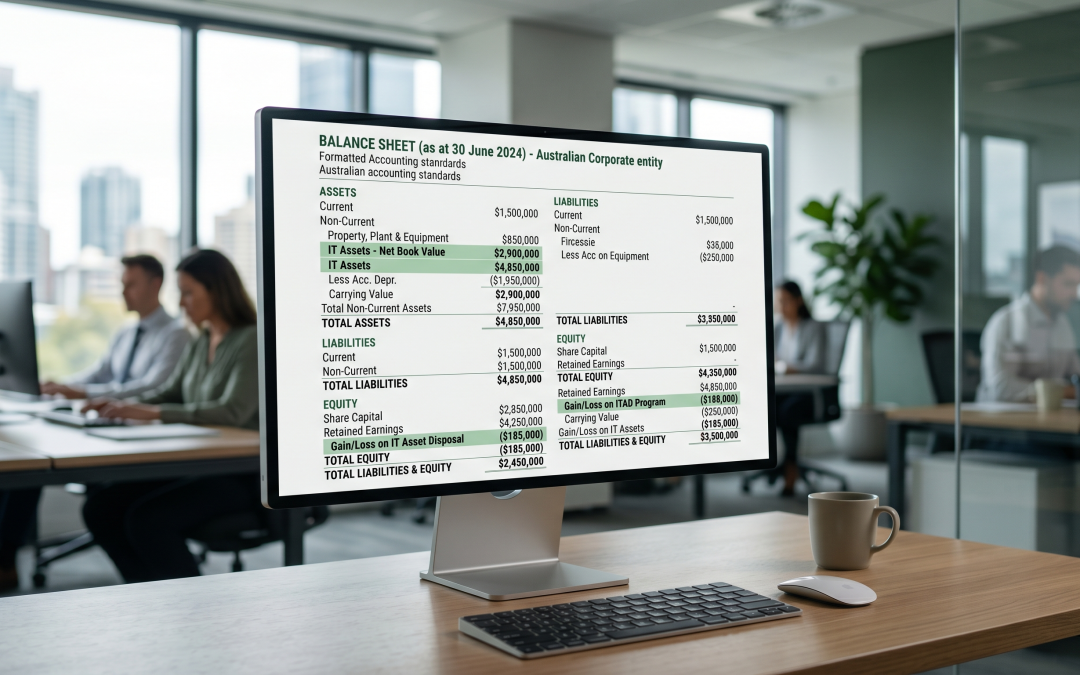
IT asset disposition has direct implications for your organisation’s balance sheet that are often overlooked by both IT and finance teams. From asset write-downs and disposal gains to value recovery income and contingent liabilities, ITAD transactions flow through your financial statements in ways that affect reported performance and financial position.
Fixed Asset Accounting
IT equipment typically sits on your balance sheet as a fixed asset, carried at its depreciated book value. When equipment is disposed of, it must be removed from the balance sheet, and the accounting treatment depends on the relationship between the book value and the disposal proceeds.
If the disposal proceeds (remarketing revenue) exceed the remaining book value, the difference is recorded as a gain on disposal. This increases reported profit for the period. If the proceeds are less than the book value, the difference is a loss on disposal, reducing reported profit. If the equipment is fully depreciated (zero book value) and you receive remarketing proceeds, the entire amount is a gain.
For large disposal projects involving significant quantities of equipment, these gains and losses can materially affect reported performance. Finance teams should be involved in disposal planning to manage the timing and accounting treatment of these transactions.
Asset Write-Downs and Impairment
If IT equipment has lost value more rapidly than its depreciation schedule reflects, an impairment write-down may be appropriate. This can occur when equipment becomes obsolete due to technology changes, when equipment is damaged and cannot be economically repaired, when a decision is made to decommission equipment before the end of its planned life, or when market conditions reduce the recoverable value below book value.
Impairment write-downs reduce the carrying value of the asset on the balance sheet and are recognised as an expense in the income statement. While no organisation wants to record impairment losses, recognising them promptly provides a more accurate picture of your financial position than carrying assets at inflated values.
Provisions and Contingent Liabilities
Organisations with significant volumes of IT equipment approaching end of life may need to recognise provisions for disposal costs. Under Australian Accounting Standards, if a present obligation exists to incur disposal costs, and the amount can be reliably estimated, a provision should be recognised on the balance sheet.
This is particularly relevant for equipment that contains hazardous materials with known disposal costs, leased equipment with return obligations that may trigger penalties, and equipment subject to environmental regulations that create disposal obligations.
Contingent liabilities related to IT disposal include the potential cost of data breaches from improperly disposed equipment and environmental remediation costs if disposal is not handled properly. While these may not meet the recognition threshold for a provision, they should be disclosed in the notes to the financial statements if material.
Value Recovery as Income
Remarketing revenue from IT disposal is typically classified as other income or a gain on disposal of assets. The tax treatment depends on your specific circumstances, but the revenue generally contributes to assessable income for the period in which it is received.
For organisations with significant and recurring value recovery, this income stream should be budgeted and tracked as a regular component of financial performance. Some organisations report it under IT department revenue, while others classify it as a general corporate income item. Consistent classification across periods supports meaningful trend analysis.
Lease Accounting Implications
Under AASB 16, lease obligations for IT equipment are recognised on the balance sheet as right-of-use assets and lease liabilities. When leased equipment is returned at lease end, both the asset and liability are derecognised. Any difference between the carrying amounts creates a gain or loss.
If leased equipment incurs return penalties (for damage, missing items, or late return), these additional costs affect the profit and loss for the period. Managing lease returns effectively, as part of your broader ITAD program, directly protects your financial performance.
Environmental and Social Reporting
While not directly balance sheet items, the environmental and social outcomes of your ITAD program increasingly feature in financial reporting. Sustainability-related disclosures in annual reports, including under the emerging Australian Sustainability Reporting Standards (ASRS), draw on data from your ITAD program. The connection between ESG performance and financial performance is becoming more explicit in reporting frameworks and investor expectations.
Getting the Accounting Right
Ensure your finance team understands the accounting implications of ITAD transactions. Provide them with detailed disposal reports from your ITAD provider, including individual asset identification, disposal method, and any revenue received. This enables accurate removal of disposed assets from the balance sheet, correct recognition of disposal gains and losses, proper treatment of remarketing revenue, and accurate reporting in financial statements.
For organisations with significant IT asset portfolios, regular communication between the ITAD program manager and the finance team ensures that disposal activities are properly reflected in the financial statements and that disposal timing considers both operational and financial reporting objectives.
EWV handles IT asset disposition (ITAD) end-to-end for Victorian businesses — from collection and data destruction through to certified recycling or refurbishment for resale. Get in touch for a tailored ITAD quote.