
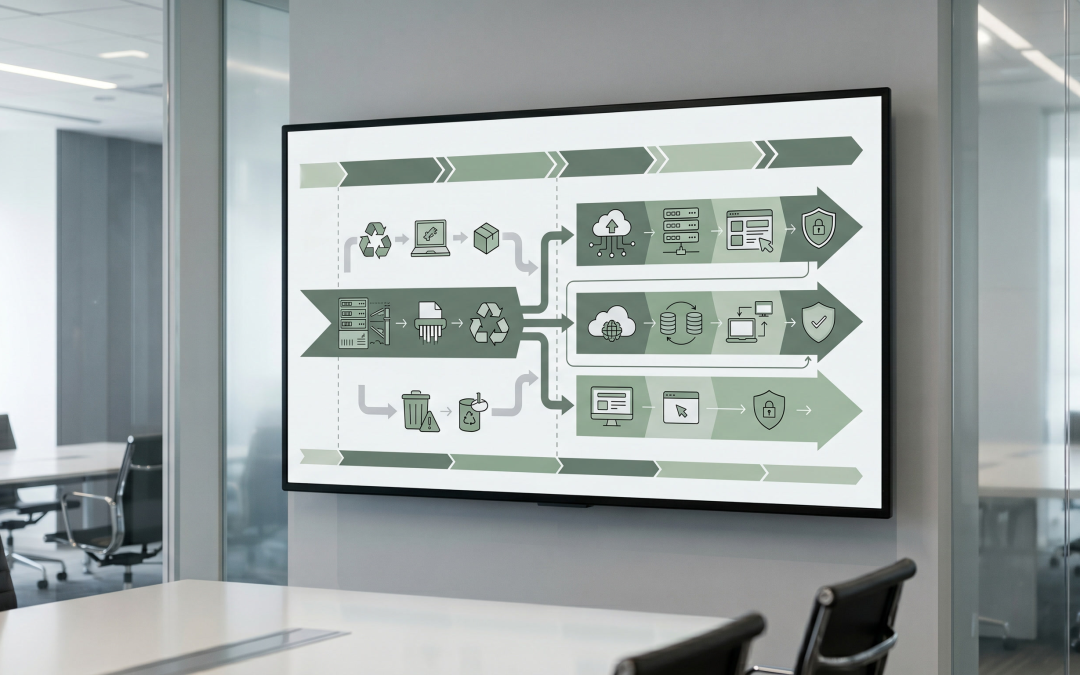
Digital transformation generates a wave of retired IT equipment that many organisations fail to plan for. As businesses migrate to cloud platforms, upgrade infrastructure, roll out new devices, and retire legacy systems, the volume of equipment reaching end of life increases dramatically. ITAD is not just a cleanup task at the end of a transformation project. It is an integral part of the transformation process itself.
Why Digital Transformation Creates ITAD Demand
Every digital transformation initiative involves replacing or retiring technology. Cloud migration makes on-premises servers and storage redundant. Workplace modernisation replaces desktops with laptops or thin clients. Network upgrades swap out switches, routers, and access points. Application modernisation may retire specialised hardware that supported legacy systems. And IoT deployments introduce new categories of devices that will eventually need disposal.
The scale can be substantial. A mid-sized organisation migrating from on-premises infrastructure to cloud might retire dozens of servers, storage arrays, network switches, and UPS systems in a single project. A company-wide laptop refresh for 1,000 employees generates 1,000 retired devices in addition to their peripherals and accessories.
Planning ITAD into Transformation Projects
ITAD should be planned from the beginning of any transformation project, not treated as an afterthought. This means including ITAD costs in the project budget from day one. Factor in collection, data destruction, recycling, and any remediation needed. Offset costs with expected value recovery from remarketing equipment that still has resale value.
Build disposal timelines into the project schedule. Equipment needs to be decommissioned, staged, collected, and processed. These activities take time and require coordination with your ITAD provider. Trying to arrange disposal at the last minute often results in higher costs and longer timescales.
Assign ITAD responsibility within the project team. Someone needs to own the disposal workstream alongside the implementation workstream. Without clear ownership, retired equipment accumulates in storage rooms while the project team focuses on the exciting new technology.
Data Security During Transformation
Digital transformation often involves moving data between systems, which creates a period where sensitive information may exist on both old and new infrastructure simultaneously. From a data security perspective, the retired equipment still holds live data until destruction is confirmed.
Prioritise data destruction as part of the decommissioning sequence, not as a separate activity to handle later. The longer retired equipment sits with data intact, the greater the risk. For servers and storage systems in particular, which may contain large volumes of sensitive data, arrange for prompt data sanitisation as soon as the data has been successfully migrated and verified on the new platform.
Document the relationship between decommissioned systems and data migration. Being able to demonstrate that data was successfully migrated before the old systems were destroyed is important for both compliance and operational continuity.
Value Recovery Opportunity
Digital transformation projects often retire equipment that still has significant resale value. Enterprise servers, networking equipment, and recent-model workstations can command reasonable prices on secondary markets if they are disposed of promptly while still current.
The key word is promptly. IT equipment depreciates rapidly, and every month equipment sits in a storage room waiting for disposal is value lost. A server that could have been remarketed for $2,000 immediately after decommissioning might be worth $1,200 six months later and almost nothing after a year. Building quick turnaround into your transformation ITAD plan maximises the financial return.
This value recovery can offset transformation costs, potentially funding some of the project expenses. Some organisations frame value recovery from old equipment as a contribution to the transformation budget, which can improve the business case for the project.
Environmental Responsibility
Digital transformation can be positioned as an environmental improvement, but only if the retired equipment is handled responsibly. Replacing energy-hungry on-premises servers with efficient cloud infrastructure reduces your operational carbon footprint, but that benefit is undermined if the old servers end up in landfill.
Proper ITAD ensures that your digital transformation delivers genuine environmental benefits through responsible disposal of retired equipment. This includes maximising reuse through remarketing, recycling materials that cannot be reused, properly handling hazardous components, and documenting environmental outcomes for sustainability reporting.
Managing the Transition Period
During transformation projects, there is often a transition period where old and new systems run in parallel. This creates practical ITAD challenges. Equipment cannot be disposed of until it is fully decommissioned, but it may be sitting idle consuming space and resources while parallel running continues.
Plan for this transition period explicitly. Define clear criteria for when equipment is considered fully decommissioned and eligible for disposal. Establish a staging area where decommissioned equipment can be securely stored while awaiting collection. And schedule collections in batches aligned with project milestones rather than waiting until the entire transformation is complete.
Lessons for Future Projects
After each transformation project, review the ITAD component. Were costs in line with budget? Was the timeline realistic? Were there security or logistics issues? Did value recovery meet expectations? These lessons improve ITAD planning for future projects and help refine your organisation’s disposal policies and processes.
EWV handles IT asset disposition (ITAD) end-to-end for Victorian businesses — from collection and data destruction through to certified recycling or refurbishment for resale. Get in touch for a tailored ITAD quote.