
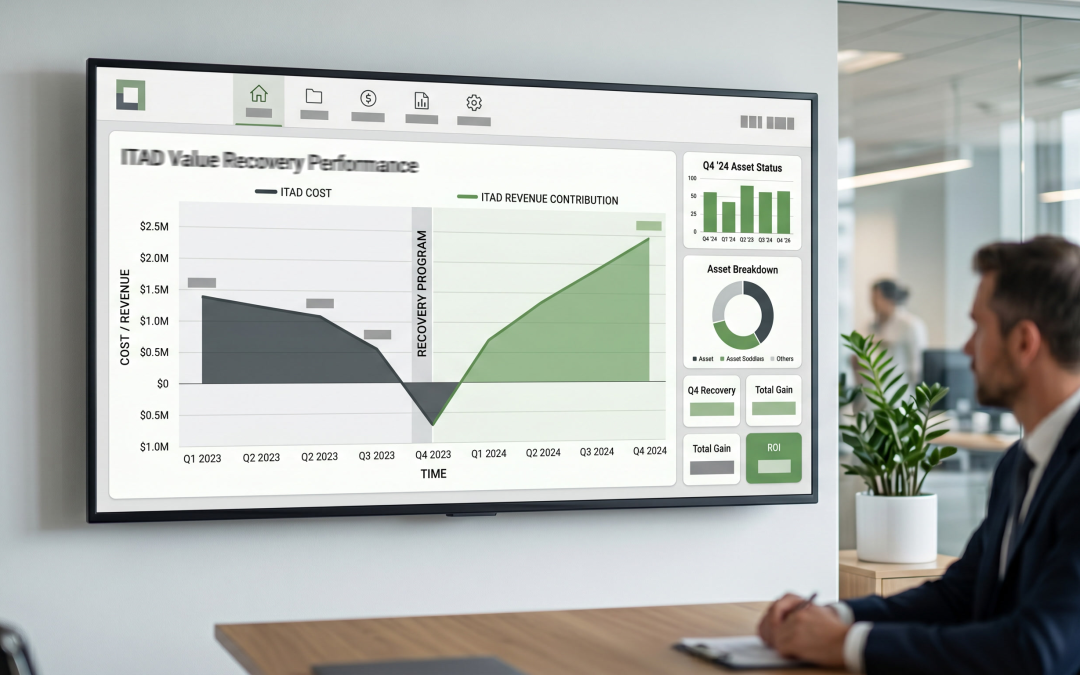
Most organisations think of IT asset disposition as a cost. Equipment reaches end of life, someone has to deal with it, and the process consumes budget. But forward-thinking organisations are flipping that assumption on its head, treating ITAD as a revenue centre that generates measurable financial returns.
The shift from viewing ITAD as waste management to recognising it as value recovery is one of the most impactful changes an organisation can make in its IT financial strategy. Here is how it works and why it matters.
The Traditional Cost Centre Mindset
In many organisations, IT disposal sits in a budget line alongside other operational expenses. Equipment gets old, someone arranges for it to be collected, and the cost is absorbed as part of doing business. There is no expectation of return, no measurement of value recovered, and no accountability for maximising outcomes.
This mindset leads to predictable problems. Equipment gets stockpiled because nobody wants to spend the disposal budget. Valuable assets depreciate in storage rooms while their resale value evaporates. When disposal finally happens, it is often reactive and rushed, which means value recovery is minimal and costs are higher than they need to be.
The cost centre approach also means ITAD rarely gets the management attention it deserves. Without a revenue component, there is little incentive to optimise processes, negotiate better terms, or invest in systems that improve outcomes.
The Revenue Centre Opportunity
The reality is that end-of-life IT equipment often retains significant residual value. Enterprise laptops that are three years old can still command meaningful prices on the secondary market. Servers, networking equipment, and storage arrays often retain value well beyond their useful life within the original organisation. Even equipment that cannot be resold has material value through component recovery.
When organisations approach ITAD with a revenue mindset, they start asking different questions. Instead of “how do we get rid of this?” the question becomes “how do we maximise the value we extract from these assets?” That simple shift in perspective transforms the entire operation.
Revenue-focused ITAD programs typically generate returns through several channels. Direct resale of refurbished equipment is the most obvious. Component harvesting from equipment that cannot be sold whole is another. Material recovery from recycling captures the value of precious metals and raw materials. And some ITAD providers offer guaranteed buy-back programs that provide predictable revenue streams.
Building the Revenue Model
Transitioning ITAD from a cost centre to a revenue centre requires a structured approach. The first step is understanding what your organisation disposes of and in what volumes. A detailed asset register is essential because you cannot recover value from equipment you do not know you have.
Next, you need to benchmark the residual value of your typical asset mix. Current market data for used enterprise equipment is readily available, and your ITAD provider should be able to give you indicative values for the equipment you are retiring. This gives you a baseline for measuring performance.
Timing is critical to value recovery. IT equipment depreciates rapidly, so the sooner you can get retired assets into the remarketing pipeline, the higher the returns. Organisations that stockpile equipment for months or years before disposal are leaving significant money on the table. A disciplined approach to regular, scheduled disposals keeps the pipeline flowing and values high.
The Financial Framework
To operate ITAD as a genuine revenue centre, you need proper financial tracking. This means establishing a separate cost code or revenue line for ITAD returns, tracking value recovery by asset category, measuring the net financial outcome (revenue minus disposal costs), and reporting results to finance and procurement leadership.
Key metrics for a revenue-focused ITAD program include recovery rate (revenue as a percentage of original purchase price), net revenue per unit, total program revenue versus total program cost, and time to revenue (days from retirement to sale). These metrics allow you to benchmark performance over time and identify opportunities for improvement.
The financial framework should also capture the cost avoidance benefits of ITAD. These include reduced storage costs from faster processing, avoided regulatory penalties from compliant disposal, lower insurance premiums from demonstrated data security practices, and reduced procurement costs when refurbished equipment is redeployed internally.
Procurement Integration
One of the most powerful aspects of a revenue-focused ITAD program is its integration with procurement. When you understand the residual value of different equipment types, you can factor end-of-life value into purchasing decisions. A laptop that costs $200 more upfront but retains $400 more residual value is a better financial decision over its full lifecycle.
This lifecycle thinking also influences lease versus buy decisions. Leased equipment may appear cheaper on a monthly basis, but if you own equipment that retains strong residual value, buying and remarketing can deliver better total cost of ownership. The ITAD revenue data gives procurement teams the information they need to make these calculations accurately.
Some organisations take this further by negotiating equipment refresh contracts that include guaranteed buy-back values. These arrangements give procurement teams cost certainty while ensuring that value recovery is baked into the equipment lifecycle from the start.
Organisational Alignment
Making ITAD a revenue centre requires buy-in from multiple stakeholders. Finance needs to establish the reporting structures. IT needs to commit to timely asset retirement. Procurement needs to factor residual value into purchasing decisions. Facilities needs to support efficient collection and staging. And sustainability teams benefit from the environmental reporting that comes with a well-run ITAD program.
The revenue narrative is often the key to getting this alignment. When ITAD is just a cost, nobody wants to own it. When it generates revenue, suddenly there is competition for ownership and accountability. That competitive dynamic drives better outcomes across the board.
Measuring Success
Successful ITAD revenue centres typically see a positive net financial position within the first year of operation. This means the revenue from value recovery exceeds the total cost of the ITAD program, including collection, data destruction, logistics, and provider fees.
Over time, as processes mature and the organisation gets better at timing disposals and selecting the right disposition channels, the revenue position improves further. Mature programs routinely recover 15 to 30 percent of original purchase price on enterprise equipment, which can represent hundreds of thousands of dollars annually for mid-sized organisations and millions for large enterprises.
The transformation from cost centre to revenue centre is not just about the money, though the financial returns are compelling. It is about changing how the organisation thinks about the full lifecycle of its IT investments, from procurement through productive use to responsible, value-maximising disposition.
EWV handles IT asset disposition (ITAD) end-to-end for Victorian businesses — from collection and data destruction through to certified recycling or refurbishment for resale. Get in touch for a tailored ITAD quote.