
The Hidden Data in Laboratory Equipment
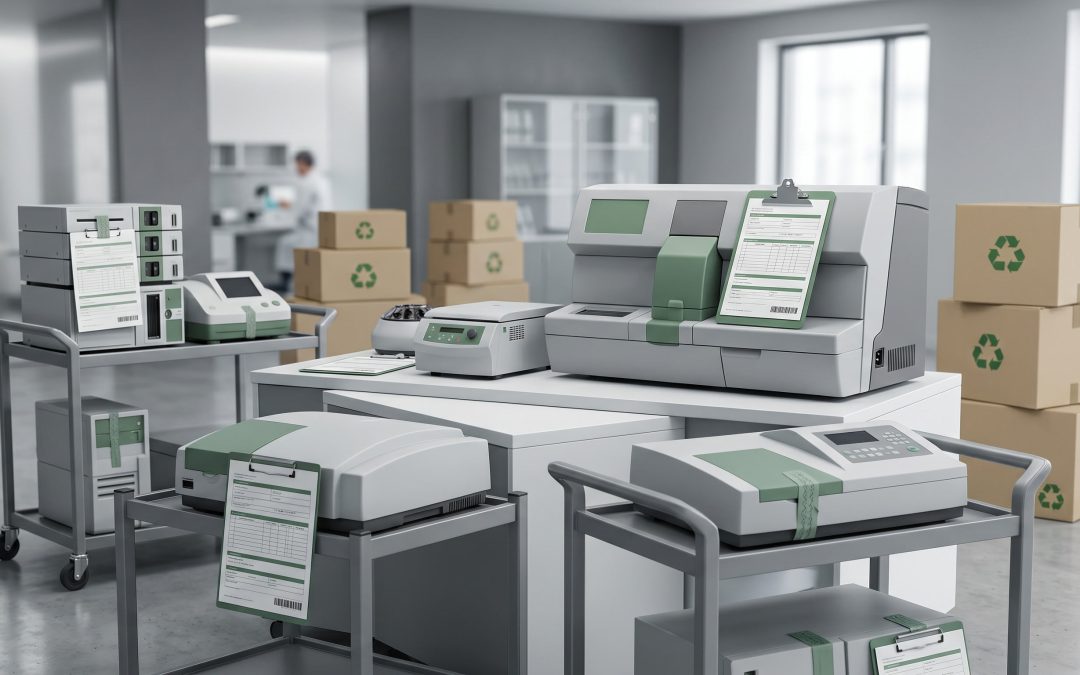
When people think about data destruction, they typically picture computers, servers, and mobile phones. Laboratory equipment rarely enters the conversation. Yet modern scientific and medical instruments are essentially specialised computers with built-in data storage. Mass spectrometers, chromatography systems, gene sequencers, electron microscopes, medical analysers, and countless other laboratory instruments contain embedded processors, hard drives or solid-state storage, and software that accumulates data over years of operation.
This data can include raw experimental results, proprietary analytical methods, calibration data, user credentials, network configurations, and in medical laboratories, patient health information. When laboratory equipment is decommissioned, this data requires the same attention as data on any other IT asset, yet it is frequently overlooked because the equipment is managed by scientific staff rather than IT departments.
Types of Data Stored on Laboratory Instruments
Analytical instruments store raw data files from every analysis performed during their operational life. A chromatography system that has been in service for ten years may contain thousands of data files representing research results, quality control analyses, or clinical test outcomes. These files may include information that is commercially valuable, scientifically sensitive, or subject to privacy regulations.
Method files and analytical protocols stored on instruments represent significant intellectual property. Proprietary analytical methods developed by the laboratory, optimised instrument parameters, and custom calibration procedures may have taken years to develop and have considerable commercial value.
User accounts and access credentials stored on networked laboratory instruments may include login details for the laboratory information management system (LIMS), network credentials, and authentication tokens for connected systems. These credentials could provide access to broader laboratory or organisational networks.
Audit trail data, required by regulatory frameworks including GLP (Good Laboratory Practice) and GMP (Good Manufacturing Practice), records every action performed on the instrument. While this data is essential during the instrument’s operational life, it must be properly handled during decommissioning to prevent exposure of operational details and user information.
In medical and clinical laboratories, instruments may store patient identifiable health information including names, dates of birth, medical record numbers, and test results. This data is subject to health privacy legislation and requires the highest standards of protection during disposal.
Regulatory Considerations
Laboratories operating under GLP or GMP regulations have specific requirements about data retention and destruction. Raw data must be retained for defined periods, and destruction must be documented and authorised. Decommissioning an instrument before its data retention obligations have been met could constitute a regulatory breach.
Clinical laboratories handling patient data must comply with the Australian Privacy Act and applicable state health records legislation. The destruction of patient data on decommissioned instruments must meet the same standards as any other health data destruction.
Instruments used in accredited laboratories (NATA-accredited in Australia) must maintain their data integrity throughout the equipment lifecycle. The decommissioning process should be documented as part of the laboratory’s quality management system, demonstrating that data was either archived or destroyed in a controlled manner.
For pharmaceutical and biotechnology laboratories, additional requirements under TGA regulations may apply to data on instruments used in the manufacture or testing of therapeutic goods.
Challenges of Laboratory Equipment Data Destruction
The primary challenge is that laboratory instruments use proprietary hardware and software that may not be compatible with standard data destruction tools. A NIST 800-88 compliant sanitisation tool designed for standard hard drives may not work on the embedded storage in a specialised instrument.
Manufacturer involvement may be necessary to access the data storage components of some instruments. Sealed units, proprietary interfaces, and embedded controllers can make it difficult to identify and access all data-bearing components without manufacturer guidance or specialised knowledge.
Data extraction before destruction may be required if the data has ongoing value or is subject to retention requirements. Exporting data from proprietary instrument formats into archival formats that can be stored on standard IT infrastructure requires planning and may require the instrument to be operational during the extraction process.
The organisational gap between laboratory management and IT management means that laboratory equipment often falls outside the scope of IT asset management policies. The IT team may not know what instruments exist, what data they contain, or when they are being decommissioned. Similarly, laboratory managers may not recognise the data security implications of instrument disposal.
Best Practices for Laboratory Equipment Decommissioning
Include laboratory instruments in the organisation’s IT asset register. Even though they are managed by scientific staff, any device with data storage capability should be tracked alongside traditional IT assets. This ensures that decommissioning triggers the same data destruction workflows as any other equipment disposal.
Before decommissioning, work with the instrument manufacturer to identify all data storage locations within the instrument. Some instruments have multiple storage components, including internal hard drives, removable media slots, and embedded flash storage that may not be obvious from external inspection.
Extract and archive any data that needs to be retained before proceeding with destruction. Convert proprietary data formats to open archival formats where possible to ensure long-term accessibility. Store archived data on the organisation’s standard IT infrastructure where it can be managed under existing data governance policies.
For data destruction, the most reliable approach for laboratory instruments is physical removal and destruction of all storage media. Remove hard drives, SSDs, and any removable storage from the instrument and process them through standard data destruction channels. The instrument chassis can then be disposed of, sold, or recycled without data concerns.
If physical removal is not feasible, consult the instrument manufacturer about built-in data destruction capabilities. Some modern instruments include factory reset or secure erase functions designed for decommissioning. Verify that these functions meet adequate destruction standards rather than simply deleting files.
Bridging the Lab-IT Divide
Effective laboratory equipment decommissioning requires collaboration between laboratory management and IT security teams. Laboratory staff understand the data landscape of their instruments, while IT teams understand data destruction standards and methods. Bringing these perspectives together, ideally through documented procedures that are integrated into both the laboratory quality system and the IT asset management framework, ensures that no data falls through the cracks when instruments reach end of life.
EWV handles IT asset disposition (ITAD) end-to-end for Victorian businesses — from collection and data destruction through to certified recycling or refurbishment for resale. Get in touch for a tailored ITAD quote.