
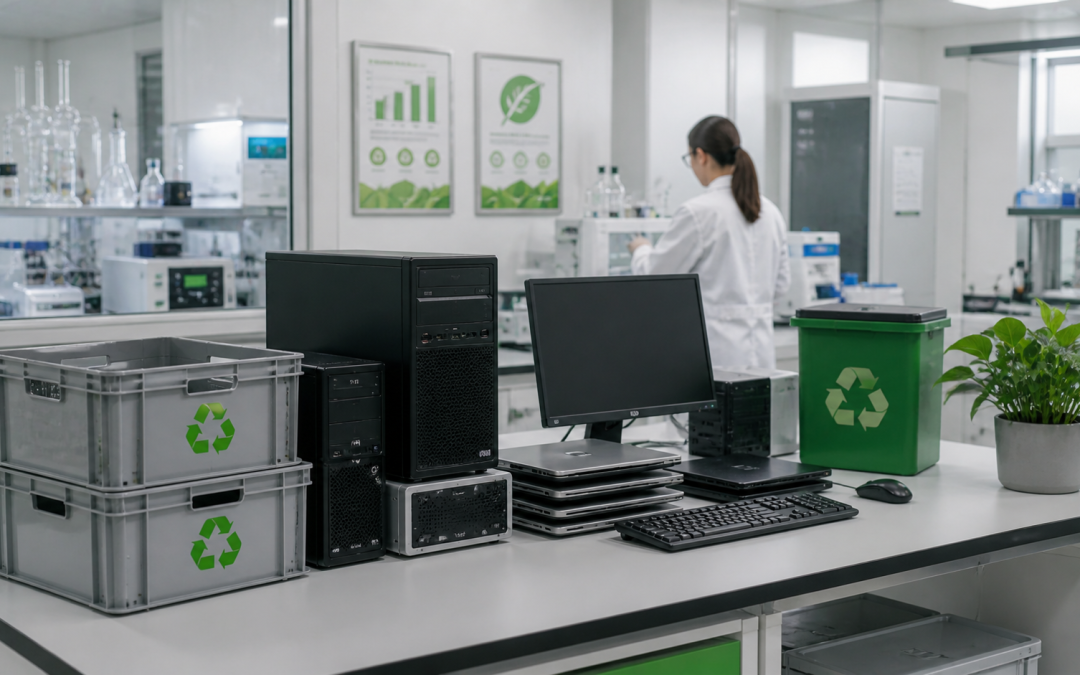
The media and entertainment industry runs on technology, from cameras and editing suites to broadcast infrastructure and streaming platforms. Production equipment evolves rapidly, with new formats, higher resolutions, and changing delivery platforms driving frequent upgrades. For media companies building ESG programs, the lifecycle management of production technology offers measurable environmental outcomes while addressing the data considerations that come with content production and distribution.
The Production Technology Landscape
Media companies operate diverse technology fleets. Production teams use cameras, audio equipment, lighting control systems, and on-set monitors. Post-production facilities house powerful editing workstations, rendering servers, colour grading systems, and massive storage arrays. Broadcast operations rely on playout servers, encoding equipment, transmission systems, and monitoring technology. Office operations run standard IT infrastructure for administration, finance, and content management.
The pace of technology change in media is faster than in most other sectors. The transition from SD to HD, HD to 4K, and now 4K to 8K has driven multiple generations of equipment replacement across the industry. Each transition generates significant volumes of still-functional but commercially obsolete equipment.
Content and IP on Disposed Equipment
Media production equipment carries unique data sensitivities. Unreleased content, whether films, television programs, news stories, or commercial productions, represents significant intellectual property value. Premature disclosure of unreleased content can cause substantial commercial damage and breach contractual obligations with talent, distributors, and advertisers.
Storage systems are the primary concern, but cameras, editing workstations, and even preview monitors may contain cached or residual content data. Data destruction for media equipment should cover all devices that have been connected to content workflows, not just designated storage systems.
Rapid Technology Cycles
Media technology becomes obsolete faster than equipment in most other sectors. A professional camera system that was state-of-the-art five years ago may no longer meet current production specifications. Editing workstations need regular upgrades to handle increasingly demanding file formats and workflows. This rapid cycling generates above-average e-waste volumes per employee.
The upside of rapid cycling is that much of the disposed equipment still functions well. Professional media equipment often has strong secondary market demand from smaller production companies, educational institutions, and international buyers. Refurbishment and resale through certified channels extends equipment life while generating revenue and avoiding manufacturing emissions.
Broadcast Infrastructure
Broadcast infrastructure represents significant material value at end of life. Servers, encoding equipment, transmission systems, and rack-mounted networking equipment contain substantial quantities of metals and electronic components. When broadcast facilities are upgraded or decommissioned, the processing of this equipment should maximise material recovery.
The transition from traditional broadcast to streaming and digital delivery is driving widespread infrastructure replacement across the media industry. Companies managing this transition responsibly can report significant environmental outcomes from the volume of equipment being processed.
Production Waste Streams
Film and television productions generate e-waste beyond standard IT equipment. Temporary lighting installations, communication systems, monitoring equipment, and power distribution components all create electronic waste when productions wrap. Location-based productions generate this waste at temporary sites that may lack established disposal infrastructure.
Production companies should include e-waste management in their production sustainability plans, alongside other environmental considerations like energy use, transport, and set materials. Industry sustainability initiatives are increasingly recognising e-waste as part of the production environmental footprint.
ESG Reporting for Media Companies
Media companies with public ESG commitments can use production technology lifecycle data to demonstrate environmental responsibility. Metrics including equipment processed, material recovery rates, refurbishment volumes, and CO2e avoidance all contribute to sustainability reporting.
For media companies whose content addresses environmental issues, demonstrating responsible internal practices adds authenticity to editorial positions. Audiences are increasingly aware of inconsistencies between what media companies say about sustainability and what they actually do.
For more on ESG reporting, see our guide on ESG reporting and e-waste for Australian businesses.