
The Technology-Intensive World of Media Production
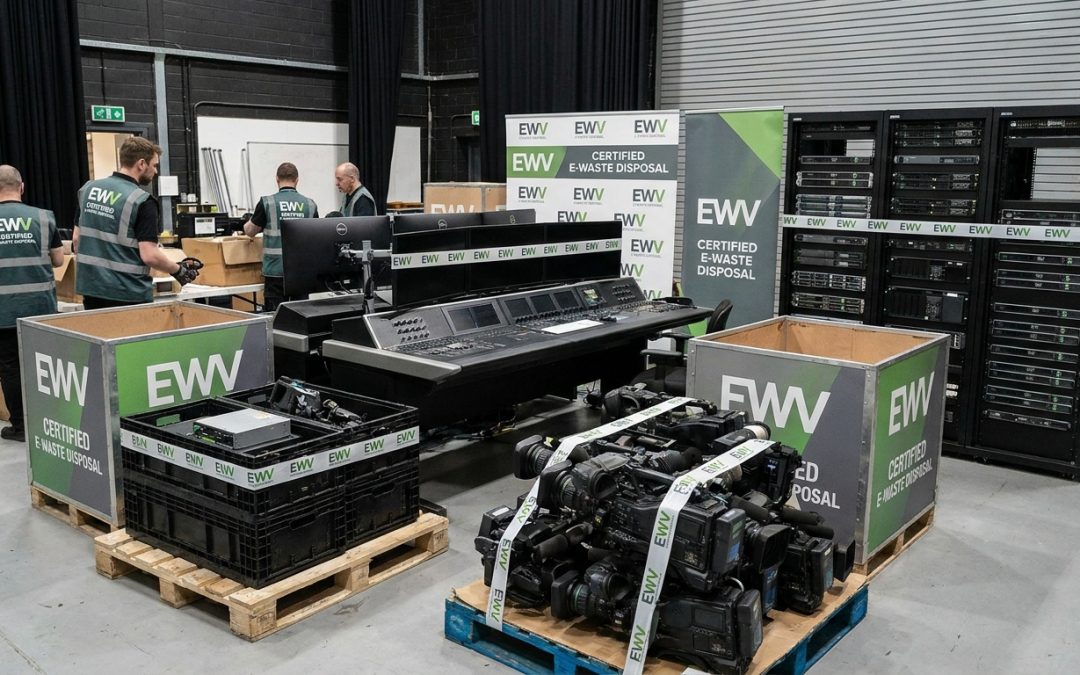
Media and production companies are among the most technology-heavy businesses in any sector. From broadcast studios running walls of monitors and server racks of editing systems to small production houses operating high-end workstations and camera equipment, the volume and value of electronic equipment in media organisations is substantial. When this equipment reaches end of life, it creates an e-waste stream that is both large in volume and diverse in type.
The media industry also has one of the fastest technology refresh cycles of any sector. Resolution standards evolve (HD to 4K to 8K), codec requirements change, storage demands grow exponentially, and processing power requirements increase with every generation of editing and effects software. Equipment that was cutting-edge three years ago may be inadequate for current production standards, driving frequent upgrades that generate significant volumes of retiring hardware.
Australian media production spans a wide range of operations including television broadcasters, film production companies, post-production houses, audio studios, podcast producers, advertising agencies, digital content creators, and corporate video departments. Each generates e-waste with its own characteristics, but all share the need for responsible disposal.
The Diverse Equipment Mix
Media production e-waste is remarkably diverse. Computing infrastructure is the largest category by volume. High-performance editing workstations with multiple GPUs, rendering farm servers, storage arrays holding terabytes of footage, and networking equipment designed for high-bandwidth media workflows all have finite lifespans. A mid-sized post-production facility might retire 20 to 30 workstations in a single upgrade cycle, plus associated storage and networking hardware.
- High-performance editing workstations and rendering servers
- SAN/NAS storage arrays and LTO tape libraries
- Broadcast monitors and reference displays
- Camera bodies, lenses with electronic components, and recording media
- Audio mixing consoles, interfaces, and studio monitors
- Lighting control systems and LED fixtures
- Broadcast infrastructure (switchers, routers, encoders)
- Satellite and transmission equipment
- Graphics processing hardware and virtual set systems
- Teleprompter systems and on-set monitors
Camera and recording equipment represents a high-value category. Professional camera bodies, electronic cinema lenses, wireless video transmitters, recording decks, and associated accessories are replaced as production standards evolve. While older camera equipment often retains significant resale value in the secondary market, units that are truly obsolete become e-waste.
Audio equipment including digital mixing consoles, audio interfaces, studio monitors, wireless microphone systems, and playback devices generates another stream. Broadcast facilities add master control equipment, signal routing systems, graphics generators, and transmission infrastructure to the mix.
Data and Intellectual Property Concerns
Media production equipment carries significant intellectual property and confidentiality risks during disposal. Storage systems contain unreleased content, raw footage, client projects, and proprietary creative work. For production companies working on feature films, television series, or advertising campaigns, leaked content from improperly disposed storage could cause serious commercial damage.
Editing workstations store project files, media caches, and render outputs that may include unreleased material. Even after project files are moved to archive storage, local caches and temporary files can retain substantial amounts of content. Audio workstations contain unreleased music, voice recordings, and sound design elements.
For companies handling corporate and branded content, the confidentiality obligations extend to client materials. A production company working on a product launch video for a major brand may have pre-release product images, marketing strategies, and embargoed information on their systems. Disposing of these systems without proper data destruction could violate client confidentiality agreements.
Storage media including hard drives, SSDs, LTO tape cartridges, and memory cards all require professional data destruction. For high-value intellectual property, physical destruction of storage media may be preferred over software-based wiping. Our guide on hard drive destruction methods compares the available options.
High-Value Equipment and Resale
One distinctive aspect of media production e-waste is that much of it has significant residual value. Professional camera equipment, high-end audio gear, broadcast infrastructure, and even computing hardware from media environments tends to be premium-grade equipment that holds its value better than standard office IT.
A professional camera body that is being retired from a broadcast environment may still be perfectly suitable for independent producers, educational institutions, or international markets. Editing workstations with high-specification GPUs are sought after by visual effects studios, gaming companies, and AI researchers. Even older broadcast equipment finds second-life applications in smaller markets and developing countries.
Working with an ITAD provider who understands the media equipment secondary market can maximise recovery value. The key is ensuring that all data destruction happens before any remarketing activity. Storage media must be certified as sanitised or physically destroyed before equipment enters the resale channel. For more on the ITAD process, see our guide on what ITAD is and how it works.
Archive and Storage Disposal
Media companies accumulate enormous volumes of storage media over time. Hard drives pulled from previous storage systems, LTO tape cartridges from archive libraries, optical discs, and flash media accumulate in storage rooms and cupboards. When a company decides to clean out its archives or migrates to cloud-based storage, the physical media needs proper disposal.
LTO tape is particularly common in media production. Tape libraries with hundreds or thousands of cartridges may contain decades of production content. When migrating away from tape, the cartridges themselves need secure disposal. LTO tapes contain magnetic media that can be degaussed, but the cartridge housings and mechanisms also constitute e-waste.
For companies transitioning from on-premises storage to cloud archiving, the physical storage hardware (SAN arrays, NAS devices, tape libraries, and their server infrastructure) becomes e-waste once the migration is complete. The data migration and verification process should be finished and confirmed before any hardware is sent for disposal, because certified data destruction is irreversible.
Broadcast Facility Decommissioning
When a broadcast facility is decommissioned or relocated, the volume of e-waste can be extraordinary. Broadcast facilities contain racks of specialised equipment: video routers, production switchers, character generators, master control systems, satellite uplink equipment, and transmission infrastructure. Decommissioning a single studio or control room can generate tonnes of electronic equipment.
Broadcast decommissioning requires specialist knowledge to ensure all components are properly identified and processed. Some broadcast equipment contains materials that need special handling, and the value of certain components in the secondary market means that careful assessment before disposal can generate meaningful returns.
Practical Steps for Media Companies
Media companies should treat e-waste management as part of their technology lifecycle planning. When budgeting for equipment upgrades, include disposal costs (or anticipated recovery values) for the equipment being replaced. Maintain an asset register that tracks all electronic equipment, particularly storage media that may contain sensitive content.
Engage an ITAD provider who has experience with high-value and specialised equipment. The provider should be able to maximise recovery value through appropriate remarketing while ensuring data destruction meets the confidentiality requirements of the content industry. Request certificates of data destruction for all storage media, and retain these as part of your compliance and contractual records.
For Victorian operations, the e-waste landfill ban applies to all equipment categories, from broadcast monitors to memory cards. For the full regulatory framework, see our overview of e-waste laws and regulations across Australia.
EWV helps Victorian businesses manage e-waste and IT asset disposal compliantly and sustainably — including collection, certified data destruction, and recycling. Contact us for a free quote.