
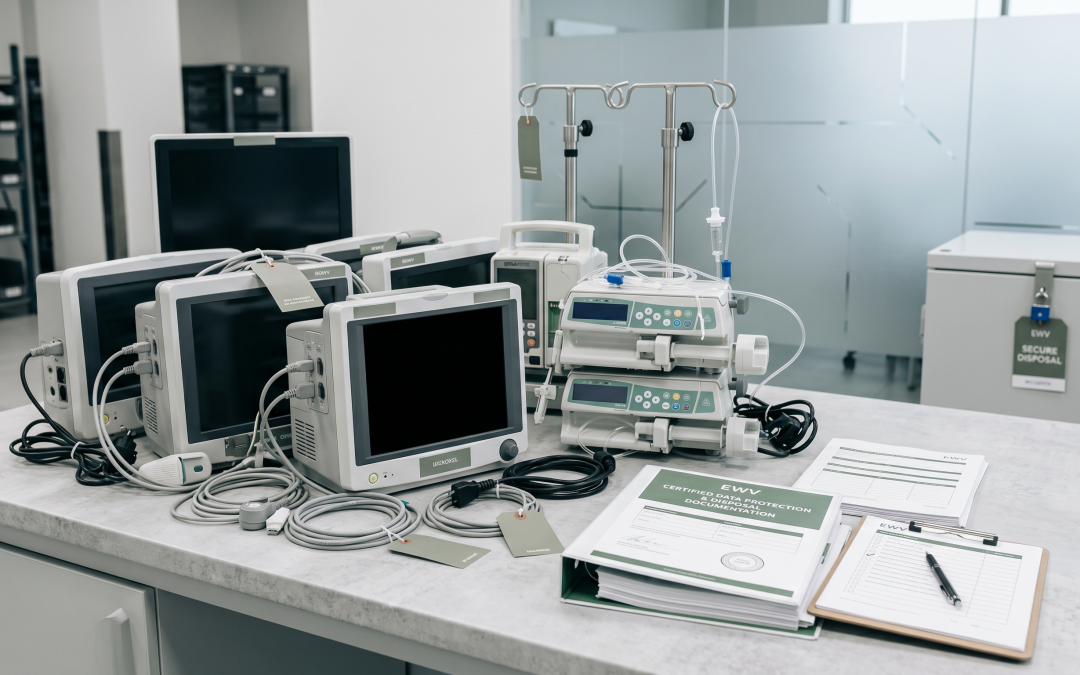
The Explosion of Connected Medical Devices
Healthcare is undergoing a connectivity revolution. Patient monitors, infusion pumps, imaging equipment, surgical robots, wearable health trackers, remote patient monitoring devices, and hundreds of other medical devices are now network-connected and data-generating. These devices collect, store, and transmit some of the most sensitive personal information imaginable: patient health data. When these devices reach end of life, the data destruction challenge combines the complexity of IoT disposal with the heightened sensitivity of health information.
The medical IoT market is growing rapidly, with hospitals, clinics, aged care facilities, and home care services deploying ever-increasing numbers of connected devices. As the first waves of these devices age out of service, the healthcare sector faces a disposal challenge it is largely unprepared for.
Types of Health Data on Connected Medical Devices
Patient monitoring equipment stores vital signs histories, alarm events, and patient identification data. A bedside monitor that has been in service for several years may contain health data from thousands of patients who occupied that bed during the device’s operational life.
Imaging equipment including MRI machines, CT scanners, X-ray systems, and ultrasound units store medical images along with patient demographics, referring physician details, and diagnostic information. The DICOM standard used for medical imaging embeds patient identification data directly into image files. A decommissioned imaging system may contain thousands of patient studies.
Infusion pumps and medication delivery systems store drug library data, dosing histories, and patient records. Some smart pumps maintain logs of every infusion delivered, including the patient’s identification, the medication, the dose, and any alarms or interventions.
Wearable and remote monitoring devices collect continuous health data in the patient’s home or community setting. Cardiac monitors, glucose monitors, blood pressure devices, and activity trackers all generate and store health information linked to individual patients.
Surgical and procedural equipment, including robotic surgery platforms, anaesthesia machines, and ventilators, store procedure logs, patient data, and device performance records that may include sensitive intraoperative information.
Regulatory Framework for Medical Device Data
Health information in Australia is protected by the Australian Privacy Act, state health records legislation (such as Victoria’s Health Records Act 2001), and various healthcare-specific standards and guidelines. The obligations around health data destruction are typically more stringent than those for general personal information.
The Therapeutic Goods Administration (TGA) regulates medical devices in Australia, and its requirements extend to the software and data handling capabilities of connected devices. While the TGA’s primary focus is on device safety and efficacy, the regulatory framework increasingly recognises cybersecurity and data protection as integral to medical device management.
Healthcare organisations accredited under the National Safety and Quality Health Service (NSQHS) Standards must demonstrate effective information management, which includes the proper handling and destruction of patient data on decommissioned equipment.
For devices used in clinical trials or research, additional data retention and destruction requirements under ethics approvals and GCP guidelines apply.
Challenges Unique to Medical Device Disposal
Medical devices use proprietary operating systems, custom software, and embedded storage that standard IT sanitisation tools cannot access. A bedside monitor runs firmware, not Windows, and there is no USB port to connect a bootable sanitisation tool. The manufacturer’s decommissioning procedures, if they exist, may be the only option for data removal.
Regulatory requirements for device records can conflict with data destruction timelines. Medical device regulations require maintenance of device history records, and healthcare regulations require retention of patient records for specified periods. Balancing these retention requirements with the need to destroy patient data on decommissioned equipment requires careful planning.
The distributed nature of medical IoT means devices are deployed across hospital wards, outpatient clinics, operating theatres, emergency departments, and patients’ homes. Tracking all these devices through to secure decommissioning is a significant logistical challenge, particularly for devices in home care settings that must be recalled before disposal.
Many medical devices are leased or on service contracts with manufacturers or medical equipment suppliers. When these devices are returned at end of contract, the patient data they contain travels with them unless the healthcare organisation takes steps to remove it first.
Best Practices for Medical IoT Disposal
Include all connected medical devices in the organisation’s asset register alongside traditional IT equipment. Biomedical engineering departments and IT departments need to collaborate on device lifecycle management, ensuring that no connected device falls outside the disposal framework.
Before decommissioning any medical device, export and archive any patient data that needs to be retained according to healthcare record retention requirements. Store this archived data on the organisation’s standard health information systems where it is subject to ongoing data governance and security controls.
For data destruction, follow the device manufacturer’s decommissioning procedures where available. Contact the manufacturer if decommissioning guidance is not included in the device documentation. Many manufacturers will provide specific instructions for clearing patient data from their devices.
Where manufacturer decommissioning procedures are not available or are insufficient, remove any accessible storage media (hard drives, SSDs, removable memory) and process them through standard NIST 800-88 data destruction methods. For devices with embedded storage that cannot be removed, physical destruction of the electronic components is the most reliable option.
Engage a certified ITAD provider with healthcare sector experience for the disposal of medical equipment. Providers who understand the regulatory environment and the specific handling requirements for medical devices can ensure compliant processing.
The Growing Imperative
As connected medical devices proliferate throughout the healthcare system, the volume of health data on decommissioned equipment will grow correspondingly. Healthcare organisations that establish robust medical device data destruction processes now will be better prepared for the increasing flow of end-of-life connected devices in the years ahead. Patient trust depends on the healthcare sector’s ability to protect their data at every stage, from collection through to disposal.
EWV helps Victorian businesses manage e-waste and IT asset disposal compliantly and sustainably — including collection, certified data destruction, and recycling. Contact us for a free quote.