
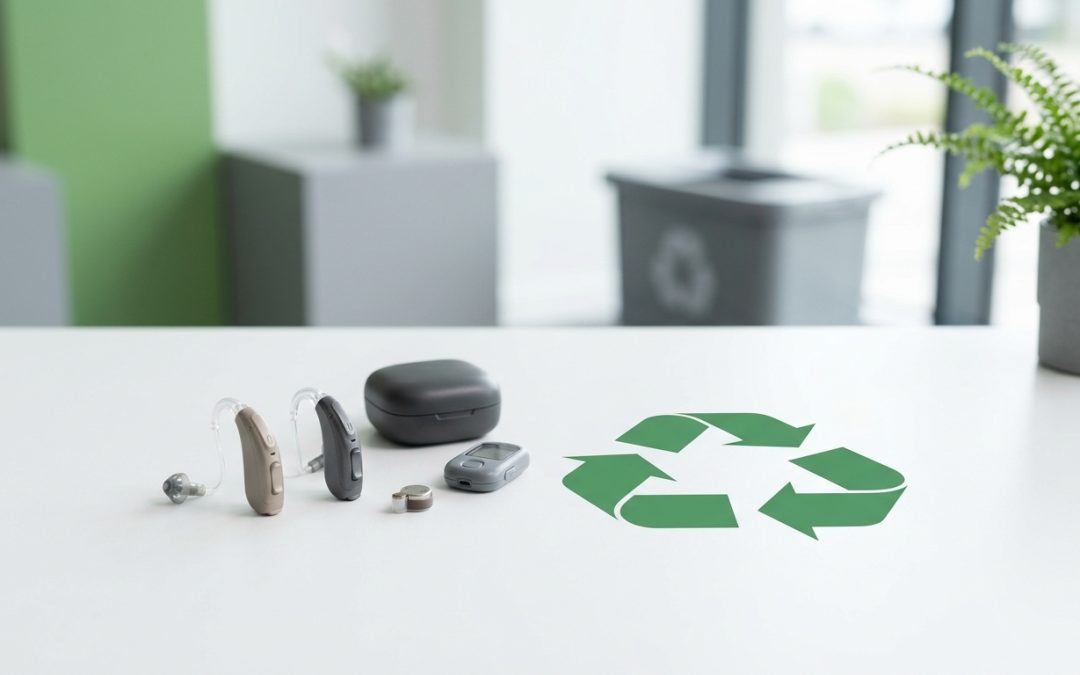
Medical Electronics Need Careful Handling
Hearing aids, blood pressure monitors, glucose meters, CPAP machines, pulse oximeters, and other personal medical electronics eventually reach end of life just like any other device. But disposing of medical electronics raises unique questions about data privacy, potential reuse, and proper recycling pathways. Many people simply put them in a drawer and forget about them, unsure of the right thing to do.
Here’s a practical guide to handling end-of-life medical electronics responsibly.
Hearing Aids
Hearing aids are small but surprisingly complex devices containing microprocessors, microphones, speakers, batteries (either disposable zinc-air or rechargeable lithium-ion), and custom-moulded or fitted casings. Their small size makes them easy to lose in general waste, but they contain valuable materials and should be properly recycled.
Option 1: Return to your audiologist. Many audiology clinics accept old hearing aids and either refurbish them for redistribution (some charities collect working hearing aids for people in developing countries who can’t afford them) or send them to specialist recyclers. This is the simplest and often best option.
Option 2: Donate working aids. Organisations like the Lions Club Hearing Aid Recycling Program collect used hearing aids for redistribution to people in need. Working aids, even older models, can significantly improve quality of life for someone who otherwise couldn’t access them. Check with local Lions Clubs or hearing charities for collection arrangements.
Option 3: Recycle as e-waste. If the aids are non-functional and not suitable for donation, they should be recycled through e-waste channels. Remove disposable batteries first and recycle them separately through battery recycling programs.
Blood Pressure Monitors
Digital blood pressure monitors contain a display screen, circuit board, pump motor, pressure sensor, and either disposable batteries or a rechargeable battery. They’re straightforward e-waste and can be disposed of through standard e-waste collection channels, including council transfer stations and e-waste drop-off points.
Remove batteries before disposal and recycle them separately. The cuff and tubing are generally not recyclable through e-waste streams but may be accepted as general waste if separated from the electronic unit.
Glucose Meters and Continuous Glucose Monitors
Glucose meters are small electronic devices that should be recycled as e-waste. Remove the battery and recycle it separately. Used test strips are not e-waste and can go in general waste (they’re not sharp waste unless they involve lancets).
Continuous glucose monitors (CGMs) like Libre and Dexcom sensors contain small batteries and electronic components. Used sensors are technically e-waste, though their very small size means many end up in general waste. Ideally, accumulate used sensors and dispose of them through e-waste channels. Some manufacturers are developing take-back programs for used sensors as volumes grow.
Insulin pumps contain batteries, circuit boards, and motors. Return them to the manufacturer or your diabetes care provider if possible. Otherwise, dispose through e-waste recycling.
CPAP Machines
CPAP machines (Continuous Positive Airway Pressure) for sleep apnoea are substantial electronic devices containing motors, circuit boards, humidifier elements, and often cellular or WiFi connectivity modules. They’re clearly e-waste and should be recycled through appropriate channels.
Data considerations: Modern CPAP machines store usage data and may contain personal health information including sleep patterns, therapy pressure settings, and compliance records. If the device is internet-connected, sign out of any associated accounts (like myAir or similar platforms) before disposal. A factory reset, if available in the device’s menu, will clear stored data.
The mask, tubing, and water chamber are generally not recyclable as e-waste. The silicone mask can sometimes be recycled through specialist silicone recycling programs, but more commonly these components go to general waste. The machine itself should go to e-waste recycling.
Other Medical Electronics
TENS machines, nebulisers, digital thermometers, pulse oximeters, and other home medical electronics are all e-waste. Remove batteries, and dispose of the devices through standard e-waste collection points.
Electric wheelchairs and mobility scooters are larger items that may need specialist collection. The batteries (typically sealed lead-acid or lithium-ion) are the most critical component to handle properly. Contact your mobility equipment provider about end-of-life handling, or arrange collection through a commercial e-waste service that can handle larger items.
Data and Privacy Considerations
Medical devices increasingly store personal health data, and some connect to cloud services that maintain your health records. Before disposing of any connected medical device:
Sign out of associated apps and accounts. Disconnect the device from its companion app and your account on the manufacturer’s platform.
Perform a factory reset if the device offers one. This clears locally stored data.
Remove SIM cards or memory cards if present. Some connected medical devices use cellular connectivity and may contain SIM cards.
Under the Privacy Act 1988, health information is classified as sensitive information with additional protections. While the risk from a discarded blood pressure monitor is relatively low, it’s good practice to clear data from any medical device before it leaves your possession.
The Bigger Picture
Medical electronics are a growing segment of the e-waste stream as healthcare becomes more technology-dependent. Wearable health monitors, connected devices, and home diagnostic equipment are proliferating rapidly. The principles for disposal are the same as any electronics: extend useful life through repair and reuse where possible, ensure data is cleared, remove batteries for separate recycling, and get the electronic components to proper e-waste recycling facilities.
EWV helps Victorian businesses manage e-waste and IT asset disposal compliantly and sustainably — including collection, certified data destruction, and recycling. Contact us for a free quote.