
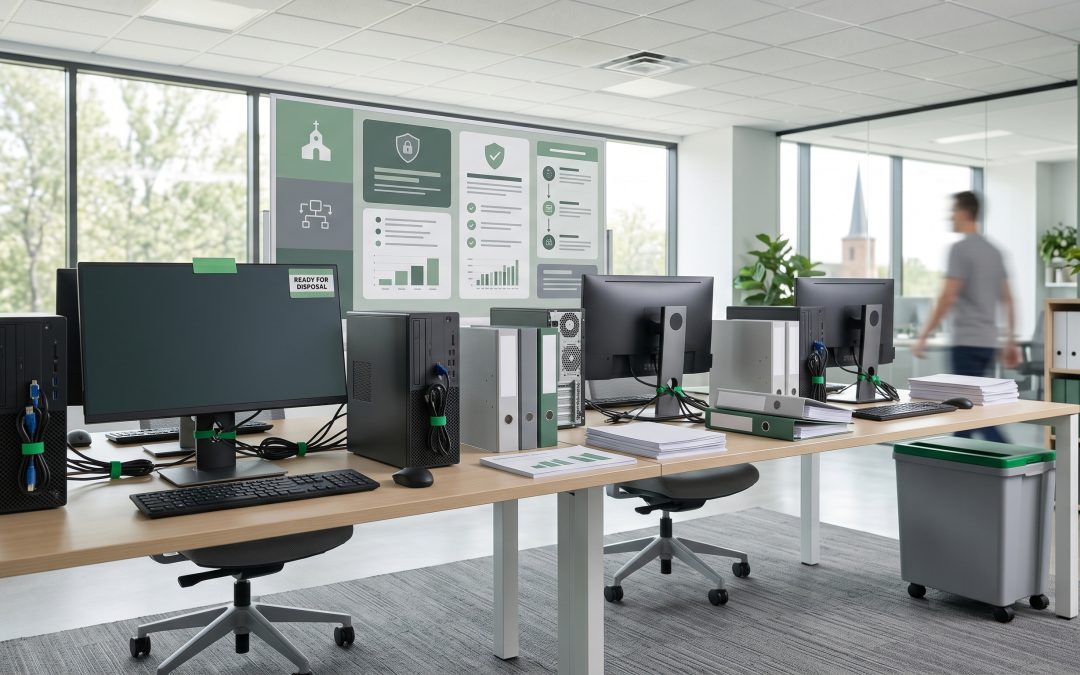
Why Religious Organisations Need Data Destruction Practices
Religious organisations, including churches, mosques, synagogues, temples, and other faith-based communities, collect and store personal information about their members that is both deeply personal and, in some cases, legally classified as sensitive information. Membership records, donation histories, pastoral care notes, counselling records, and sacramental registers all contain data that requires careful handling when the IT equipment storing it reaches end of life.
Many religious organisations operate informally when it comes to IT management, relying on volunteers or staff members who wear multiple hats. This informality can lead to situations where old computers, tablets, and storage devices are passed along, donated, or discarded without any thought to the data they contain. As religious organisations increasingly digitise their operations, the volume of personal data at risk during equipment disposal continues to grow.
Types of Sensitive Data in Religious Organisations
Membership databases typically contain names, addresses, phone numbers, email addresses, family relationships, dates of birth, and sometimes marital status and gender information. On its own, this data is sensitive enough to warrant proper destruction. But religious membership data carries an additional dimension: it reveals an individual’s religious affiliation, which is classified as sensitive information under the Australian Privacy Act.
Financial records represent another significant data category. Donation tracking systems store giving histories that can reveal not only financial capacity but also patterns of engagement and commitment. Direct debit details, credit card information used for online giving, and bequest intentions all require secure handling.
Pastoral care and counselling records are among the most sensitive data any organisation holds. Ministers, priests, rabbis, imams, and pastoral workers may maintain records of counselling sessions covering marriage difficulties, mental health challenges, addiction, grief, family conflict, and other deeply personal matters. In some traditions, these records may include information disclosed under the seal of confession or equivalent confidential spiritual guidance.
Safeguarding records, including working-with-children check details, incident reports, complaints, and investigation files, add yet another layer of highly sensitive data. These records may contain information about allegations of misconduct involving both adults and minors.
Legal Obligations for Religious Organisations
The Australian Privacy Act 1988 treats religious affiliation as sensitive information, subject to heightened protections. While small organisations with annual turnover under $3 million are generally exempt from the Privacy Act, this exemption does not apply to organisations that provide health services (which may include some faith-based counselling services) or that trade in personal information.
Regardless of whether the Privacy Act technically applies, religious organisations have strong ethical obligations to protect the personal information of their members. The trust that members place in their faith community is profound, and a breach of that trust through careless data handling can cause lasting damage to the community.
State and territory child safety legislation imposes specific obligations on religious organisations regarding the handling of safeguarding records. The Royal Commission into Institutional Responses to Child Sexual Abuse recommended significant improvements to record-keeping practices in religious institutions, and these recommendations extend to the secure destruction of records when retention periods expire.
Common Data Disposal Gaps in Faith Communities
Volunteer-managed IT is one of the biggest risk factors for religious organisations. When a technically inclined congregation member sets up the church computer system, there may be no formal process for what happens when that equipment is eventually replaced. Old machines may sit in storage rooms for years, be given to members of the congregation, or be dropped off at charity shops with data intact.
The use of personal devices for organisational purposes creates additional exposure. A minister who maintains pastoral care notes on their personal laptop, or a treasurer who tracks donations on their home computer, has created data repositories that sit outside any formal IT management framework. When these individuals change roles or leave the organisation, their personal devices still contain organisational data.
Multi-site religious organisations, such as denominations with numerous local congregations, face the challenge of ensuring consistent practices across locations that may have very different levels of technical capability and awareness.
Cloud transitions can create a false sense of security. Moving to cloud-based church management software does not eliminate the data on local devices that was created before the migration. Old databases, exported spreadsheets, and email archives on decommissioned computers still need to be addressed.
Best Practices for Religious Organisation Data Destruction
The first step is awareness. Leadership within the religious organisation needs to understand that data protection is part of their duty of care to members. This includes recognising that IT equipment disposal is a data security issue, not just a logistics question.
Creating a simple inventory of all devices that store organisational data is the foundation. This should include office computers, laptops, tablets, phones, external drives, USB sticks, and any personal devices used for organisational purposes. The inventory should note what types of data each device may contain.
For organisations with limited technical resources, engaging a certified IT asset disposition provider is the most practical approach. The cost of professional data destruction is modest, and it provides assurance that the job has been done properly, with documentation to prove it.
For organisations that prefer to handle destruction in-house, software-based data wiping following NIST 800-88 guidelines can be performed by someone with basic technical skills. The critical point is using a proper data sanitisation tool rather than simply deleting files or performing a factory reset, which leaves data recoverable.
Pastoral care records and safeguarding files warrant the highest level of destruction. Where possible, physical destruction of the storage media containing these records provides the greatest assurance. If physical destruction is not feasible, verified software sanitisation with documented confirmation should be the minimum standard.
Building a Culture of Data Stewardship
Religious organisations are communities built on trust. Members share personal information, financial details, and their most intimate struggles with the expectation that this information will be held in confidence. Extending that commitment to the proper destruction of data when equipment is replaced is a natural expression of the care and respect that faith communities aspire to offer. A simple, documented data destruction process demonstrates that the organisation takes its stewardship responsibilities seriously in every aspect of its operations.
EWV provides NIST 800-88 certified data destruction for Victorian businesses, covering software-based erasure and physical destruction with full chain-of-custody documentation. Request a quote to discuss your requirements.