
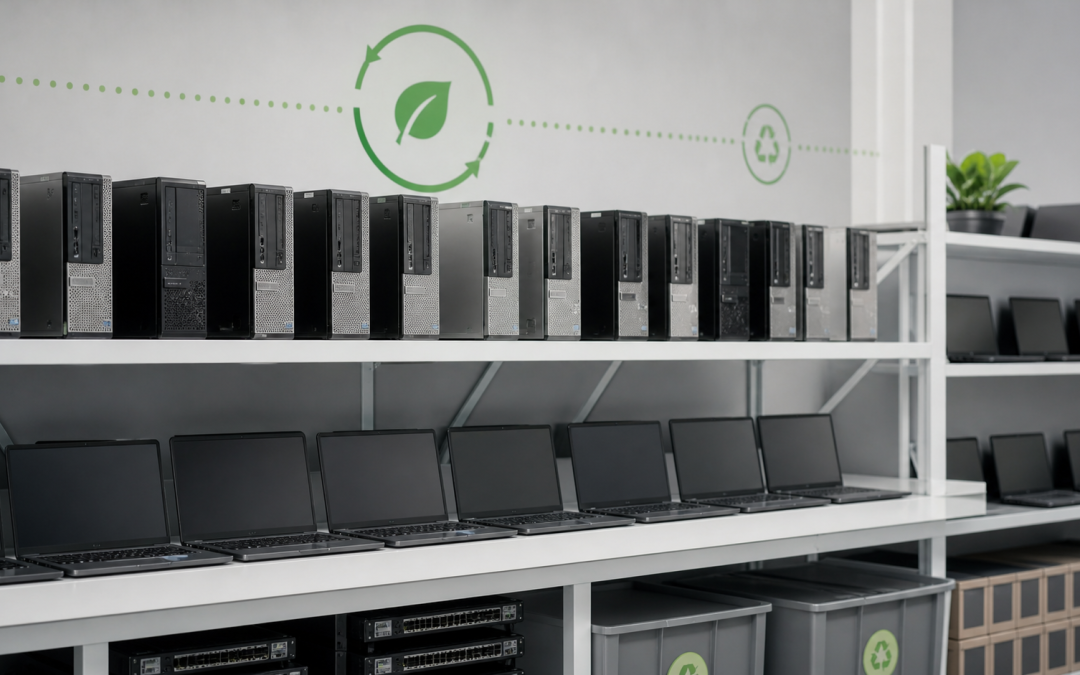
Reusing IT equipment is one of the most effective forms of resource conservation available to modern organisations. Every device that continues in productive use is a device that does not need to be replaced by a newly manufactured one, avoiding all the resource extraction, energy consumption, water use, and waste generation that manufacturing entails. The resource conservation benefits of IT reuse go far beyond carbon savings to encompass critical minerals, water, land, and the ecosystems affected by resource extraction.
The Resources in a Single Laptop
A typical business laptop contains a remarkable concentration of natural resources. Over 30 different metals are used in its construction, including copper for wiring and circuit board traces, aluminium for the chassis and heat sinks, gold for connector contacts and circuit board traces (approximately 0.03 grams per device), silver for solder and contacts, palladium for circuit board components, cobalt in the lithium-ion battery, lithium in the battery, tantalum in capacitors, tin in solder, and various rare earth elements in the display, speakers, and magnets.
Beyond metals, a laptop contains glass (display panel), multiple types of plastic (casing, keyboard, internal components), silicon (processor and memory chips), and various chemicals and compounds in the battery, adhesives, and coatings.
Extracting these resources from the earth requires moving and processing thousands of kilograms of ore and rock to produce the refined materials in a single device. The mining and processing operations consume energy, water, and chemicals while generating waste rock, tailings, and emissions.
The Scale of Conservation
When an organisation extends the life of its IT equipment through refurbishment and reuse, the resource conservation multiplies across the fleet. An organisation that refurbishes and continues using 200 laptops for an additional two years rather than replacing them conserves the resources that would have been needed to manufacture 200 new devices. This includes approximately 6 grams of gold, 120 grams of silver, tonnes of copper and aluminium, hundreds of kilograms of various plastics, and the lithium, cobalt, and rare earth elements in 200 batteries.
These numbers may seem small for a single organisation, but across an entire economy where millions of devices are retired annually, the aggregate resource conservation from extending equipment lifecycles is enormous.
Water Conservation
The water footprint of electronics manufacturing is substantial. Semiconductor fabrication, the process of making processors and memory chips, uses enormous quantities of ultra-pure water, typically 7,000 to 10,000 litres per wafer processed. A modern fabrication facility can use 30 to 50 million litres of water per day.
Mining operations for electronics materials also consume and contaminate significant water resources. Lithium extraction from brine deposits in South America requires pumping and evaporating vast quantities of groundwater. Copper and gold mining operations use water-intensive processing methods. By extending equipment lifecycles and reducing the frequency of new equipment purchases, organisations indirectly conserve these water resources.
Land Conservation
Mining for the raw materials in electronics requires physical access to mineral deposits, which often means clearing vegetation, removing topsoil, and fundamentally altering landscapes. Open-pit mines for copper, gold, and other electronics materials can span kilometres and persist as features of the landscape long after mining ceases.
The land use impact extends beyond the mine site to include processing facilities, waste dumps, tailings dams, and supporting infrastructure like roads, rail lines, and worker housing. Reducing demand for primary materials through equipment reuse and recycling reduces the rate at which new mining operations are needed.
Practical Reuse Strategies
Organisations can maximise resource conservation through IT reuse by implementing several strategies. Lifecycle extension through maintenance involves investing in maintenance, repairs, and targeted upgrades (memory, storage) to keep equipment productive for longer. An extra year of use for each device meaningfully reduces the annualised resource footprint.
Internal redeployment means that equipment that no longer meets the requirements of one department may still be suitable for another. A three-year-old laptop retired from a power-user role might serve another three years in a general office or training role.
External remarketing through an ITAD provider ensures retired equipment reaches buyers who can use it, extending its productive life beyond your organisation. Professional refurbishment ensures quality and data security.
Donation programmes provide refurbished equipment to schools, community organisations, or international development programmes, combining resource conservation with social impact.
Parts harvesting from equipment that cannot be refurbished as complete units can still yield reusable components: screens, keyboards, power supplies, memory modules, and storage drives can extend the life of other devices.
Measuring Resource Conservation
Quantifying the resource conservation benefits of your reuse programme supports sustainability reporting and helps communicate impact to stakeholders. Useful metrics include number of devices reused (refurbished, redeployed, donated) annually, average lifecycle extension achieved, estimated weight of materials conserved (based on device weight and composition data), estimated water savings (based on manufacturing water footprint data), and estimated CO2e avoided (as a proxy for overall resource conservation).
For guidance on measuring and reporting these environmental benefits, see our guide on measuring the environmental impact of IT disposal. For a broader look at how circular economy principles apply to electronics, our guide on the circular economy for electronics in Australian businesses provides a comprehensive framework.
]]>