
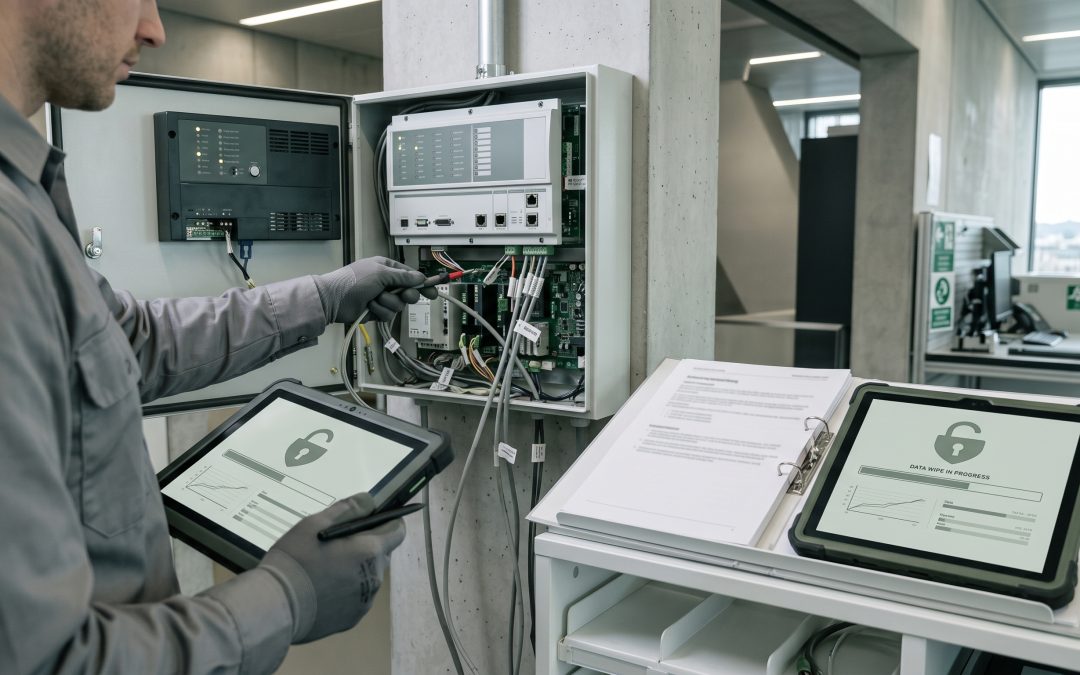
Data Embedded in the Building Itself
Smart buildings are networks of interconnected systems that monitor, control, and optimise everything from heating and cooling to lighting, security, and occupancy. Building automation systems (BAS), access control platforms, CCTV networks, smart lifts, occupancy sensors, and energy management systems all collect and store data about the building and the people who use it. When a smart building is renovated, repurposed, or demolished, the data embedded in these systems needs to be addressed, yet it is almost universally overlooked.
Unlike IT equipment that sits on desks or in server rooms, smart building technology is integrated into the physical fabric of the structure. Sensors are mounted in ceilings. Controllers are hidden behind panels. Network switches are tucked into risers. Access control readers are embedded in walls. This physical integration makes the technology invisible to most occupants and, critically, invisible to those managing building transitions.
What Data Smart Buildings Collect
Access control systems store detailed records of every person who entered the building, which doors they used, and when. For buildings with sophisticated access control, this data may include biometric information such as fingerprints or facial recognition templates. Over years of operation, access control databases build a comprehensive picture of every occupant’s movement patterns.
CCTV systems record video footage of public areas, lobbies, car parks, and corridors. Modern smart building CCTV may include facial recognition, license plate recognition, and behavioural analytics. The storage systems for building CCTV can contain months of footage showing the movements of tenants, visitors, and the public.
Occupancy sensors and people-counting systems track how many people are in each area of the building at any time. While this data is collected for energy optimisation and space planning, it reveals detailed patterns about how different tenants use the building and when their staff are present.
Building management systems (BMS) store environmental data, energy consumption records, equipment maintenance histories, and alarm logs. For multi-tenant buildings, this data may reveal information about individual tenants’ operations, working hours, and energy usage patterns.
Visitor management systems store the names, contact details, and visit records of everyone who visited the building. These systems may also store photographic identification captured at reception.
Smart lift systems record usage patterns including which floors are accessed, by whom, and at what times. In buildings with destination dispatch lifts tied to access control, the lift system has a complete record of individual movement between floors.
When Smart Building Data Needs Attention
Several scenarios trigger the need to address smart building data. Tenant changeovers in multi-tenant buildings mean that the incoming tenant may inherit access to data from the departing tenant if building systems are not properly cleared between tenancies.
Building sale or change of ownership transfers control of all building systems and their data to the new owner. The previous owner’s data, and the data of all previous tenants, may remain on building systems unless specifically addressed.
Major renovations that involve replacing or upgrading building systems create decommissioned controllers, servers, and sensors that contain historical data. Renovation contractors focused on physical works may remove old equipment without any data consideration.
Building demolition is the most extreme scenario. While the physical destruction of the building will eventually destroy most embedded technology, the period between when the building ceases operation and when demolition occurs creates a window where systems may be accessible. Additionally, some building technology, particularly servers and storage, may be removed by demolition contractors and sold or recycled before the building comes down.
Addressing Smart Building Data During Transitions
The building owner or facilities manager should maintain an inventory of all smart building systems and their data storage locations. This inventory should include building management system servers and controllers, access control databases and readers, CCTV recording equipment, network infrastructure, occupancy monitoring systems, visitor management platforms, and any other connected building technology.
Before any building transition, data on these systems should be assessed. Personal information subject to the Australian Privacy Act, such as access control records, CCTV footage, visitor logs, and biometric data, must be handled in accordance with privacy obligations.
For tenant changeovers, all data specific to the departing tenant should be removed from shared building systems. Access control records, allocated access credentials, visitor logs, and any tenant-specific configuration data should be cleared.
For building system upgrades or decommissioning, the old equipment should undergo data destruction before being removed from the building. For servers and storage devices, standard IT sanitisation or physical destruction applies. For embedded controllers with non-removable storage, manufacturer decommissioning procedures should be followed.
The Facilities-IT Coordination Gap
Smart building systems typically fall under facilities management rather than IT department jurisdiction. This organisational split means that the people responsible for building technology may not be familiar with data destruction standards, and the IT team may not be aware of what data the building systems contain.
Bridging this gap requires clear policies that bring building technology into the organisation’s broader data management framework. When building systems are being decommissioned or transitioning, the IT security team should be consulted to ensure data destruction meets organisational standards.
Working with an ITAD provider experienced in building technology can help manage the diverse range of equipment involved. Building automation systems use a mix of standard IT hardware and proprietary building technology, requiring a provider who can handle both.
A Growing Challenge for Smart Cities
As buildings become smarter and cities become more connected, the volume of data embedded in the built environment will continue to grow. Every building transition, renovation, and demolition will involve increasingly complex data considerations. Organisations and building owners that recognise the data dimension of smart building management now will be ahead of a challenge that will only become more significant in the years ahead.
EWV handles IT asset disposition (ITAD) end-to-end for Victorian businesses — from collection and data destruction through to certified recycling or refurbishment for resale. Get in touch for a tailored ITAD quote.