
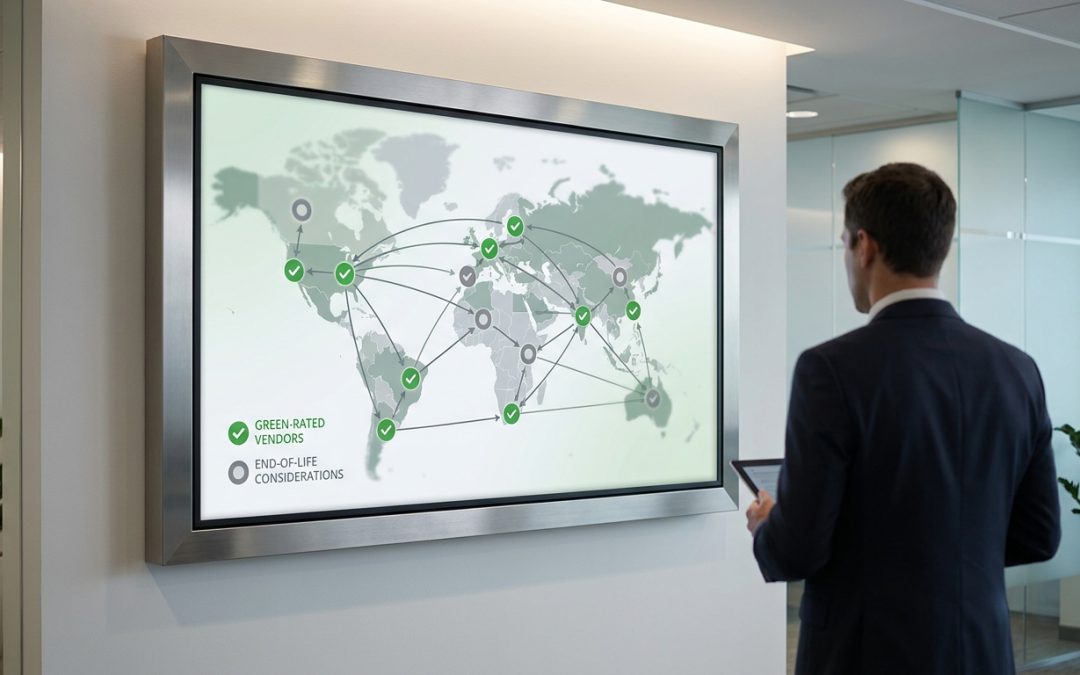
The sustainability of your IT supply chain extends far beyond the environmental footprint of the devices sitting on your desks. From the minerals mined for components to the factories assembling devices, the logistics networks delivering them, and the processors handling them at end of life, every link in the chain carries environmental and social implications. For organisations serious about sustainability, understanding and managing these supply chain impacts is becoming a core business requirement rather than an optional add-on.
The Full Picture of IT Supply Chain Sustainability
A typical piece of IT equipment passes through dozens of organisations across multiple countries before it reaches your office. Raw materials are extracted from mines on several continents. Components are manufactured in specialised facilities, often in Asia. Assembly happens in large-scale factories. Distribution involves international shipping, warehousing, and last-mile delivery. And at end of life, collection, data destruction, refurbishment, and recycling involve yet another set of organisations and processes.
Each of these stages carries its own sustainability profile, including greenhouse gas emissions, water usage, waste generation, chemical exposure, labour practices, and community impacts. Truly sustainable IT procurement considers this full lifecycle rather than just the price tag and specifications of the finished product.
Upstream Sustainability: Procurement Decisions
Sustainable IT procurement starts with the buying decisions you make. Key considerations include choosing manufacturers with demonstrated sustainability commitments, verified through third-party audits, published sustainability reports, and participation in industry initiatives like the Responsible Business Alliance.
Specifying environmental standards is also important. EPEAT (Electronic Product Environmental Assessment Tool) provides a tiered rating system for electronics that evaluates criteria including materials selection, manufacturing processes, energy efficiency, longevity, and end-of-life management. Specifying EPEAT-registered products in your procurement requirements ensures a baseline level of environmental performance.
Requesting lifecycle data from suppliers helps you make informed decisions. This includes embodied carbon figures, environmental product declarations, and information about recycled content and recyclability. Not all suppliers provide this data readily, but asking for it signals market demand and helps you compare options on environmental as well as technical and financial criteria.
Midstream Sustainability: Usage and Maintenance
How you use and maintain IT equipment during its active life is the longest phase of the lifecycle and has significant sustainability implications. Extending equipment lifecycles through good maintenance, timely repairs, and memory or storage upgrades reduces the frequency of procurement and therefore the upstream impacts associated with manufacturing new devices.
Energy management during the usage phase, including proper power settings, efficient peripheral use, and right-sizing equipment to actual needs, reduces operational environmental impact. A developer workstation left running 24/7 when it is only used during business hours wastes significant energy over its multi-year lifecycle.
Downstream Sustainability: End-of-Life Management
The downstream portion of your IT supply chain, how equipment is managed at end of life, is where your choice of ITAD provider has the greatest impact. Sustainable downstream management prioritises refurbishment and reuse to maximise the retained value of embodied resources, materials recovery through certified recycling to return raw materials to manufacturing, domestic processing where possible to maintain visibility and control, and avoiding export to countries where processing conditions are unsafe or exploitative.
Your ITAD provider is essentially your downstream sustainability partner. Their practices, certifications, and transparency directly affect your supply chain sustainability performance. For guidance on selecting a provider, see our guide on how to choose an ITAD provider in Australia.
Supplier Assessment and Monitoring
Sustainable supply chain management requires ongoing assessment, not just a one-time evaluation at the point of procurement. Practical approaches include requiring IT equipment suppliers to complete sustainability questionnaires as part of tender processes, including sustainability KPIs in supplier contracts (such as packaging reduction, carbon reduction targets, or recycled content commitments), conducting periodic reviews of supplier sustainability performance, participating in industry sustainability initiatives that provide shared supplier assessment frameworks, and requiring your ITAD provider to produce regular environmental impact reports.
Several frameworks support supplier sustainability assessment, including EcoVadis (a widely used supplier sustainability rating platform), CDP Supply Chain (which allows you to request environmental disclosures from suppliers), and the Responsible Business Alliance’s assessment tools for electronics manufacturers.
Circular Procurement
One of the most impactful sustainable procurement strategies is buying refurbished IT equipment. Refurbished devices have a fraction of the embodied carbon of new equipment because the manufacturing emissions have already been incurred. Modern refurbishment processes produce equipment that is functionally equivalent to new devices, often with warranties comparable to new products.
Circular procurement also includes leasing models where the provider retains ownership and responsibility for end-of-life management, equipment-as-a-service arrangements that incentivise longevity and maintenance, and buy-back agreements that ensure retired equipment re-enters the circular economy.
Reporting Supply Chain Sustainability
Transparency about your IT supply chain sustainability practices is increasingly expected by stakeholders. Relevant reporting frameworks include GRI 308 (Supplier Environmental Assessment), Scope 3 emissions reporting under various climate frameworks, Modern Slavery Act reporting for organisations above the revenue threshold, and voluntary disclosures in sustainability reports and annual reports.
Having accurate data on your IT supply chain, from procurement through to end-of-life, enables credible reporting across these frameworks. For guidance on ESG reporting and e-waste, our comprehensive guide covers the reporting landscape in detail.
]]>