
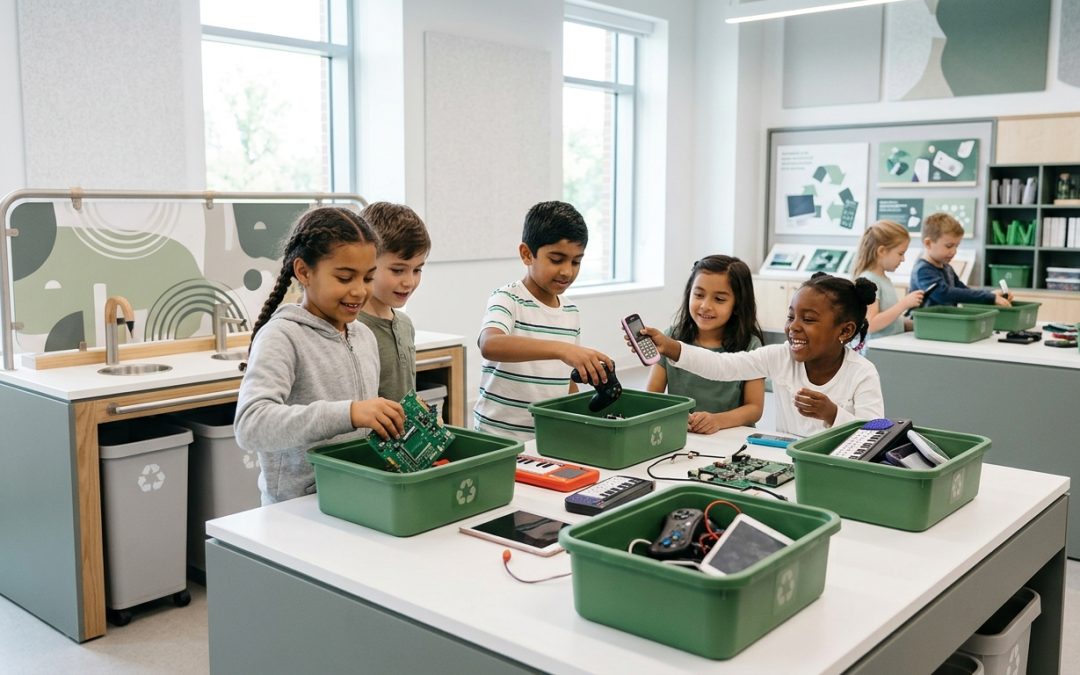
Why E-Waste Education Matters for the Next Generation
Children today grow up surrounded by technology in a way no previous generation has experienced. Tablets in classrooms, smartphones by age 10, gaming consoles, smart watches, and wireless earbuds are all part of daily life. Yet very few kids understand what happens to these devices when they stop working or get replaced. Teaching children about electronic waste and responsible recycling builds habits that will shape how an entire generation handles technology throughout their lives.
Australia generates over 500,000 tonnes of e-waste annually, and that number is growing faster than any other waste stream. The habits children develop now around technology disposal will directly influence whether that trend accelerates or starts to reverse.
Start with the Basics: What Is E-Waste?
For younger children, the concept of e-waste can be introduced simply. Anything that uses electricity or batteries and no longer works or is no longer wanted is electronic waste. That includes the obvious things like phones and computers, but also items kids might not think about: broken torches, old remote-control cars, dead batteries, and worn-out headphones.
A good starting activity is to walk around the house together and identify items that would count as e-waste. Kids often enjoy the treasure hunt aspect of this, and it makes the abstract concept concrete. You might be surprised at how many items a child can spot that adults have become blind to.
Explain that e-waste is different from regular rubbish because it contains materials that can be harmful if they end up in the ground, like lead, mercury, and cadmium. But it also contains valuable materials that can be recovered, like gold, silver, copper, and rare earth elements. This dual nature of e-waste, both harmful and valuable, is a concept that even young children can grasp.
Make It Visual and Hands-On
Abstract environmental concepts don’t stick with children the way concrete experiences do. Showing is always more effective than telling when it comes to e-waste education.
If you have a broken device that’s safe to open (a desktop computer or old radio works well), let children see the inside. Show them the circuit boards, the copper wiring, the various metals and plastics. Explain that each of these materials came from the earth and can go back to being useful if the device is recycled properly. If it goes to landfill instead, those materials are lost and the hazardous substances can leach into soil and water.
Videos showing the e-waste recycling process can also be powerful teaching tools. Many recycling facilities have produced educational content showing how devices are dismantled, sorted, and processed. Seeing shredded circuit boards being separated into different metals makes the recycling process tangible.
Connect It to Their World
Children respond best when environmental lessons connect to things they care about. Frame e-waste recycling in terms of the technology they love. The rare earth elements in their gaming console had to be mined from the ground. Recycling old electronics means those materials can be used to make new devices without digging up more of the earth.
For older children and teenagers, the social justice angle can be compelling. Much of the world’s e-waste ends up being processed informally in developing countries, where workers including children burn electronics in open air to extract metals. The toxic fumes cause serious health problems. Recycling e-waste properly in Australia means it gets processed safely in regulated facilities rather than being shipped offshore for dangerous informal processing.
Gaming is another useful entry point. If a child’s controller breaks, use it as a teaching moment. Rather than tossing it in the bin, discuss what should happen to it. The lithium battery needs careful handling. The plastics and metals can be recovered. Even the packaging it came in has a recycling pathway.
Age-Appropriate Activities
For ages 5 to 8: Keep it simple and sensory. Do an e-waste scavenger hunt around the house. Create a drawing or poster about recycling electronics. Set up a designated box where the family puts old electronics instead of the bin. Let them help sort cables and devices, with supervision, when doing a tech clean-out.
For ages 9 to 12: Introduce more detail. Research together what materials are inside a smartphone. Calculate how many old phones your household has gone through. Visit a local e-waste drop-off point together. Start a school project or presentation about electronic waste. Read about the environmental cost of e-waste together and discuss what surprised them.
For teenagers: Engage with the bigger picture. Discuss planned obsolescence and why devices seem to break or become outdated so quickly. Explore the concept of the circular economy and how it applies to electronics. Talk about data security when disposing of old devices. Encourage them to sell or donate their old devices rather than hoarding them. Let them handle listing and selling their old tech on marketplace platforms, with appropriate supervision.
Schools and Community Involvement
Schools are increasingly incorporating e-waste education into their sustainability programs. If your child’s school doesn’t have an e-waste collection program, it’s worth suggesting one. Many councils and recycling organisations will support schools in setting up collection points for small electronics and batteries.
Some practical ideas for school involvement include organising a class or whole-school e-waste collection week, inviting a local e-waste recycler to give a presentation, incorporating e-waste statistics into maths lessons (calculating household e-waste generation, graphing growth trends), using e-waste topics for persuasive writing exercises, and creating art projects from non-hazardous electronic components.
Community e-waste collection events are also excellent learning opportunities. Taking children along and involving them in the process of sorting and dropping off old electronics reinforces the lessons they’ve learned at home.
Lead by Example
Children learn far more from what they see their parents and caregivers do than from what they’re told. The most powerful e-waste lesson is simply modelling responsible behaviour.
- Keep a dedicated container for old electronics and batteries
- Make e-waste drop-offs a visible family activity, not something done quietly
- Discuss your thought process when deciding whether to repair, donate, or recycle a device
- Choose to repair devices when practical rather than automatically replacing them
- Explain why you’re wiping data before disposing of a device
- Talk about why you chose a product with a longer warranty or better repairability
When your child sees you taking an old phone to a recycling point rather than dropping it in the bin, that behaviour becomes normal for them. When they hear you discussing whether a device can be repaired before replacing it, they absorb that as a standard approach to consumption.
The Bigger Picture
Teaching kids about e-waste isn’t just about recycling. It’s about developing a thoughtful relationship with technology and consumption more broadly. Children who understand where their devices come from and where they go develop a more considered approach to wanting the latest gadget. They start asking better questions: Do I really need a new one? Can this be fixed? What happens to the old one?
These are questions that, if normalised in childhood, carry forward into adulthood. And given that the e-waste challenge is only growing, raising a generation that instinctively thinks about the full lifecycle of their electronics is one of the most impactful things we can do.
For more on how the recycling process works and why it matters, explore our guide to what happens to old electronics.
EWV helps Victorian businesses manage e-waste and IT asset disposal compliantly and sustainably — including collection, certified data destruction, and recycling. Contact us for a free quote.