
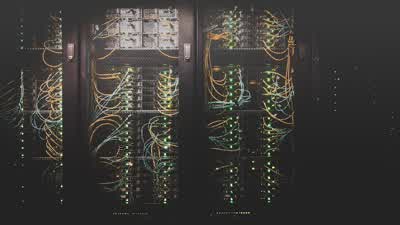
Used server hardware is selling at roughly 2.5 times its seven-year average resale price. The driver is AI infrastructure demand, with organisations building out machine learning capacity competing for second-hand rack hardware. That ripple effect is showing up in the IT asset disposition market in a way most Victorian IT teams haven’t factored into their planning.
For businesses with a mid-year hardware refresh approaching, that context changes the economics of disposal. And with Australia’s financial year-end looming on 30 June, it’s the right time to revisit how end-of-life IT is handled.
The disposal model needs an update
The traditional approach to end-of-life IT is straightforward: remove equipment from the asset register, hand it to a provider, collect a certificate of destruction, close the ticket. That model prioritised risk elimination. Value recovery was secondary, if it came up at all.
A Resource Recycling report published 10 June 2026 suggests the industry is shifting. NIST 800-88 adoption as a baseline data erasure standard jumped from 34% to 52% in a single year, reflecting how widely clients now specify it in tenders. A separate study of more than 117,000 storage devices found that 87% were suitable for reuse after proper sanitisation.
Nearly nine in ten devices going through disposal could re-enter productive use instead of being shredded or smelted. That changes the question from “are we disposing safely?” to “are we leaving recoverable value on the table?”
What documented ITAD makes possible
Value recovery only works when data security comes first. A device without documented sanitisation cannot be verified as clean, which means it cannot be responsibly resold or placed into secondary markets.
NIST 800-88 Rev. 2-aligned sanitisation, combined with a clear chain of custody from collection to final disposition, produces a device that is both auditable and commercially transferable. That same documentation satisfies ISO 27001 Annex A.8.10 requirements, aligns with AS/NZS 5377 as the relevant Australian e-waste handling standard, and keeps your organisation compliant with Victoria’s e-waste landfill ban, in effect since 1 July 2019.
Electronic Waste Victoria operates to this standard, with ISO 14001 and ISO 27001 certification on the roadmap. CircularTrack, EWV’s reporting platform, records each device through its full disposition lifecycle, feeding your audit file, chain of custody documentation, and ESG reporting in one continuous process.
The CO2e factor
Value recovery and environmental performance move together here. A device that re-enters productive use avoids the CO2e, water consumption, and rare earth material demand that manufacturing a replacement requires.
For Victorian businesses with Scope 3 emissions reporting obligations, end-of-life IT sits in the supply chain emissions category. A provider who can document landfill diversion rates and material recovery gives your sustainability team concrete figures for the annual report, rather than a gap in the asset lifecycle data.
Before your next refresh
If a hardware refresh, data centre decommission, or end-of-financial-year equipment clearance is approaching, the time to engage your ITAD process is before the equipment comes off the asset register, not after.
That means:
- Auditing what you have and checking residual value against current market conditions
- Confirming device-level sanitisation aligned to NIST 800-88 Rev. 2
- Asking whether reusable hardware is placed into secondary markets rather than shredded by default
- Getting a chain of custody record for every device, not just assets flagged as sensitive
The hardware in your server room is depreciating on the books. In the current market, it may be worth considerably more than its written-down value. A proper ITAD process closes data security exposure, meets compliance obligations under AS/NZS 5377 and ISO 27001, and recovers commercial value in the same movement.
Contact Electronic Waste Victoria to understand what compliant IT asset disposition looks like for your next hardware refresh or decommission.