
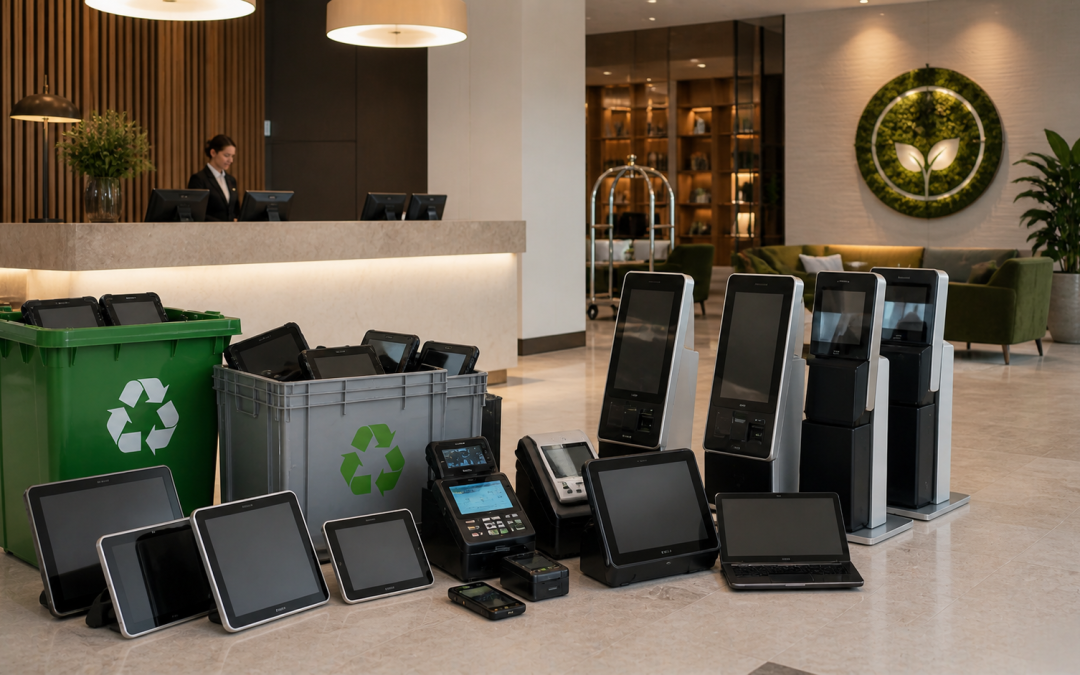
Hotels, resorts, conference centres, and tourism operators are deploying more guest-facing technology than ever before. Digital check-in kiosks, in-room tablets, smart room controls, entertainment systems, point-of-sale terminals, and Wi-Fi infrastructure all enhance the guest experience while generating a growing e-waste stream. For hospitality businesses where brand reputation and guest perception drive commercial success, responsible technology management is both an ESG requirement and a brand opportunity.
The Hospitality Technology Footprint
A modern hotel deploys technology across every guest touchpoint. Reception areas use check-in terminals and concierge screens. Guest rooms contain televisions, phones, clock radios, minibars with electronic controls, and increasingly tablets or smart room systems. Conference and event spaces use audio-visual equipment, presentation systems, and networking infrastructure. Restaurants use POS systems and kitchen display technology. And back-of-house operations run on standard IT infrastructure for reservations, accounting, and staff management.
When these systems are refreshed, the disposal volumes can be significant. A hotel upgrading its in-room entertainment across 300 rooms generates 300 televisions and associated equipment in a single project, plus the networking infrastructure that supported the old system.
Guest Expectations and Brand Alignment
Travellers are increasingly environmentally conscious, and they notice how hospitality businesses manage their environmental responsibilities. Hotels that promote sustainability as part of their brand promise need to ensure their technology practices align with that message.
Many hospitality businesses already communicate their environmental efforts through towel reuse programs, energy efficiency initiatives, and locally sourced food. Adding responsible technology management to this narrative strengthens the overall sustainability story without requiring additional marketing investment.
Renovation and Refurbishment Cycles
Hospitality properties undergo periodic refurbishment to maintain competitiveness and meet brand standards. These renovation cycles generate concentrated volumes of e-waste as technology systems are replaced across the property. Room refurbishments, conference facility upgrades, and restaurant renovations all include technology components.
Build e-waste management into renovation project planning from the outset. Specify disposal requirements in contractor agreements, allocate budget for responsible processing, and ensure all electronic waste is directed to certified processors rather than being mixed with general construction waste.
Guest Data on Disposed Equipment
Hospitality technology handles guest personal information including names, contact details, payment card data, loyalty program information, and sometimes passport or identification details. PCI DSS compliance requires secure handling of payment data throughout its lifecycle, including at equipment disposal.
In-room devices may store Wi-Fi connection logs, browsing history, and other usage data that could relate to identifiable guests. POS terminals process thousands of card transactions. Reservation systems contain comprehensive guest profiles. All data-bearing devices require certified destruction before disposal.
Seasonal and Event Technology
Some hospitality operations deploy temporary technology for seasonal peaks or special events. Pop-up registration systems, additional POS terminals for functions, and temporary audio-visual setups all have finite useful lives. Include disposal planning in the lifecycle management of temporary technology deployments rather than allowing these devices to accumulate in storage rooms between events.
Multi-Property Management
Hotel chains and property groups operating multiple venues can achieve efficiencies by coordinating e-waste management across their portfolio. Centralised contracts with processing partners, standardised disposal procedures across properties, and consolidated reporting simplify management while ensuring consistency.
Equipment cascading between properties, where devices replaced at premium properties are redeployed at properties with lower specification requirements, extends useful life and reduces both procurement costs and waste volumes.
Sustainability Certification
Track your e-waste performance as part of your broader sustainability program. Metrics including disposal volumes, diversion rates, material recovery, and data destruction compliance all contribute to eco-certification assessments and corporate sustainability reporting.
For more on ESG frameworks applicable to service industries, see our guide on ESG reporting and e-waste for Australian businesses.