
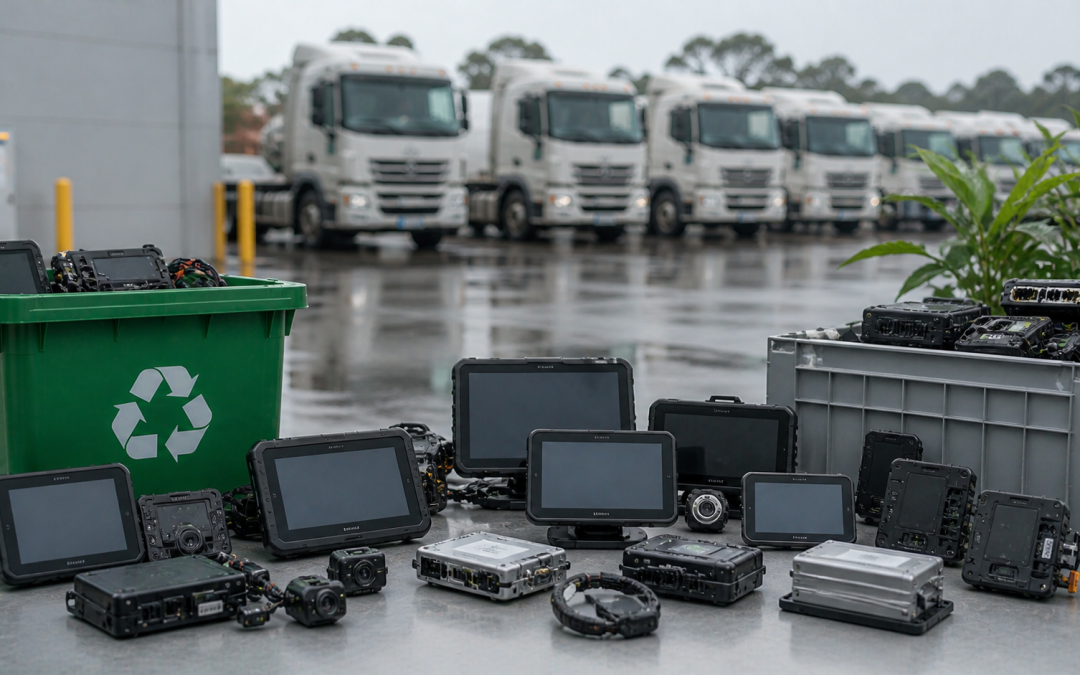
The transport and logistics sector operates technology in some of the most demanding environments imaginable. GPS tracking units in vehicles, handheld scanners in warehouses, onboard computers in trucks and buses, and communication systems across depots all face harsh conditions that accelerate equipment wear. For transport companies building ESG programs, fleet technology disposal represents a distinct challenge and opportunity that differs significantly from office-based IT management.
Technology Across the Fleet
Modern transport operations are heavily technology-dependent. Vehicles carry GPS tracking devices, electronic logging systems, dashboard cameras, communication equipment, and increasingly sophisticated telematics systems. Depots and warehouses use handheld scanners, rugged tablets, weighing and measurement equipment, and security systems. Offices run standard corporate IT infrastructure for administration, routing, and customer management.
Each of these technology categories has different lifecycle characteristics. Vehicle-mounted technology is replaced when vehicles are disposed of or when systems are upgraded fleet-wide. Handheld devices in warehouses face heavy use and shorter lives. Office equipment follows more conventional refresh cycles.
Harsh Environment Challenges
Technology in transport environments faces vibration, temperature extremes, dust, moisture, and physical impact that standard office equipment never encounters. This means devices often reach end of life due to physical degradation rather than obsolescence. Damaged and degraded equipment may be more difficult to process for refurbishment but still contains valuable materials that can be recovered through recycling.
Vehicle-mounted equipment also presents removal challenges. GPS units, cameras, and telematics devices need to be properly extracted from vehicles during fleet turnover, which requires coordination between fleet management and IT disposal processes.
Data in Transport Technology
Transport technology carries data that requires careful handling at disposal. GPS tracking records show vehicle movements, driver behaviour, and customer locations. Electronic logging devices contain regulatory compliance data. Dashboard cameras store recorded footage. Handheld scanners hold delivery records and customer details. All of these devices need appropriate data handling before disposal.
For transport companies operating under chain of responsibility legislation, maintaining records of responsible disposal, including data destruction, supports compliance obligations and demonstrates due diligence in fleet management.
ESG Reporting for Transport
Transport companies typically focus their ESG reporting on fuel consumption, emissions, and safety performance. Adding IT asset management metrics broadens the environmental narrative and demonstrates attention to environmental responsibility beyond the most obvious operational impacts.
E-waste data from fleet technology disposal provides specific, measurable metrics: devices collected, materials recovered, CO2e avoided, and data securely destroyed. These complement fuel efficiency and emissions data to present a more comprehensive environmental picture.
Fleet Turnover as an Opportunity
Major fleet turnover events, where vehicles are replaced in bulk, create concentrated e-waste volumes that can be processed efficiently. Planning the technology component of fleet disposal alongside vehicle disposal ensures nothing is overlooked and allows you to capture the full environmental benefit through documented recycling and recovery.
Some transport companies are finding that selling older vehicles without the technology installed, and processing the technology separately through certified e-waste channels, delivers better outcomes for both data protection and environmental reporting.
Depot and Warehouse Programs
Establish e-waste collection points at each depot or warehouse location. Rugged tablets, handheld scanners, and communication equipment that fails or reaches end of life should be collected centrally rather than discarded locally. Regular pickups from a certified processor ensure consistent handling and generate the data you need for ESG reporting.
Training for depot and warehouse staff should cover which devices need to go through the e-waste stream rather than general waste. Simple visual guides showing the types of equipment that require special handling are usually more effective than written policies in operational environments.
For more on ESG reporting frameworks across sectors, see our guide on ESG reporting and e-waste for Australian businesses.