
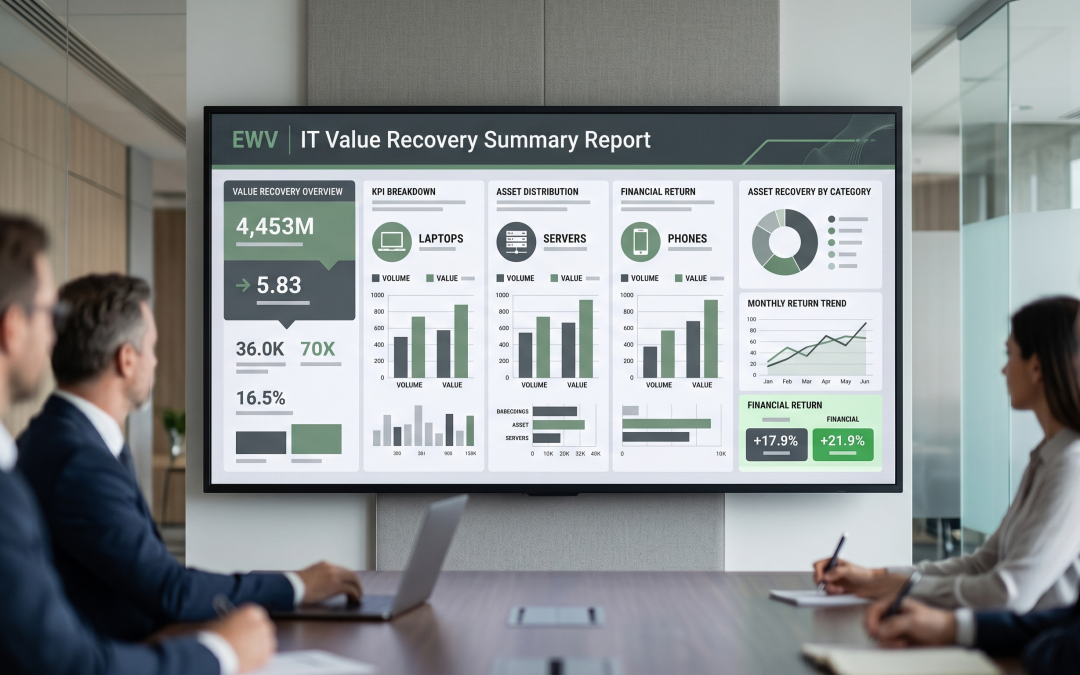
Old IT equipment is not just a disposal cost. For many organisations, retired devices represent a recoverable financial asset that can offset disposal expenses or even generate net revenue. The key is understanding which equipment holds value, how to maximise returns, and how to balance financial recovery with data security and environmental obligations.
Where the Value Lies
Not all retired IT equipment is worth the same. Several factors determine resale value. Age is the most significant: equipment less than three years old typically commands reasonable prices, while devices over five years old rarely have meaningful resale value. Brand and model matter too. Business-grade equipment from major manufacturers (Dell, HP, Lenovo, Apple) holds value better than consumer-grade or lesser-known brands because it has established secondary markets.
Condition obviously affects value. A laptop in good cosmetic condition with a healthy battery is worth considerably more than one with a cracked screen and a battery that barely holds a charge. Functional testing results, including performance benchmarks and component health, directly influence grading and pricing.
Market demand fluctuates based on broader economic conditions, technology cycles, and seasonal patterns. The secondary market for IT equipment is surprisingly dynamic, with prices shifting in response to new product launches, supply chain disruptions, and changes in business purchasing patterns.
Equipment Categories and Typical Value
Business laptops are generally the highest-value category in most disposal projects. Recent-model ultrabooks and business-class notebooks in good condition can fetch 20-40% of their original purchase price on the secondary market. Even laptops that are three to four years old may return meaningful value if they are from popular product lines.
Desktops typically return less than laptops because demand in the secondary market is lower. However, high-specification workstations used for design, engineering, or video production can be exceptions, particularly if they contain high-end GPUs or large amounts of RAM.
Servers and networking equipment have a more specialised market. Enterprise servers from the last few generations can hold significant value, especially if they are in popular configurations. Storage arrays, switches, and other infrastructure equipment also have active secondary markets, though prices vary widely based on model and specification.
Mobile devices, particularly iPhones and recent Android flagship phones, retain value well. Tablets hold value less consistently, though iPads tend to outperform Android tablets in resale markets.
Monitors, printers, and peripherals generally have the lowest recovery value. Older monitors may have little or no resale value, though recent high-resolution displays can still command reasonable prices.
The Remarketing Process
Value recovery through remarketing follows a standard process. After collection, devices undergo data destruction to remove all stored information. They are then functionally tested to verify that all components work correctly. Cosmetic grading assigns each device a condition rating. Devices are then listed for sale through various channels depending on volume and value.
Remarketing channels include direct sales to businesses looking for refurbished equipment, online auction platforms specialising in used IT, wholesale buyers who purchase in bulk for redistribution, and export markets where demand for used business equipment is strong.
Your ITAD provider’s remarketing capabilities directly affect the returns you receive. Providers with established sales channels, a strong reputation in secondary markets, and the technical capability to properly test and present equipment will typically achieve better prices than those who simply sell to the first wholesale buyer.
Maximising Your Returns
Several practical steps help maximise value recovery from your old equipment. Dispose of equipment sooner rather than later. IT equipment depreciates rapidly, and every year you hold onto unused devices reduces their resale value. A device sitting in a cupboard losing 20-30% of its value annually is a poor use of capital.
Maintain equipment well during its active life. Devices with intact screens, working keyboards, and healthy batteries are worth significantly more than those with physical damage. Include original accessories (chargers, docking stations) where possible, as these add value.
Provide your ITAD provider with accurate information about the equipment upfront. Detailed inventory lists with specifications help them assess value accurately and plan remarketing strategies before the equipment even arrives at their facility.
Consider your IT asset lifecycle strategy holistically. Regular refresh cycles that retire equipment while it still has strong resale value may cost more in procurement but generate better returns at disposal, potentially improving total cost of ownership.
Balancing Value and Security
The pursuit of value recovery must never compromise data security. Every device destined for remarketing must undergo thorough data sanitisation before being offered for sale. Certified wiping using recognised standards ensures data is irrecoverably removed while keeping the device functional and valuable.
Devices that fail software-based data sanitisation should be diverted to physical destruction rather than re-attempted or sold with uncertain data removal. The financial value of a single used laptop never justifies the risk of a data breach.
Financial Reporting
Track your value recovery results over time. Understanding what returns you are achieving helps you budget more accurately for future disposal projects, benchmark your ITAD provider’s performance, and demonstrate the financial benefits of a structured disposal program to your organisation’s leadership. Some organisations find that a well-managed ITAD program with strong value recovery transforms IT disposal from a pure cost centre into a program that partially funds itself.
EWV helps Victorian businesses manage e-waste and IT asset disposal compliantly and sustainably — including collection, certified data destruction, and recycling. Contact us for a free quote.