
Technology in Modern Veterinary Practice
Veterinary clinics have undergone the same digital transformation as human healthcare, just on a smaller scale. A modern veterinary practice relies on digital X-ray systems, ultrasound machines, in-house pathology analysers, practice management software, client communication platforms, and increasingly sophisticated diagnostic equipment. When this technology reaches end of life, veterinary practices face many of the same e-waste challenges as their human healthcare counterparts, though often without the same level of institutional support or guidance.
The variety of electronic equipment in a veterinary clinic can be surprising. Beyond the obvious computers and diagnostic imaging systems, practices use microchip readers and programmers, digital dental X-ray units, endoscopy systems, anaesthetic monitoring equipment, laser therapy devices, and automated dispensing systems. Emergency and specialist veterinary hospitals add even more sophisticated equipment including CT scanners, MRI machines, and linear accelerators for radiation therapy.
As veterinary medicine continues to advance technologically, the volume of electronic equipment in practices is growing. Equipment that was once only found in specialist referral centres is increasingly common in general practice, meaning more technology to manage and eventually dispose of.
Client Data and Privacy Considerations
While veterinary records are primarily about animal patients, the associated client records contain significant personal information. Practice management systems store client names, addresses, phone numbers, email addresses, and payment details. Many practices also hold copies of identification documents for controlled substance dispensing records.
Payment processing systems handle credit card transactions and direct debit arrangements for payment plans. Client communication platforms store correspondence that may include sensitive information about clients’ financial situations (particularly around payment plans for emergency treatment) or personal circumstances. While veterinary practices are not subject to the same health privacy regulations as human healthcare providers, the Privacy Act 1988 still applies to the handling of client personal information.
- Client personal details (names, addresses, contact information)
- Payment card details and financial arrangements
- Controlled substance dispensing records with client ID
- Patient diagnostic images linked to client accounts
- Correspondence including sensitive personal circumstances
- Staff employment records and payroll data
- Business financial records and supplier information
Controlled substance records deserve particular attention. Veterinary practices that dispense Schedule 8 medications (such as ketamine, morphine, and other controlled drugs) maintain detailed registers that include client identification details. The devices that store or process these records need secure disposal to prevent any misuse of this information. Our guide to data destruction for Australian businesses explains the standards that apply.
Diagnostic Equipment as E-Waste
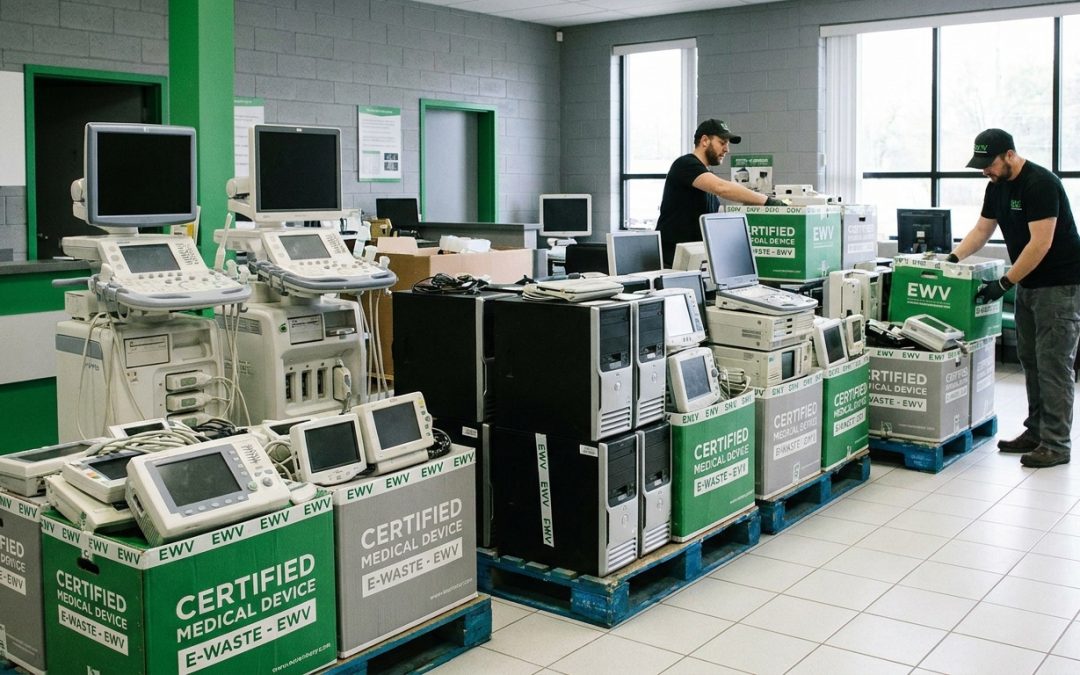
Digital radiography systems are now standard in veterinary practice and represent one of the most significant categories of veterinary e-waste. A computed radiography (CR) system consists of imaging plates, a reader unit with internal computing components, and a workstation. Direct digital radiography (DR) systems use flat-panel detectors with embedded electronics. Both contain storage media that may hold patient images and associated data.
Ultrasound machines used for pregnancy diagnosis, cardiac assessment, and abdominal imaging contain computers, displays, and storage systems. Older units may have internal hard drives storing examination data. Even portable units used for equine or farm animal work contain electronic components requiring proper disposal.
In-house pathology analysers for blood chemistry, haematology, and urinalysis are essentially specialised computers. These devices run proprietary software and may store test results, calibration data, and quality control records. When they are replaced during technology upgrades, they become e-waste that needs appropriate handling.
Endoscopy systems, anaesthetic monitors, dental X-ray units, laser therapy equipment, and surgical monitoring systems all contain electronic components. A practice upgrading from older to newer equipment may generate a substantial volume of e-waste in a single refresh cycle.
Radiation Equipment in Veterinary Practice
Like dental practices, veterinary clinics use X-ray generating equipment that is regulated under state radiation safety legislation. Practices must notify the relevant state authority when decommissioning registered radiation apparatus. In Victoria, the Department of Health oversees radiation use licences, and practices should check notification requirements before disposing of X-ray equipment.
The X-ray equipment itself does not contain radioactive materials and can be recycled through standard e-waste channels once regulatory requirements are met. However, practices that still have legacy film processing equipment in storage need to handle the chemical solutions (developer and fixer) as hazardous waste, separate from the electronic components of the processing unit.
Specialist veterinary facilities offering radiation therapy use equipment with more complex regulatory requirements for decommissioning. These facilities should work with both their radiation safety officer and their ITAD provider to ensure all requirements are met.
The Unique Challenge of Mixed Practice and Farm Calls
Veterinary practices that serve both companion animals and livestock often operate portable electronic equipment that travels to farms and rural properties. Portable ultrasound machines, laptop-based X-ray systems, and handheld diagnostic devices are exposed to challenging conditions including dust, moisture, temperature extremes, and physical impacts during transport.
This rough handling means portable veterinary equipment often has a shorter functional lifespan than the same equipment in a clinic setting. Devices may be retired due to physical damage rather than obsolescence, but they still contain the same electronic components and potentially the same data as clinic-based equipment.
For large animal practices and rural mixed practices, the logistics of e-waste collection can be more challenging. Equipment may be stored at the practice, in vehicles, or at satellite locations. Creating a complete picture of what electronic equipment exists across all locations is the first step toward managing its disposal effectively.
Practice Transitions and Ownership Changes
The Australian veterinary industry has seen significant consolidation in recent years, with corporate groups acquiring independent practices. These ownership changes often trigger technology standardisation, where the acquiring group replaces existing systems with their preferred platforms. This generates bulk e-waste as practice management servers, workstations, and sometimes diagnostic equipment are retired simultaneously.
During practice transitions, particular care is needed around client data migration. The incoming operator needs access to patient histories and client records, but the outgoing practice owner needs assurance that any equipment they retain or that is disposed of has been properly sanitised. Clear agreements about data handling and equipment disposal should be part of the practice sale documentation.
Independent practices closing or retiring also face a concentrated disposal requirement. All electronic equipment in the practice needs proper end-of-life processing, with particular attention to devices containing client data and controlled substance records.
Practical Steps for Veterinary Practices
Veterinary practices can manage their e-waste effectively with a few straightforward practices. Maintain a register of all electronic equipment, including diagnostic devices and portable equipment. When planning equipment purchases, factor in the disposal cost and process for the equipment being replaced.
Engage a certified ITAD provider for data destruction rather than attempting to wipe devices in-house. This is especially important for practice management servers and any device that has stored client financial information or controlled substance records. Certificates of data destruction provide documentary evidence of proper handling that can be filed with the practice’s compliance records.
For Victorian practices, remember that the e-waste landfill ban applies to everything from computer peripherals to diagnostic equipment components. Even small items like old microchip readers, defunct label printers, and broken handheld scanners need to go through proper recycling channels.
For guidance on selecting a disposal partner and building a structured approach, see our articles on choosing an ITAD provider and building an IT asset disposal policy.
EWV helps Victorian businesses manage e-waste and IT asset disposal compliantly and sustainably — including collection, certified data destruction, and recycling. Contact us for a free quote.