
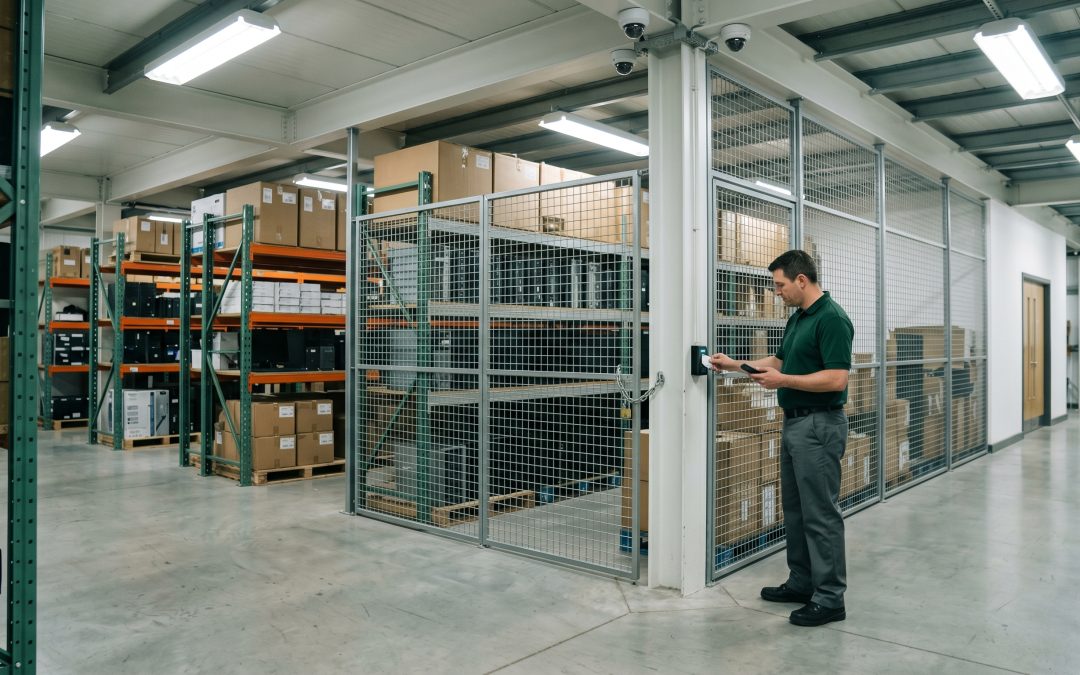
Between collection and processing, IT equipment awaiting disposal often spends time in a warehouse or staging area. This storage period, whether it lasts hours or weeks, creates a window of vulnerability. Equipment sitting in a warehouse still contains live data, and without proper security measures, it is exposed to theft, unauthorised access, and mishandling. The security of this interim storage is a critical factor in evaluating any ITAD provider.
Why Warehouse Security Matters
When your IT equipment arrives at an ITAD provider’s facility, it likely still contains all the data it held when it was in active use. Customer records, financial data, employee information, intellectual property. Until data destruction is completed and certified, your organisation remains responsible for that data under the Australian Privacy Principles and any industry-specific regulations that apply.
If equipment is stolen from a warehouse before data destruction, the data breach consequences fall on your organisation, not the warehouse operator (though they may share liability depending on your contract). This makes warehouse security a direct concern for your compliance and risk management.
Physical Security Fundamentals
At minimum, a facility storing IT equipment awaiting disposal should have perimeter security including fencing, controlled entry points, and adequate lighting around the building. The building itself should be of solid construction with no easy access points beyond controlled doors. Access control systems should restrict entry to authorised personnel only, using key cards, PIN codes, biometrics, or a combination.
CCTV coverage should be comprehensive, covering all entry and exit points, storage areas, processing zones, and loading docks. Footage should be retained for a reasonable period, typically 30 to 90 days, and should be available for review if any incidents occur.
Alarm systems should cover intrusion detection (door contacts, motion sensors), fire detection and suppression, and environmental monitoring (temperature, humidity, water leak detection).
Internal Controls
Physical barriers are only part of the equation. Internal controls govern how people interact with equipment inside the facility. Storage areas for data-bearing equipment should be separated from general warehouse areas. Access to these secured zones should be limited to staff who need it for their work, and every entry should be logged.
A clean desk (or rather, clean floor) policy prevents equipment from being left in unsecured areas. Every device should have a designated storage location, and movement between areas should be documented. Visitors, including clients, auditors, and contractors, should be signed in, escorted, and signed out.
Staff background checks are essential. Everyone who has access to stored IT equipment should have undergone appropriate vetting, including police checks for roles involving access to sensitive data-bearing devices.
Inventory Management Within the Warehouse
Knowing exactly what is in the warehouse at any given moment is both a security measure and an operational necessity. Every item entering the facility should be scanned and logged on arrival. Every item leaving, whether for processing, return to client, or dispatch after remarketing, should be scanned and logged on departure.
Regular cycle counts verify that the physical inventory matches the system records. Discrepancies should trigger immediate investigation. The goal is to be able to account for every single device at all times, creating a continuous chain of custody from receipt through to final disposition.
Segregation by Client and Classification
Good warehouse practice segregates equipment by client to prevent mix-ups and ensure that each organisation’s devices are processed according to their specific requirements. Where data classification levels vary, equipment should also be segregated by sensitivity level, with higher-classification devices in more secure storage zones.
Some clients require dedicated caged areas within the warehouse where only their equipment is stored and only authorised personnel can access it. This is common for government, defence, and financial services clients with heightened security requirements.
Processing Priority and Dwell Time
The longer equipment sits in storage before processing, the longer it remains vulnerable. Evaluate your ITAD provider’s approach to processing queues and dwell times. A well-managed facility processes equipment on a first-in, first-out basis, with clear SLAs for maximum dwell time between receipt and data destruction.
Ask your provider what their average dwell time is for equipment awaiting data destruction. If devices are sitting for weeks before processing, that is weeks of unnecessary risk. For high-security equipment, consider specifying a maximum dwell time in your service agreement.
Environmental Controls
While less dramatic than theft, environmental damage to stored equipment can also be costly. Equipment destined for remarketing needs to arrive at testing in good condition. Excessive heat, humidity, water ingress, or dust can damage devices and reduce their resale value.
A properly managed storage environment maintains stable temperature and humidity, protects against water damage from leaks or flooding, minimises dust exposure, and stores equipment off the ground on racking or pallets to prevent floor-level damage.
What to Look for During a Site Visit
If you are evaluating an ITAD provider, visiting their facility tells you more than any marketing material. During your visit, observe whether access is controlled and whether you are asked to sign in and wear a visitor badge. Check if storage areas are clean, organised, and logically arranged. Ask to see their CCTV monitoring setup. Notice whether staff follow procedures or take shortcuts. Ask about their incident history and how they handle security events.
A provider who welcomes facility visits and is transparent about their security measures is generally one you can trust with your equipment. Reluctance to show you the facility or answer security questions should prompt serious reconsideration of the relationship.
EWV helps Victorian businesses manage e-waste and IT asset disposal compliantly and sustainably — including collection, certified data destruction, and recycling. Contact us for a free quote.