
When organisations retire data-bearing IT assets, they need assurance that sensitive information has been permanently and irreversibly destroyed. Two primary models exist for providing this assurance: witnessed destruction, where a representative physically observes the process, and certificate-based assurance, where the organisation relies on documentation provided by the destruction vendor. Both have their place, and understanding the trade-offs helps you make the right call for different asset types and risk levels.
What Is Witnessed Destruction?
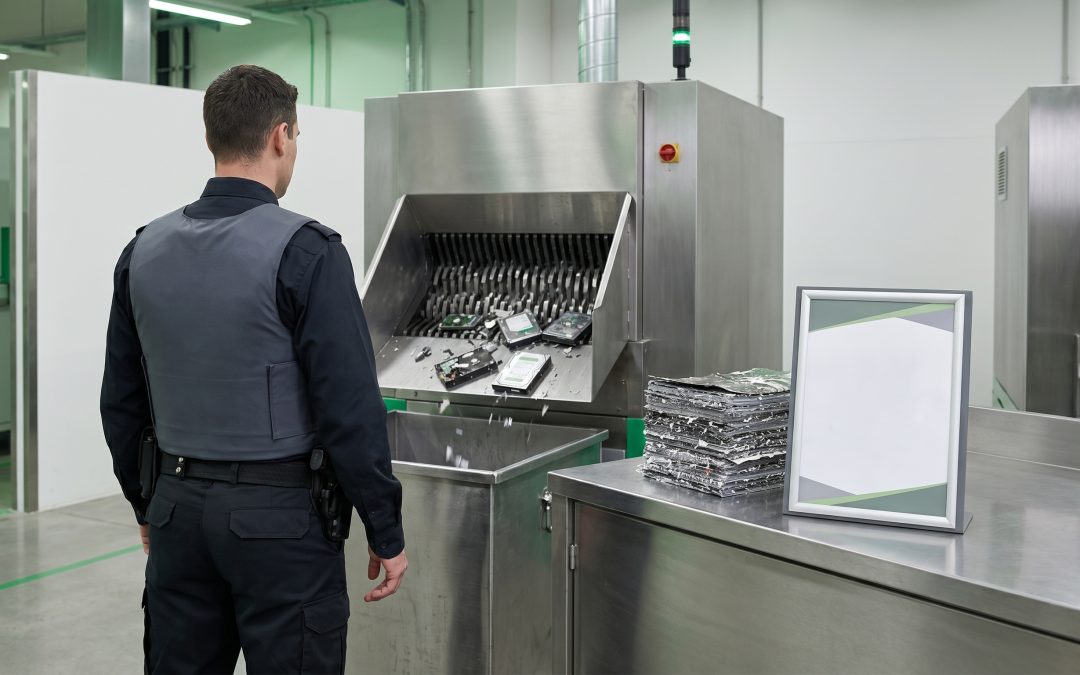
Witnessed destruction means a representative from your organisation, or an independent auditor, is physically present during the data destruction process. They watch as drives are degaussed, shredded, or wiped, and can verify in real time that every asset on the manifest has been processed. At the end of the session, the witness signs off on the destruction record, adding a layer of verification beyond what the vendor alone can provide.
Some providers offer on-site witnessed destruction where mobile shredding or wiping equipment is brought to your premises. Others invite clients to their processing facility for supervised destruction sessions. Either way, the defining feature is that someone independent of the vendor observes and confirms the process.
What Is Certificate-Based Assurance?
Certificate-based assurance means you send your assets to the ITAD provider and receive a formal certificate of destruction after processing is complete. The certificate typically includes the date of destruction, the method used, serial numbers or asset tags of items processed, the standard followed (such as NIST 800-88), and the name and signature of the responsible person at the destruction facility.
This model relies on trust in the provider’s processes, certifications, and reputation rather than direct observation. For most organisations and most asset types, well-documented certificate-based assurance from a reputable, certified provider is perfectly adequate.
When Witnessed Destruction Is Worth It
Witnessed destruction adds time and cost to the process, so it should be reserved for situations where the additional assurance is genuinely warranted. Common scenarios include assets containing classified or highly confidential government data, equipment that held large volumes of personal health information or financial records, assets subject to regulatory requirements that mandate witnessed destruction, high-profile decommissions where the organisation needs to demonstrate maximum due diligence, and situations where the organisation has previously experienced a data breach related to improper disposal.
In some industries, clients or regulators may specifically require witnessed destruction as a condition of doing business. Defence contractors, certain financial institutions, and healthcare organisations handling particularly sensitive records sometimes fall into this category.
When Certificates Are Sufficient
For the vast majority of commercial IT disposition, certificate-based assurance from a certified provider is the appropriate level of verification. This applies to routine equipment refreshes with standard business data, assets that have been encrypted throughout their lifecycle (reducing the residual risk even if destruction were imperfect), large-volume dispositions where witnessed destruction of every item would be impractical, and organisations working with providers holding recognised certifications like R2, e-Stewards, or ISO 27001.
The key is ensuring your provider’s certification of destruction process is robust. A good certificate should be detailed enough to trace each individual asset through the destruction process. Certificates that only list quantities without serial numbers provide much weaker assurance.
Hybrid Approaches
Many organisations adopt a risk-based approach that uses both models. Standard office equipment, laptops with encrypted drives, and routine assets go through the normal certificate-based process. High-security items, such as servers that held customer databases, network equipment with configuration data, or storage arrays from regulated environments, receive witnessed destruction.
Some organisations also conduct periodic witnessed destruction sessions not because every batch requires it, but as an audit mechanism to verify that the provider’s standard processes match what is documented. Witnessing one in every five or ten collections, for example, provides ongoing assurance without the cost of witnessing every single pickup.
Video-Verified Destruction
An increasingly popular middle ground is video-verified destruction, where the provider records the destruction process on camera and provides the footage alongside the certificate. This gives you visual evidence without requiring someone from your organisation to be physically present. It is not quite as strong as live witnessed destruction, since the footage could theoretically be manipulated, but it provides a meaningful additional layer of assurance at a fraction of the cost.
Making the Right Choice
Your decision should be driven by a risk assessment rather than a blanket policy. Consider the sensitivity of the data on each asset, the regulatory requirements applicable to your industry, the track record and certifications of your ITAD provider, and the practical costs of witnessed destruction relative to the risk reduction it provides.
For organisations building a comprehensive IT asset disposal policy, integrating both options into a tiered framework is often the most practical approach. Clear criteria for which assets require witnessed destruction versus standard certification ensure consistent decision-making without over-investing in assurance for low-risk items. For more on building these policies, see our guide on building an IT asset disposal policy.
]]>