
Can Electronics Achieve Zero Waste?
Zero waste has become a powerful aspirational goal for organisations across industries. The concept is straightforward: design and manage products and processes so that no waste is sent to landfill or incineration. For many waste streams, including food waste, packaging, and textiles, genuine zero waste pathways exist. But electronics present one of the most challenging frontiers for zero waste ambitions, and understanding both the possibilities and limitations is important for setting realistic targets.
The complexity of electronic devices, with their dozens of material types, hazardous components, and sophisticated construction, makes 100% material recovery technically challenging. But the gap between where we are now (roughly 20-25% global collection and recycling) and where we could be with current technology is enormous. The question isn’t whether perfect zero waste is achievable for electronics today, but how close we can get and what strategies will take us there.
What Zero Waste Means in Practice
The Zero Waste International Alliance defines zero waste as “the conservation of all resources by means of responsible production, consumption, reuse, and recovery of products, packaging, and materials without burning and with no discharges to land, water, or air that threaten the environment or human health.”
For electronics, this definition implies several things. Products should be designed for longevity, repair, and eventual disassembly. Materials should be selected for recyclability. Manufacturing should minimise waste generation. And at end of life, every component and material should either be reused, refurbished, or recycled back into productive use.
Most zero waste frameworks acknowledge that 100% diversion is an aspirational target rather than an absolute requirement. The commonly cited benchmark is 90% diversion from landfill and incineration, with the understanding that continuous improvement should push this higher over time. For electronics, achieving even 90% diversion across the full material stream would represent a massive improvement over current performance.
The Electronics Zero Waste Hierarchy
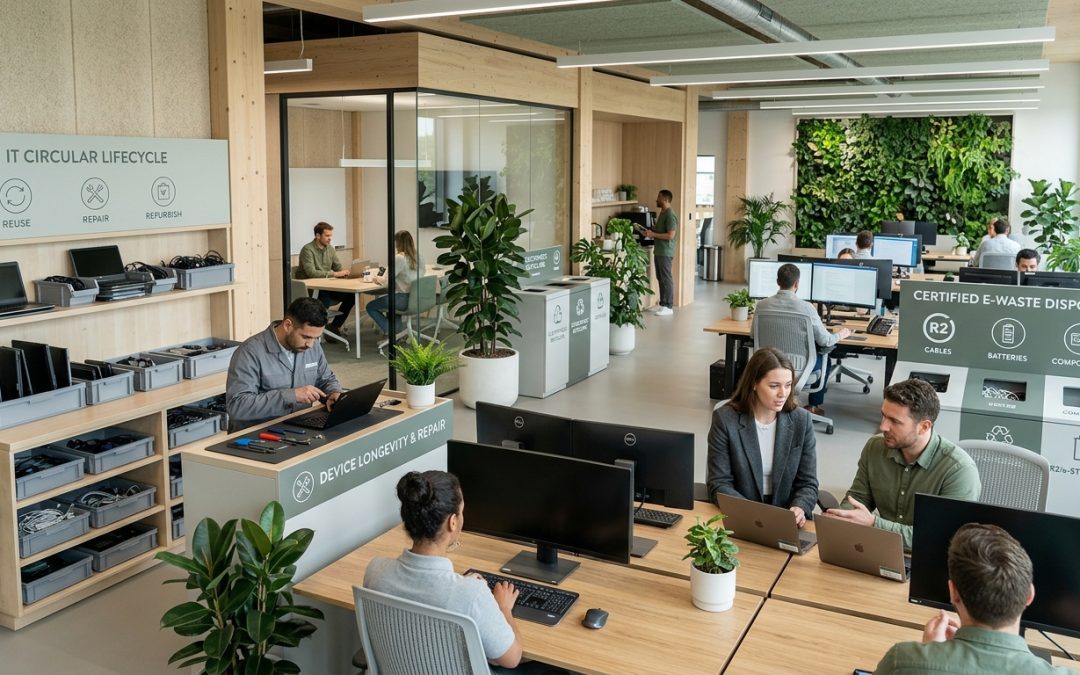
Achieving zero waste for electronics requires applying the waste hierarchy rigorously at every stage:
Reduce. The most effective way to reduce e-waste is to buy less and buy better. Choosing durable, repairable equipment that lasts longer directly reduces waste generation. For businesses, this means evaluating procurement decisions based on total lifecycle rather than just purchase price. A business laptop that lasts seven years generates half the waste per year of use compared to one that lasts three and a half years.
Reuse. When equipment is no longer needed by its original user, the highest-value outcome is reuse by another user. This can happen through internal redeployment, resale into the secondary market, or donation to organisations that can use it. Every device that enters a second productive life avoids becoming waste entirely. Professional ITAD services maximise the proportion of retired equipment that enters reuse channels.
Refurbish and repair. Devices that need attention before they can serve another user should be refurbished. Battery replacement, storage upgrades, cosmetic restoration, and software refresh can return equipment to full productivity at a fraction of the environmental cost of new manufacturing.
Recycle. When a device has genuinely exhausted its useful life, comprehensive recycling should recover as much material as possible. Best-practice recycling achieves high recovery rates for metals and increasingly effective recovery of plastics and other materials. The recovered materials re-enter manufacturing supply chains, reducing demand for virgin material extraction.
Recover. For the small fraction of material that can’t currently be recycled, energy recovery is preferable to landfill. This should be genuinely limited to residual material after all higher-value options have been applied.
Barriers to Zero Waste Electronics
Several obstacles stand between current practice and zero waste outcomes for electronics:
Product design. Many electronics are still designed without end-of-life considerations. Glued batteries, mixed material composites, miniaturised components, and proprietary construction all make disassembly and material recovery more difficult and expensive. Design for disassembly and design for recyclability need to become standard practice rather than exceptions.
Collection infrastructure. The biggest gap in the e-waste chain is getting devices from their last user to appropriate processing facilities. Convenient, accessible collection options for both consumers and businesses need significant expansion, particularly in regional Australia. You can’t recycle what you never collect.
Economic viability. Some material recovery processes are technically possible but not yet economically viable. Recovering certain plastics, rare earth elements from small magnets, and trace materials from complex assemblies costs more than the recovered materials are worth at current prices. Regulatory mechanisms like extended producer responsibility can bridge this gap by internalising disposal costs into product pricing.
Hazardous material management. Some components in electronics, including certain flame retardants, mercury-containing backlights, and legacy materials in older equipment, need to be safely removed from the material cycle rather than recycled. These materials represent a necessary exception to pure circular material flows.
Setting Realistic Targets
For organisations setting sustainability targets around IT equipment, a zero waste framework provides useful structure:
Track your IT waste diversion rate. Measure what percentage of retired IT equipment goes to reuse/refurbishment versus recycling versus landfill/disposal. If you’re using a reputable ITAD provider, they should be able to provide this data. Target progressive improvement toward 90%+ diversion from landfill.
Prioritise reuse over recycling. From both an environmental and economic perspective, every device that enters a second productive life delivers better outcomes than even the most efficient recycling. Maximise the proportion of retired equipment that’s refurbished and resold rather than processed for materials.
Engage your procurement team. Zero waste starts before purchase, not after disposal. Choosing repairable, upgradeable, durable equipment with strong manufacturer support commitments reduces future waste generation at source.
Report transparently. Include IT equipment in your organisation’s waste reporting and ESG disclosures. Transparency drives accountability, and publicly stated targets create internal momentum for improvement.
Zero waste for electronics is an ambitious goal that current technology and infrastructure can’t fully achieve. But it’s the right direction to aim for, and the gap between current practice and what’s achievable today is large enough that significant progress is possible for any organisation willing to prioritise it. The circular economy isn’t about perfection. It’s about continuous improvement toward keeping materials in productive use for as long as possible.
EWV helps Victorian businesses manage e-waste and IT asset disposal compliantly and sustainably — including collection, certified data destruction, and recycling. Contact us for a free quote.