
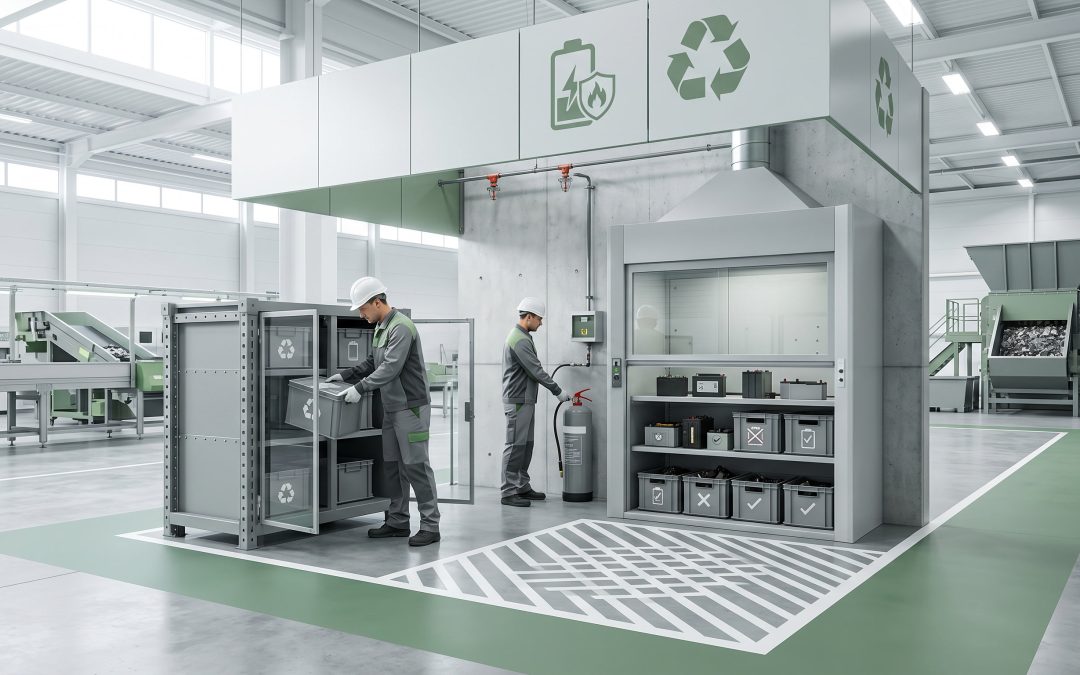
A Dangerous Trend in E-Waste Management
Lithium-ion batteries have become ubiquitous in modern electronics. They power our laptops, phones, tablets, power tools, electric scooters, and an ever-expanding range of connected devices. As these products reach end of life and enter the e-waste stream, the lithium batteries inside them are causing an alarming increase in fires at recycling facilities, waste transfer stations, collection points, and in waste collection vehicles across Australia and worldwide.
These fires are not minor incidents. Lithium battery fires in e-waste facilities have caused millions of dollars in damage, shut down recycling operations for months, and posed serious safety risks to workers and surrounding communities. The problem is growing in proportion to the volume of lithium battery-containing devices entering the waste stream, and the e-waste industry is racing to develop solutions.
Why Lithium Batteries Cause Fires in E-Waste
Lithium-ion batteries store significant energy in a compact space. When damaged, punctured, crushed, or short-circuited, they can undergo thermal runaway, a self-reinforcing chemical reaction where the battery heats rapidly, potentially reaching temperatures above 500 degrees Celsius. This reaction can trigger flames, explosions, and the release of toxic gases.
In e-waste processing environments, batteries are vulnerable to damage at multiple points. During collection, devices may be thrown into bins or skips, with impacts that can damage internal batteries. During transport, shifting loads can crush devices and their batteries. During sorting and processing, batteries may be punctured by forks, crushed in compactors, or damaged during dismantling.
The challenge is compounded by batteries that are concealed within devices. A lithium battery inside a laptop, phone, or wireless headphone case is not visible to the sorter handling the device. Even seemingly benign items like greeting cards with sound chips, light-up shoes, and disposable vapes contain small lithium batteries that can cause fires when damaged.
Damaged or swollen batteries that have already begun to degrade are particularly dangerous. Devices with visibly bulging cases, often a sign of battery swelling, should be treated as immediate fire hazards and handled with extreme care during any disposal process.
Impact on E-Waste Recycling Operations
Battery fires have forced temporary and permanent closures of recycling facilities across Australia. When a lithium battery fire occurs in a processing area, it can spread rapidly through surrounding electronic waste, creating intense fires that are difficult to extinguish. Water can react with lithium, potentially worsening the situation, and lithium battery fires can reignite hours or even days after they appear to be extinguished.
The financial impact on recyclers is substantial. Facility repairs, lost processing capacity, increased insurance premiums, and the costs of enhanced fire suppression systems all add to the operational expenses of e-waste recycling. Some smaller operators have exited the market entirely due to the escalating fire risk and associated costs.
For organisations responsible for disposing of IT equipment, these facility disruptions can affect the availability and cost of e-waste recycling services. Processing backlogs, increased fees, and stricter acceptance criteria are all consequences of the battery fire problem that flow through to the businesses generating e-waste.
Regulatory and Industry Responses
Victoria’s e-waste landfill ban, in effect since 1 July 2019, correctly prevents electronic waste from going to landfill. However, the ban increases the volume of battery-containing devices entering recycling streams, intensifying the fire risk at processing facilities. Balancing environmental objectives with safety concerns is an ongoing challenge for regulators.
The Australian Battery Stewardship Council and the B-cycle program are working to establish dedicated collection and recycling pathways for batteries, separate from general e-waste streams. Proper battery collection reduces the risk of batteries being damaged during mixed e-waste processing.
The AS/NZS 5377 standard for e-waste collection, storage, and treatment includes provisions for handling hazardous components including batteries. Compliance with this standard helps recyclers manage battery risks, but the rapid growth in battery volumes is testing the capacity of existing frameworks.
Implications for IT Equipment Disposal
Organisations disposing of IT equipment should be aware of the battery fire risk and take steps to reduce it. When preparing equipment for recycling or disposal, separate devices with lithium batteries from those without. Laptops, tablets, phones, and other battery-powered devices should be identified and handled carefully.
Do not attempt to remove batteries from devices unless you have the expertise and equipment to do so safely. Puncturing a lithium battery during removal can cause immediate thermal runaway. Leave battery removal to trained professionals at the recycling facility or your ITAD provider.
Damaged or swollen batteries require special handling. If a device has a visibly bulging case, is hot to the touch, or has been physically damaged in a way that may have affected the battery, do not place it in regular e-waste collection. Contact your ITAD provider or local council for guidance on handling damaged batteries safely.
Store end-of-life battery-powered devices in a cool, dry area away from direct sunlight and heat sources. Do not stack heavy items on top of battery-powered devices. Avoid storing large quantities of battery-containing e-waste in confined spaces where a single battery failure could spread to other devices.
Best Practices for Safe Battery Disposal
Use dedicated battery collection programs where available. Many councils and retailers offer battery drop-off points that are specifically designed for safe battery collection. The B-cycle program is expanding drop-off locations across Australia for household and small commercial batteries.
For large volumes of IT equipment with batteries, work with an ITAD provider who has appropriate battery handling procedures, fire suppression capabilities, and staff trained in lithium battery safety. Ask about their battery handling protocols when evaluating providers.
Consider the battery dimension when purchasing IT equipment. Devices with easily removable batteries simplify both data destruction (since the battery does not need to be powered during wiping) and safe disposal. While the trend in consumer electronics is toward sealed batteries, enterprise procurement can still influence device design through purchasing preferences.
A Shared Responsibility
Managing the lithium battery fire risk in e-waste is a shared responsibility across the supply chain. Manufacturers need to design for safe end-of-life handling. Consumers and businesses need to dispose of battery-containing devices through proper channels. Recyclers need appropriate infrastructure and training. And regulators need frameworks that balance environmental protection with worker and community safety. As the volume of lithium batteries in the waste stream continues to grow, getting this right becomes more urgent every year.
EWV helps Victorian businesses manage e-waste and IT asset disposal compliantly and sustainably — including collection, certified data destruction, and recycling. Contact us for a free quote.