
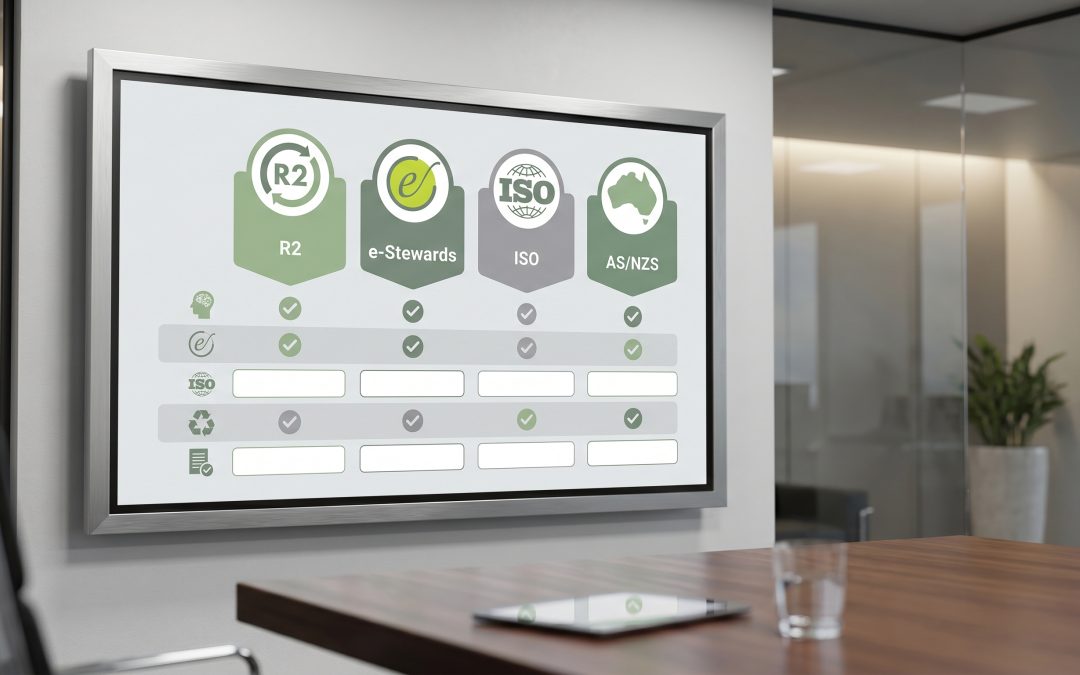
When evaluating ITAD providers, certifications are one of the most important indicators of capability and credibility. But the landscape of ITAD-related certifications can be confusing, with multiple standards covering different aspects of the operation. Here is a clear comparison of the key certifications and what each one tells you about a provider.
R2 (Responsible Recycling)
R2 is the most widely adopted certification specific to electronics recycling and ITAD. Administered by SERI (Sustainable Electronics Recycling International), R2 certification requires providers to demonstrate competence across environmental management, data destruction, downstream material tracking, worker health and safety, and focus material management including hazardous substances.
R2 is assessed by accredited third-party auditors with annual surveillance audits and full recertification every three years. It is recognised globally and provides strong assurance that the provider operates responsibly across all aspects of electronics processing.
e-Stewards
e-Stewards, administered by the Basel Action Network (BAN), is considered the more stringent alternative to R2. It includes all the core requirements of R2 plus a prohibition on exporting hazardous e-waste to developing countries, stricter downstream due diligence, GPS tracking of exported materials, a prohibition on prison labour, and a prohibition on landfill disposal of e-waste.
e-Stewards appeals to organisations that prioritise environmental justice and want the strongest guarantee against their equipment being processed in unregulated overseas operations.
ISO 27001 (Information Security Management)
ISO 27001 is the international standard for information security management systems (ISMS). An ITAD provider with ISO 27001 certification has implemented a comprehensive system for managing information security risks, including those related to data destruction and equipment handling.
ISO 27001 is particularly relevant for organisations with high data security requirements. It provides assurance that the provider has systematic processes for protecting information assets, managing access controls, and responding to security incidents. However, ISO 27001 alone does not address environmental practices, so it should be considered alongside ITAD-specific certifications.
ISO 14001 (Environmental Management)
ISO 14001 certifies that the provider has implemented an environmental management system that systematically manages their environmental impact. This includes waste management, emissions control, resource efficiency, and compliance with environmental regulations.
For ITAD, ISO 14001 provides assurance that the provider manages the environmental aspects of electronics processing responsibly. It complements ITAD-specific certifications by verifying the broader environmental management framework.
ISO 9001 (Quality Management)
ISO 9001 certifies that the provider has a quality management system that ensures consistent service delivery. While less directly relevant to ITAD than the security and environmental certifications, ISO 9001 indicates that the provider has documented processes, performance monitoring, and continuous improvement practices.
AS/NZS 5377
AS/NZS 5377 is the Australian and New Zealand standard for the collection, storage, transport, and treatment of end-of-life electrical and electronic equipment. Compliance with this standard demonstrates that the provider meets the specific requirements relevant to the Australian regulatory environment.
AS/NZS 5377 is particularly relevant for Australian organisations because it addresses local regulatory requirements including Victoria’s e-waste landfill ban and national environmental protection frameworks.
Verifying Certifications
Always verify certifications independently. R2 certifications can be checked on the SERI website. e-Stewards certifications are listed on the BAN website. ISO certifications should be verified through the issuing certification body. Ask to see current certificates and check the validity dates. Be cautious of providers who claim to be “working towards” certification or who hold expired certificates.
Certifications Are Necessary but Not Sufficient
Certifications provide a baseline of assurance, but they should not be the only factor in your provider evaluation. Supplement certification verification with facility visits, reference checks, financial stability assessment, and ongoing performance monitoring. A certified provider who delivers poor service is still a poor choice, just as an excellent provider without certifications may still present unverified risk.