
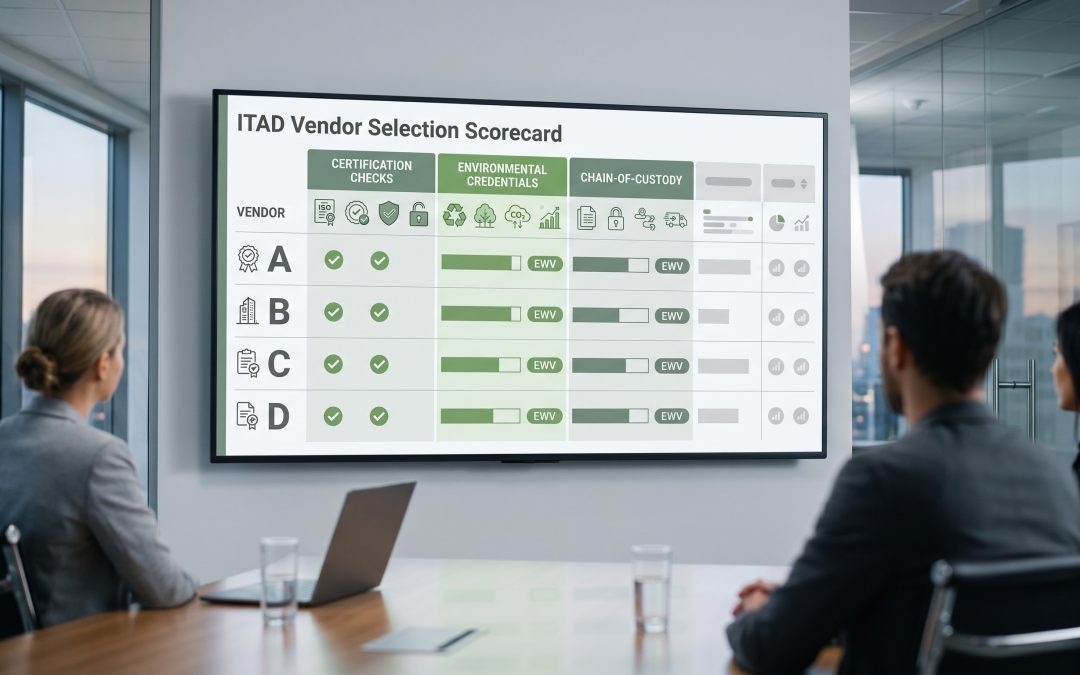
Choosing the right IT asset disposition vendor is one of the most consequential decisions you will make for your organisation’s data security, environmental compliance, and financial recovery from old equipment. The ITAD market includes everything from large multinational operators to small local recyclers, and the quality of service varies enormously. Knowing what to evaluate helps you separate genuine capability from marketing claims.
Certifications and Accreditations
Certifications are your first filter. They do not guarantee excellent service, but their absence should raise immediate questions. The key certifications to look for in Australia include AS/NZS 5377 for the collection, storage, transport, and treatment of end-of-life electrical and electronic equipment. ISO 14001 for environmental management systems demonstrates a structured approach to managing environmental impact. ISO 27001 for information security management is particularly important if your disposal involves sensitive data. ISO 9001 for quality management provides assurance of consistent processes.
International ITAD-specific certifications like R2 (Responsible Recycling) and e-Stewards provide additional assurance, particularly around downstream recycling practices and the prevention of e-waste export to developing countries.
Always verify certifications independently rather than relying on a vendor’s claims. Check with the certifying body directly or ask to see current certificates with valid dates.
Data Destruction Capabilities
Your vendor’s data destruction capabilities should match your security requirements. Evaluate whether they offer both software-based sanitisation and physical destruction, what standards they follow (NIST 800-88 is the baseline), whether they can perform on-site destruction for sensitive assets, what verification and reporting processes they use, and whether their data destruction processes have been independently audited.
A strong ITAD vendor should be able to articulate exactly how they handle different types of storage media, from standard hard drives and SSDs to tape media, embedded flash storage, and mobile devices. If they give vague answers about their destruction methods, that is a concern.
Environmental Practices
How your vendor handles materials after data destruction matters for both compliance and your organisation’s environmental reputation. Key questions include where do recycled materials end up, do they export any e-waste to other countries, what percentage of materials is diverted from landfill, do they provide environmental impact reporting (weight recycled, CO2e avoided), and are their downstream recycling partners also certified?
In Victoria, all e-waste is banned from landfill, so your vendor must have legitimate recycling pathways for all material they handle. Ask for specifics about their recycling processes and the facilities they use.
Security and Logistics
Evaluate the physical security measures your vendor has in place throughout the disposal chain. This includes secure collection vehicles with GPS tracking, facility security (CCTV, access controls, visitor policies), employee background checks and security clearances, insurance coverage for assets in their possession, and tamper-evident packaging and sealed transport options.
Visit the vendor’s facility if possible. A walkthrough tells you more about their actual operations than any brochure. Look at how equipment is stored, whether areas are clean and organised, whether access is controlled, and how staff handle equipment.
Reporting and Documentation
Good reporting is what separates professional ITAD from basic recycling. Your vendor should provide detailed asset-level tracking with serial numbers, certificates of destruction for every data-bearing device, environmental impact reports (weight processed, materials recovered), regular status updates during large projects, and clear final reconciliation showing every device accounted for.
Ask to see sample reports before engaging a vendor. The quality and detail of their reporting reflects the quality of their internal processes.
Value Recovery
If your equipment has residual value, your vendor’s remarketing capabilities become important. Not all ITAD providers offer value recovery, and among those that do, the returns can vary significantly. Evaluate their testing and grading processes, their remarketing channels (direct sales, auction, wholesale), their track record with equipment similar to yours, and their pricing transparency and payment terms.
Be realistic about value expectations, but also be aware that some vendors offer “free collection” by keeping all resale revenue for themselves. Understanding the full scope of ITAD services helps you assess whether you are getting fair value.
Scalability and Flexibility
Consider whether the vendor can handle your needs both now and in the future. Can they manage one-off projects and ongoing programs? Do they service all your locations? Can they scale up quickly for large decommissioning projects? Are they flexible on scheduling and logistics? Do they have capacity during peak periods (end of financial year, office moves)?
Contractual Terms
Before signing, review the contract carefully. Pay attention to liability provisions (who is responsible if a data breach occurs from disposed equipment), insurance requirements, service level agreements with measurable commitments, pricing structure and any hidden fees, termination terms, and dispute resolution processes.
A thorough vendor selection process takes time upfront but prevents problems that are far more expensive and disruptive to deal with after the fact. The right ITAD partner should feel like an extension of your own security and compliance team.
EWV handles IT asset disposition (ITAD) end-to-end for Victorian businesses — from collection and data destruction through to certified recycling or refurbishment for resale. Get in touch for a tailored ITAD quote.