
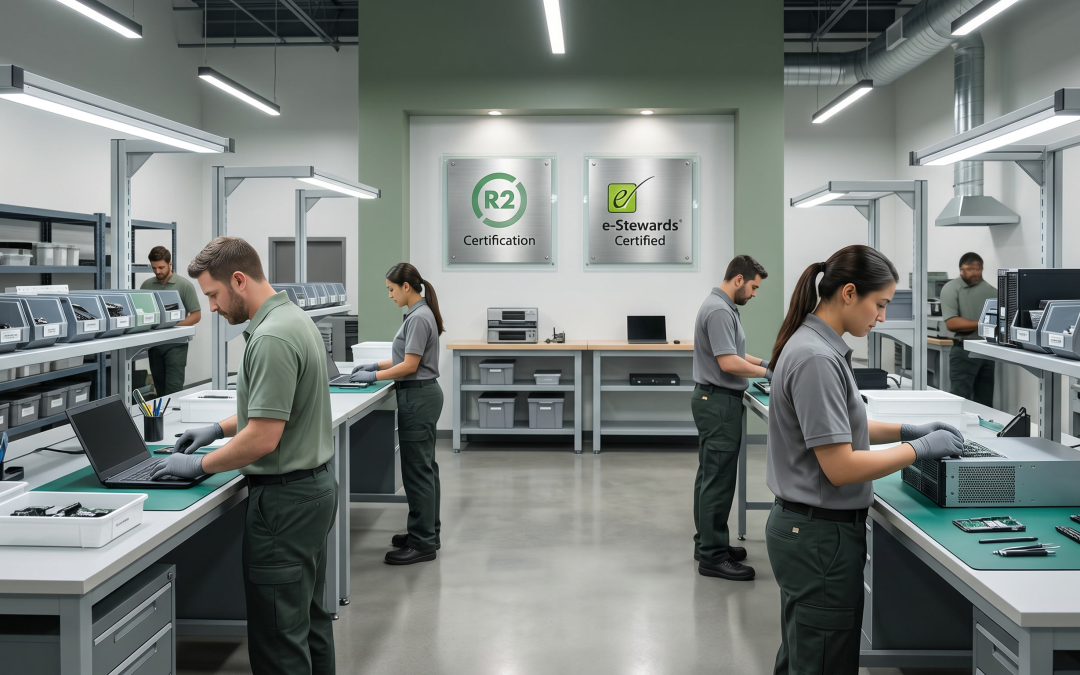
R2 and e-Stewards are the two most widely recognised certifications specific to the electronics reuse and recycling industry. Both aim to ensure responsible handling of end-of-life electronics, but they approach the challenge from different angles and with different emphases. Understanding what each certification requires helps you assess ITAD providers and make informed decisions about who handles your retired IT equipment.
R2: Responsible Recycling Standard
R2, now in its third revision (R2v3), was developed through a multi-stakeholder process facilitated by SERI (Sustainable Electronics Recycling International). It is the most widely adopted electronics recycling certification globally, with certified facilities operating across dozens of countries.
R2 certification requires compliance across several core areas. Environmental health and safety requirements ensure that facilities manage hazardous materials properly, protect workers from exposure risks, and maintain appropriate emergency response procedures. Data security provisions require certified facilities to implement controls for receiving, storing, tracking, and sanitising data-bearing devices, following recognised standards like NIST 800-88.
Focus materials management addresses specific materials of concern in electronics, including lead, mercury, cadmium, and other hazardous substances. Certified facilities must demonstrate proper handling, storage, and disposition of these materials. Downstream vendor management is a cornerstone of R2, requiring certified facilities to track where materials go after leaving their facility and to verify that downstream processors meet appropriate environmental and safety standards.
R2 also includes provisions for legal compliance, quality management, and facility security. Certified facilities undergo regular audits by accredited certification bodies to verify ongoing compliance.
e-Stewards: Electronics Environmental Excellence
e-Stewards was developed by the Basel Action Network (BAN), an environmental organisation focused on preventing toxic trade and the export of hazardous waste to developing countries. This origin gives e-Stewards a particular focus on preventing the export of hazardous e-waste.
The cornerstone of e-Stewards is its prohibition on exporting hazardous e-waste and untested, non-working equipment to developing countries. Certified recyclers commit to processing all hazardous materials domestically (or within OECD countries) rather than shipping them to countries with less stringent environmental protections.
Beyond export controls, e-Stewards requires comprehensive environmental management, data security practices for all data-bearing devices, worker health and safety programs, secure chain of custody for equipment, and downstream accountability for materials leaving the facility.
e-Stewards certified facilities are subject to both scheduled audits and unannounced inspections. BAN also operates a GPS tracking program (e-Trash Transparency Project) that monitors whether certified recyclers’ materials actually go where they claim, adding an extra layer of accountability.
Key Differences
While R2 and e-Stewards share many objectives, several differences distinguish them. On export restrictions, e-Stewards takes a stricter position, effectively prohibiting the export of hazardous e-waste to non-OECD countries. R2 allows export if the receiving facility meets specified standards, though it requires due diligence on downstream processors.
On scope, R2 covers a broader range of electronics reuse and recycling activities, including refurbishment and remarketing. e-Stewards focuses more specifically on responsible recycling and environmental protection.
On monitoring, e-Stewards includes GPS tracking of exported materials through BAN’s transparency program. R2 relies on documented downstream vendor management and audit verification.
On market adoption, R2 has broader global adoption with more certified facilities worldwide. e-Stewards has a smaller but dedicated base of certified recyclers, particularly in North America.
Relevance for Australian Organisations
In Australia, these international certifications complement local standards like AS/NZS 5377. While AS/NZS 5377 addresses Australian-specific requirements, R2 and e-Stewards provide additional assurance around areas like downstream accountability and data security that go beyond what AS/NZS 5377 covers in detail.
For organisations that operate internationally or whose clients have global compliance requirements, R2 or e-Stewards certification can be important for demonstrating alignment with international best practices. For domestically focused organisations, these certifications are a valuable complement to Australian standards but not necessarily a mandatory requirement.
What to Ask Providers
When evaluating a provider’s R2 or e-Stewards certification, ask to see their current certificate and note the scope it covers (some facilities may be certified for certain activities but not others). Ask about their most recent audit results and any corrective actions required. Enquire about their downstream vendor management practices and how they verify where materials end up. And ask about their data destruction procedures and whether they follow recognised standards for all data-bearing devices.
A provider who is transparent about their certification status, audit outcomes, and downstream practices is demonstrating the kind of openness that these certifications are designed to encourage.
Making Your Choice
When selecting an ITAD provider, the presence of R2 or e-Stewards certification should carry significant weight in your evaluation. Either certification indicates a provider who has invested in meeting independently verified standards. The specific choice between R2 and e-Stewards (or requiring both) depends on your priorities: if export prevention is your top concern, e-Stewards’ stricter export controls may be more relevant. If you need a provider with broad reuse and remarketing capabilities alongside responsible recycling, R2’s wider scope may be more applicable.
EWV helps Victorian businesses manage e-waste and IT asset disposal compliantly and sustainably — including collection, certified data destruction, and recycling. Contact us for a free quote.